


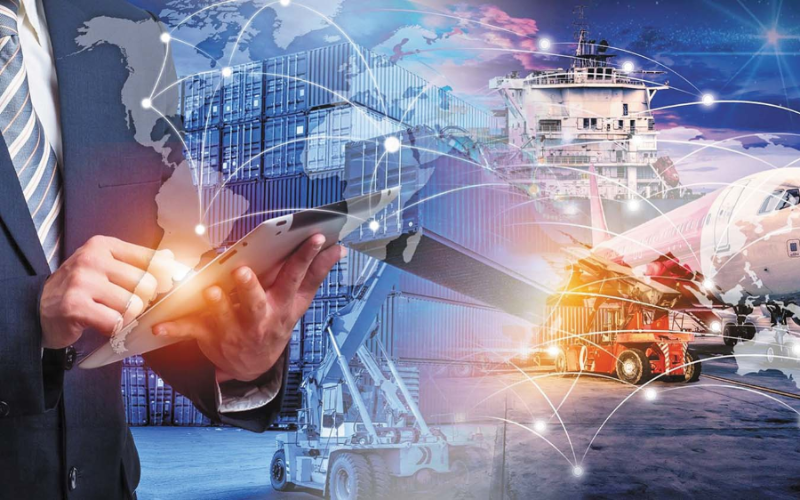
Vietnam stands before a massive opportunity to become the trade "gateway" of Southeast Asia, emphasized Prof. Tran Ngoc Anh from Indiana University (USA) at the Vietnam Economic - Financial Forum 2025 on December 5.
Specifically, this opportunity arises from the fact that many multinational corporations are shifting their supply chains and seeking new strategic destinations.
One of the clearest evidences of this is the recent announcement by Amazon—one of the world's largest technology conglomerates operating in e-commerce, cloud computing (AWS), smart technology, AI, and logistics—selecting Vietnam as a location to launch its Amazon Global Logistics (AGL) program.
Notably, Vietnam is only the second country in the world (after China) chosen by Amazon to operate the AGL program globally. Furthermore, the US e-commerce giant has set a goal to transform Vietnam into the e-commerce export hub of Southeast Asia by 2026.
Citing this example, Prof. Anh suggested that if Vietnam can successfully cooperate with major corporations like Amazon, it will present a "huge opportunity for the Vietnamese economy to become an e-commerce export stronghold for Southeast Asia."
This would create a strong spillover effect on trade activities and pave the way for domestic enterprises to participate more deeply in the global supply chain, especially in the current context where a large portion of Vietnam's export value still relies heavily on the FDI sector.
However, according to the professor, these new opportunities also require Vietnam to prepare thoroughly in order to turn this potential into breakthrough successes.
First, it is necessary to accelerate investment in and upgrades to infrastructure—including roads, airports, seaports, and warehousing—to ensure seamless connectivity and meet growing transport demands.
Second, energy development must be promoted, particularly clean and stable energy sources, to power logistics hubs, manufacturing plants, and large-scale e-commerce operations.
Third, institutional reform should continue to be strengthened, especially regarding tax, customs, and administrative procedures, in order to reduce compliance costs and create the most favorable conditions for businesses.
Fourth, focus should be placed on investing in enterprises and the business environment, helping Vietnamese businesses enhance their competitiveness so they can integrate more deeply into the value chains of major corporations like Amazon and other global groups.
Fifth, environmental protection and land planning management must be implemented strategically and effectively to ensure sustainability and secure long-term competitive advantages for the economy.
Finally, investing in human capital is a prerequisite. Vietnam needs to step up the training of a high-quality workforce in logistics, technology, supply chain management, and e-commerce to fully capitalize on these new opportunities.
“These are crucial factors for Vietnam to achieve its high growth targets in 2026 and the periods ahead. I am confident that Vietnam can seize this opportunity to become a global trade gateway and strengthen its role in the global supply chain,” Prof. Anh said.


 Google translate