



Financial security in the digital age is far more than a technical or operational matter. It is directly linked to public trust, market stability, and the safety of the national economy, said Lieutenant General Nguyen Minh Chinh, Standing Vice President of the National Cyber Security Association.
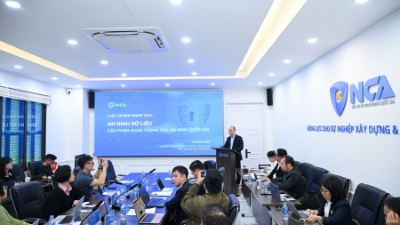
"The urgent task at hand is to ensure that development goes hand-in-hand with security and safety," he told delegates at the seminar titled “Protecting National Financial Security in the Digital Era” on December 23. The seminar focused on key solutions to fortify digital defense systems, ensuring sustainable growth and global integration.
In today’s digital era, financial security has become an integral and inseparable component of national security. The banking and financial system, along with digital data infrastructure, serve not only as engines for economic growth but also as prime targets that high-tech criminals aim at.
From the perspective of State management and the operation of the national payment system, Deputy Director of the IT Department at the State Bank of Vietnam (SBV), Mr. Phan Thai Dung, noted that the banking sector has been a pioneer in digital transformation, technological innovation, and service enhancement.
In an environment where cybercrime is becoming increasingly sophisticated, with rising risks from targeted attacks, supply chain vulnerabilities, third-party threats, and online fraud, the State Bank of Vietnam affirms that ensuring cybersecurity is a core priority, said Mr Dung.
"This mission requires close coordination between regulatory bodies, financial institutions, and specialized forces to safeguard the banking system and protect the rights of customers."
Chairman of the Digital Asset Management Council Center, Nguyen Dinh Thang, noted that the rapid growth of digital assets, cryptocurrency exchanges, and fintech is profoundly transforming the economy while heightening risks to national financial security. He likened the banking and financial system to the "circulatory system" of the economy, asserting that any disruption or manipulation could lead to serious macroeconomic instability.
"To safeguard national financial security, it is essential to perfect legislation regarding digital assets, cybersecurity, and personal data protection," said Mr. Thang.
This includes clearly defining the security responsibilities of banks, fintech firms, and payment intermediaries, as well as strengthening sanctions for violations. Simultaneously, the banking and financial sector must enhance cybersecurity, adopt emerging technologies, upgrade payment infrastructure, and raise public awareness.
Within the framework of the seminar, the project "Protecting National Financial Security in the Digital Era" for the 2026-2030 period was officially launched. This marks a significant transition from awareness to action, and from issuing warnings to establishing proactive, long-term defense mechanisms for Vietnam’s financial and banking system.
The project aims to establish a synchronized interdisciplinary coordination mechanism between state management agencies, specialized cybersecurity forces, and financial-technology institutions. This synergy is designed to optimize early risk detection and establish rapid response systems against digital fraud and sophisticated technical scams.









 Google translate