


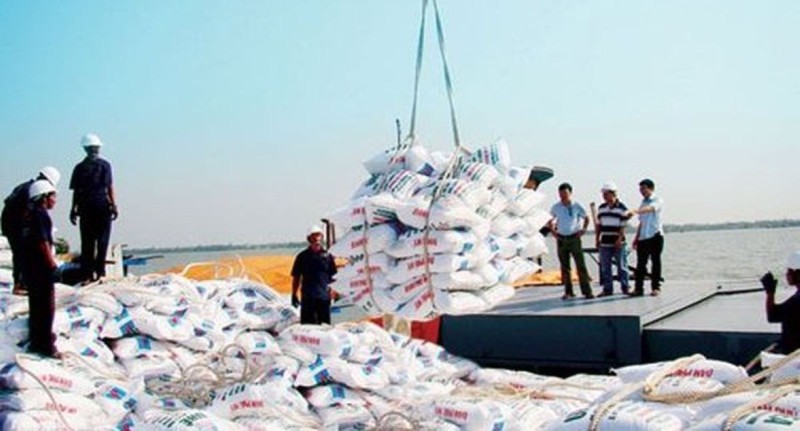
Vietnam exported about 1.7 million tons of fertilizer worth $933 million in the first half of this year, up 52% in volume and 107% in value, compared with the same period in 2025, according to the Vietnam Customs.
The result reflects rising international demand and persistently high global fertilizer prices.
Cambodia remained the largest importer of Vietnamese fertilizer in the period, with more than 330,000 tons valued at $146 million. South Korea followed with nearly 149,000 tons worth $104 million; the Philippines imported around 118,000 tons worth $64 million; and Malaysia purchased about 88,000 tons worth $49 million.
Industry enterprises noted that the main driver of export growth was the tightening of global fertilizer supply. Geopolitical tensions in the Middle East have disrupted transport through the Strait of Hormuz—an essential maritime route for energy trade and fertilizer raw materials—forcing many plants in the Persian Gulf to cut capacity.
In addition, Russia and China have continued to impose restrictions on fertilizer exports, further constraining global supply. As many countries stepped up imports to secure agricultural production, Vietnamese companies seized the opportunity to expand their export markets.
Businesses assess that if global supply remains tight and import demand stays high, Vietnam’s fertilizer exports still have ample room for growth in the remaining months of the year. However, firms must closely monitor geopolitical developments, logistics costs, and international trade policies to proactively respond to market fluctuations.
Dr. Phung Ha, Chairman of the Vietnam Fertilizer Association, emphasized that fertilizer enterprises are now competing not only domestically but also increasingly in international markets. Vietnamese fertilizer has reached more than 20 countries and territories. Therefore, if regulations are not streamlined or fail to follow risk‑management principles, production costs will rise, technological innovation will be limited, and the competitiveness of enterprises will be affected.


 Google translate