


Semiconductors have become the backbone of artificial intelligence (AI), digital infrastructure, and the data economy, while emerging as a strategic industry reshaping global supply chains. As countries race to strengthen domestic capabilities, collaboration among government, industry, academia and international research institutions is increasingly seen as critical to advancing research and development (R&D), cultivating skilled talent, and accelerating technology transfer.
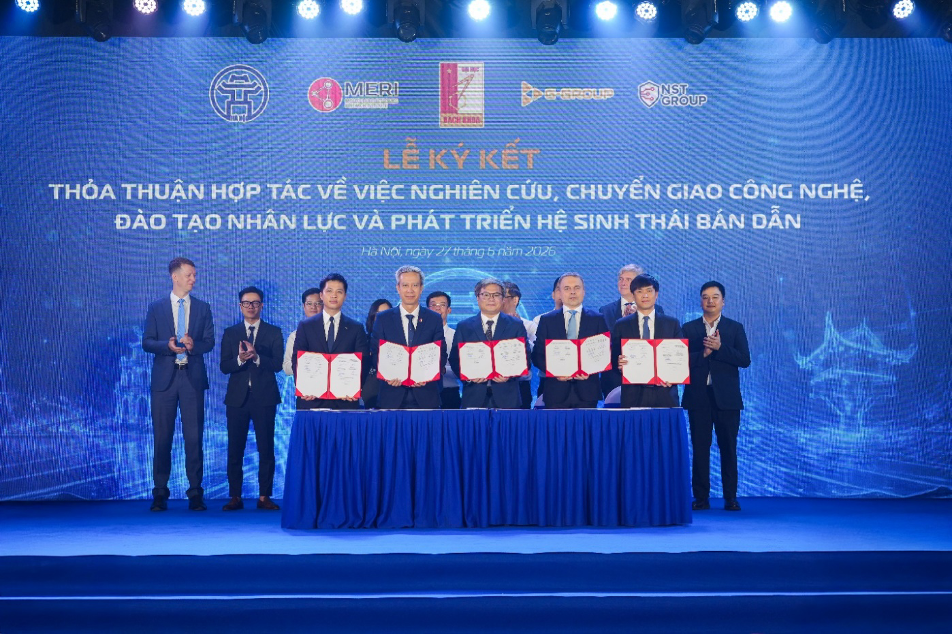
Against this backdrop, the Hanoi People's Committee, G-Group Technology Corporation, the Molecular Electronics Research Institute (MERI) of the Russian Federation, Hanoi University of Science and Technology (HUST), and National Security Technology Joint Stock Company (NST Group) have signed a strategic cooperation agreement to support the development of Vietnam's semiconductor ecosystem.
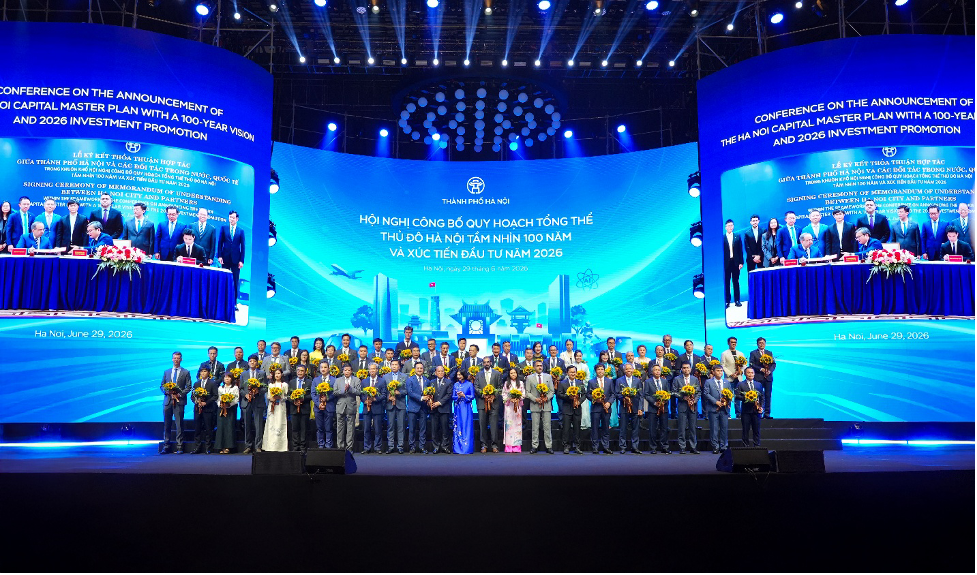
The agreement was announced at the Conference on the Announcement of the Hanoi Capital Master Plan with a 100-Year Vision and 2026 Investment Promotion. It establishes a long-term framework for collaboration aimed at strengthening Vietnam's capabilities in semiconductor research, technology development, talent training and commercialization.
Building a strategic technology sector
Vietnam has identified semiconductors as one of its strategic technology sectors for the country's next stage of development. In addition to expanding its role in the global semiconductor value chain, the country is seeking to strengthen domestic capabilities in chip research, design and applications to enhance digital sovereignty, cybersecurity and long-term technological competitiveness.
Hanoi has placed science and technology, innovation and digital transformation at the center of its growth strategy, targeting the digital economy to contribute at least 22 per cent of the city's Gross Regional Domestic Product (GRDP) by 2026.
The capital has also been selected as the home of the National Multi-Project Wafer (MPW) Coordination Center and is advancing a range of initiatives in AI, semiconductor technologies and R&D, further reinforcing its ambition to become a national hub for high-tech industries.
Against this backdrop, semiconductor development is increasingly viewed not as the growth of a single industry but as a strategic foundation for Vietnam's digital economy and future technological capabilities.
Partnership to strengthen semiconductor capabilities
Under the cooperation agreement, the five partners will collaborate on semiconductor research, workforce development, technology transfer and ecosystem building, with a particular focus on secure chip technologies, microelectronics and related fields.
The Hanoi People's Committee will coordinate the partnership and facilitate long-term collaborative initiatives. Hanoi University of Science and Technology will lead research, education and talent development, while MERI will provide technology consulting, technical expertise and knowledge transfer.
G-Group will contribute engineering resources to support research, technology adoption and ecosystem development, while NST Group will focus on product development and commercializing semiconductor applications across a range of industries.
The partnership will also explore the development of secure chips and application-specific semiconductor solutions for systems requiring advanced authentication, data protection and cybersecurity. In addition, the partners will assess opportunities for technology transfer in microelectronics, nanoelectronics, chip design and secure chip fabrication.
Plans also include establishing research, training and testing infrastructure, developing dedicated R&D centers, and accelerating the commercialization of research in areas such as digital identity, digital payments, telecommunications and other security-critical digital systems.
The collaboration with MERI - part of Russia's Element Group and one of the country's leading semiconductor and microelectronics research organizations - reflects growing confidence in the technological capabilities of Vietnamese enterprises and their ability to progressively develop expertise in strategic core technologies.
Mr. Ha Trung Kien, Vice Chairman of the Board of Directors of G-Group, said: "The greatest value of this partnership lies not only in the projects themselves, but in bringing together the most critical stakeholders across the semiconductor ecosystem. By combining the strengths of government, Vietnamese technology companies, leading academic institutions and trusted international partners, we have an opportunity to build the foundational technological capabilities needed for sustainable long-term growth."
Mr. Alexander Kravtsov, Chief Executive Officer of MERI, said: "Russia and Vietnam have enjoyed a long-standing cooperative relationship. The agreement between MERI and its Vietnamese partners establishes a solid foundation for mutually beneficial projects in the years ahead. The signing took place as part of the 2026 Investment Promotion Forum, which presented Hanoi's 100-year development vision. This long-term vision creates significant opportunities to develop new technologies and apply them in ways that contribute to the growth and prosperity of both countries."
As AI and data-driven technologies continue to evolve rapidly, semiconductors are expected to become an increasingly important driver of economic competitiveness. The partnership is intended to establish a long-term platform for research, innovation and technology commercialization, supporting Hanoi's ambition to move beyond technology adoption and play a larger role in semiconductor development and next-generation innovation.

 Google translate