


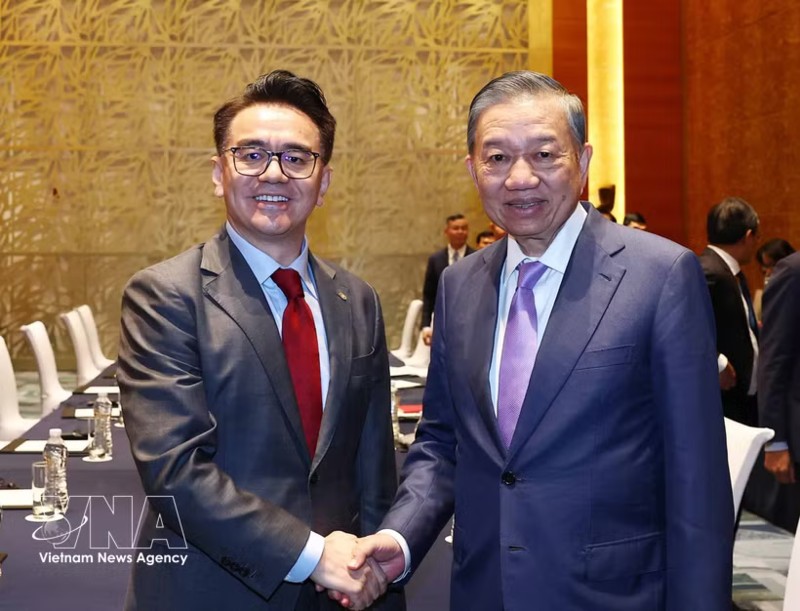
General Secretary of the Communist Party of Vietnam Central Committee and President To Lam received leaders of several major Chinese corporations in Shenzhen on November 17, discussing investment expansion, technology transfer and stronger business cooperation to support Vietnam's industrial development and digital transformation, according to the Vietnam News Agency.
The meetings took place during the Vietnamese leader's visit to China to attend the 33rd APEC Economic Leaders' Week and conduct bilateral activities.
Meeting with Wang Cheng, CEO of TCL Group, General Secretary and President Lam praised the group's decision to choose Vietnam as its first destination in its internationalisation strategy in 1999. He expressed his hope that the group will continue its long-term engagement and development in Vietnam.
The top Vietnamese leader affirmed that Vietnam consistently attaches importance to its friendly neighbourliness and comprehensive strategic cooperative partnership with China, as well as building a Vietnam-China Community with a shared future that carries strategic significance. He called for more substantive and effective economic, scientific and technological cooperation between the two nations.
Wang said TCL, an internationally operating technology and electronics manufacturer, had maintained a long-term presence in Vietnam, contributing to creating jobs, exports and developing electronics ecosystems. He affirmed that the firm will continue to expand investment, train human resources and involve Vietnamese businesses in its supply chains.
He proposed stronger support for workforce training, closer cooperation in supporting industries and the early implementation of new projects in Vietnam.
General Secretary and President Lam said Vietnam prioritises quality investment featuring advanced technologies, high added value and stronger links with domestic businesses.
Welcoming TCL's continued recognition of Vietnam as a strategic location in its global production network, he encouraged the group to expand investment in display technology, smart electronics, research and development (R&D), supporting industries and other high-value-added activities in line with Vietnam’s development orientations.
He also called on TCL to work with Vietnamese universities, vocational training institutions and research institutes to develop demand-driven training programmes, expand internships and workplace training, and build a skilled Vietnamese workforce of engineers, experts and managers.
The Vietnamese leader affirmed that the Vietnamese Party and State value investors with long-term strategies, effective operations, respect for the law and contributions to socio-economic development. He pledged continued improvements to the institutional framework and investment climate, and protection of investors' legitimate rights and interests.
He expressed his hope that TCL will build on its cooperation achievements, undertake more high-quality projects, and accompany Vietnam in developing a modern industrial sector and strengthening its self-reliance.
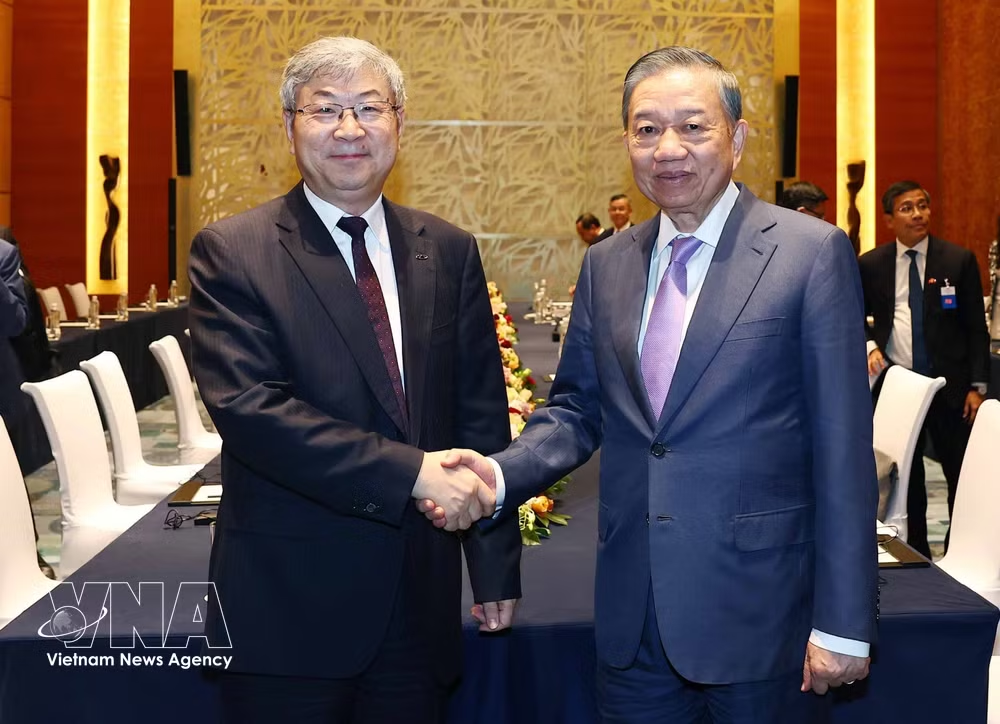
At his meeting with Yin Tongyue, Chairman of Chery Holdings, General Secretary and President Lam welcomed the group's cooperation with Vietnamese businesses in industrial and high-tech manufacturing.
Vietnam prioritises projects featuring advanced technologies, high added value, the potential to develop new industries, technology transfer and linkages with domestic businesses, he said, showing the hope that Chery will leverage its strengths in research, manufacturing, management and market networks to cooperate with Vietnam in developing a modern, green and smart automotive industry and supporting industries.
Yin introduced Chery as a multi-sector group centred on the automotive industry, with operations spanning passenger and commercial vehicles, components, automotive technology, finance and related services. Its activities also include new energy vehicles, intelligent connection technologies and relevant industrial solutions.
Chery considers Vietnam a strategic market in Southeast Asia and wishes to step up cooperation to help develop the country's automotive industry, supporting industries and supply chains, while expanding its investment in Vietnam, he said.
General Secretary and President Lam said he hopes major investors will expand beyond manufacturing to R&D, technology transfer, and cooperation with Vietnamese universities, research institutes and businesses. He called on Chery to develop a roadmap for increasing localisation rates and developing suppliers of components, materials and services in Vietnam.
Welcoming the comprehensive strategic cooperation agreement between Chery Holdings and Vietnam’s Geleximco Group, he urged the two sides to focus on practical projects in manufacturing automobile and new energy vehicles, components, and high technology. He expressed confidence that their partnership can serve as an effective cooperation model, helping enhance domestic industrial capacity.
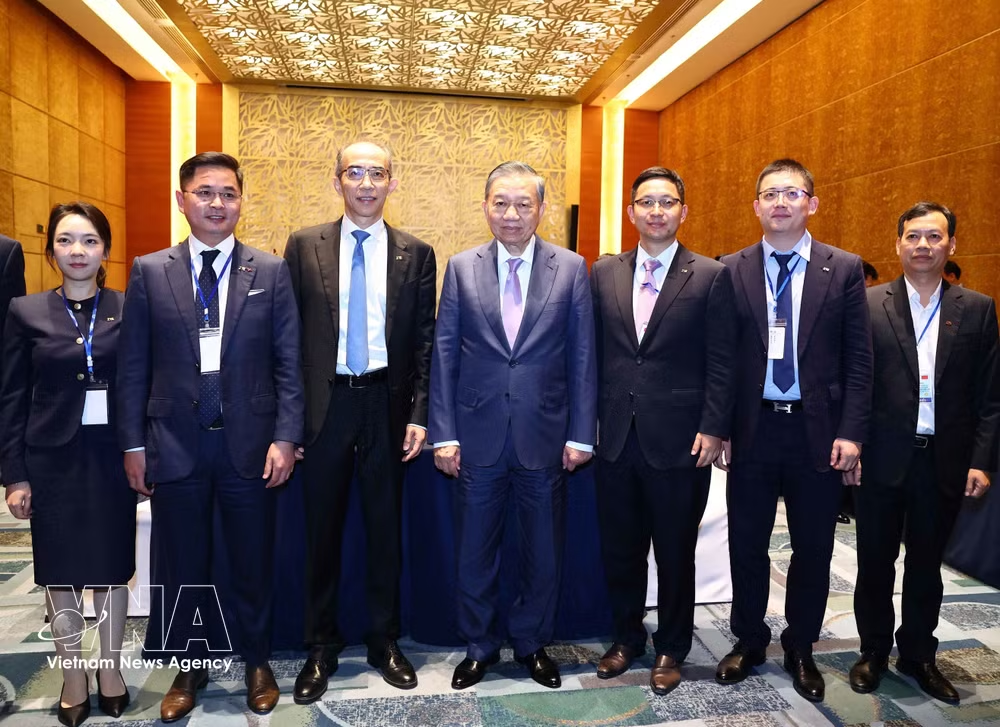
Meeting Xu Ziyang, CEO and Executive Director of ZTE Corporation, General Secretary and President Lam acknowledged the group's effective cooperation in developing telecommunications infrastructure and training information technology personnel in Vietnam, expressing his hope for sustained and effective partnerships with Vietnamese counterparts.
Xu said ZTE has strengths in optical transmission, fixed network access, AI servers, storage systems, computing networks and green data centres, as well as integrated connectivity and computing solutions, providing opportunities to cooperate with Vietnam in digital infrastructure development and digital transformation.
ZTE has worked with the Posts and Telecommunications Institute of Technology, Vietnam National University, Hanoi, and other training institutions to develop ICT human resources. It has also sent Vietnamese engineers to professional training programmes under China-ASEAN cooperation.
The group wishes to expand cooperation with Vietnam in developing green data centres, cloud computing, telecommunications, AI infrastructure, servers, storage and computing networks, as well as smart management solutions for the electronics and mechanical engineering sectors, Xu said. He proposed pilot projects in personnel training, technical exchanges, laboratory development and AI and computing network capabilities.
The Vietnamese leader encouraged ZTE to work with Vietnamese businesses, industrial parks and relevant agencies to identify suitable pilot projects. He also called for closer cooperation with Vietnamese universities, research institutes and enterprises in training engineers, exchanging experts, establishing laboratories and implementing joint projects.
He urged ZTE to turn these proposals into concrete cooperation programmes and projects with Vietnamese partners, with clear objectives, technologies, resources and expected outcomes, while helping develop local suppliers, technology partners and research capacity in Vietnam.

 Google translate