


Agricultural and food processing, energy, aerospace technology, advanced technology, socio-economic infrastructure, and the dual-use defense industry have been identified as the six priority areas for Vietnam's cooperation with Canada in the coming period.
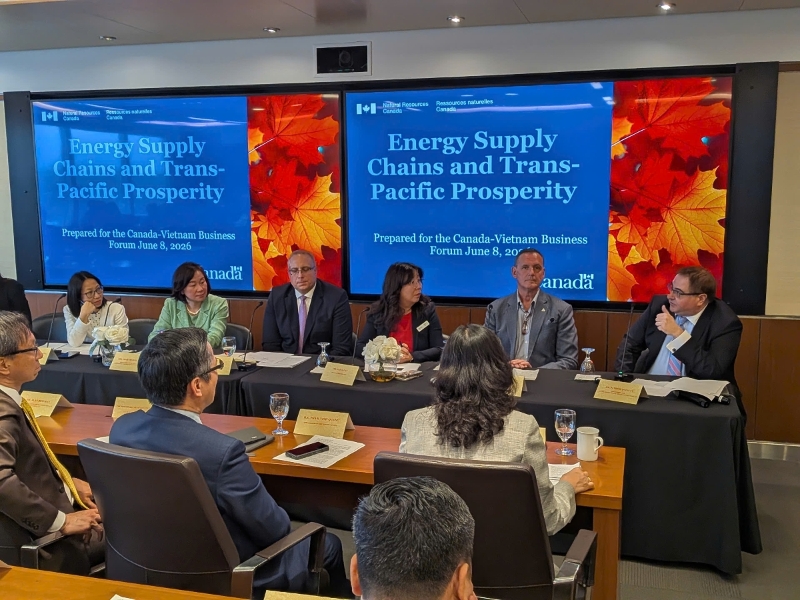
These sectors were highlighted during the "Vietnam-Canada Business Forum 2026," held recently in Toronto.
The forum, themed “Reshaping Economic Partnerships to Drive Quality, Growth, and Economic Resilience,” was organized by the Vietnamese Ministry of Industry and Trade (MoIT) in collaboration with Canadian partners within the framework of the 3rd meeting of the Vietnam-Canada Joint Economic Committee (JEC 3).
According to the MoIT’s Department of Foreign Market Development, the forum aimed not only to boost bilateral import-export activities but also to redefine the economic partnership amidst a major global supply chain restructuring. The theme reflects the current pressures faced by both countries to diversify markets and partners within an increasingly uncertain global trade order.
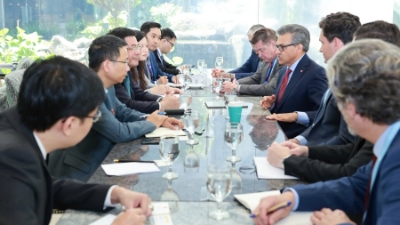
Speaking at the forum, Deputy Minister of Industry and Trade Phan Thi Thang emphasized that the two economies are highly complementary and share many key strategic interests. Ms. Thang noted that while Canada possesses strengths in energy, raw materials, technology, and finance, Vietnam offers significant advantages in processing and manufacturing, a geo-strategic location within ASEAN, and a vast network of free trade agreements with 60 global partners.
Both nations are also pursuing shared goals of diversifying markets and supply chains, protecting the rules-based international trade system, and focusing on the development of future industries such as artificial intelligence (AI), energy technology, advanced materials, and quantum computing.
"The legal conditions for both sides to exploit this potential are already in place through the Comprehensive and Progressive Agreement for Trans-Pacific Partnership (CPTPP). As members, both Vietnam and Canada benefit from a framework of significant tariff preferences," said Ms. Thang. However, she also noted that forum discussions revealed a substantial gap between the legal framework and actual utilization, particularly for small and medium-sized enterprises (SMEs) on both sides who often lack information regarding each other's markets and partners.
She reiterated that Vietnam has identified six priority sectors for cooperation, among these, energy and agri-food processing are considered to have the most immediate potential for realization.
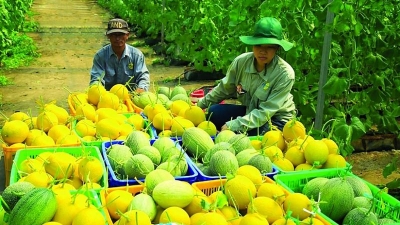
Vietnam is currently in a period of intensive energy transition, creating a high demand for capital, technology, and project management expertise—all of which align with Canada’s strengths. Regarding agri-food, while Vietnam is one of the world's leading agricultural exporters, its deep-processing ratio remains low. Canada, meanwhile, possesses the food technology systems necessary to collaborate on upgrading the value chain.
On the Canadian side, participating businesses expressed increasing interest in Vietnam as a key investment destination within the "China Plus One" strategy.
However, a significant barrier highlighted by many delegates was the difficulty in verifying information and assessing partners. Currently, businesses in both countries lack reliable channels to verify the actual capacity of potential partners, particularly for SMEs. Consequently, trade promotion agencies are expected to play a more substantive bridging role that goes beyond merely organizing events to providing practical verification and networking support.



 Google translate