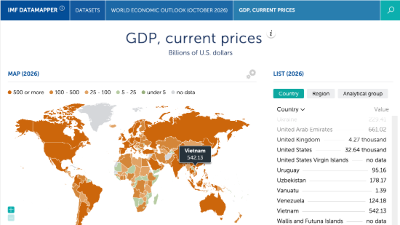
Vietnam’s nominal per capita gross domestic product (GDP) is forecasted to reach $5,259 this year, allowing the country to overtake Indonesia and climb to fifth place in ASEAN, according to the International Monetary Fund’s (IMF) October 2026 World Economic Outlook report.
The Ministry of Finance estimated that the policy would reduce budget revenue by approximately VND6,700 billion (more than $260 million) over two years.
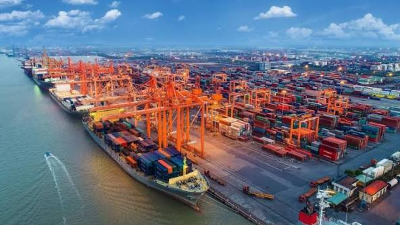
Boasting Vietnam’s largest seaport network, southern Ba Ria-Vung Tau province possesses a key role in the southern region and the country as a whole in terms of economy and society, security and defense, culture, and political geography. Prime Minister Pham Minh Chinh has outlined four major orientations for the province, initially focusing on logistics development to become a major logistics center in the region and the world.
With total investment of more than $4.5 million, the “Building a database of genetic variation for the Vietnamese population” project involves more than 40 scientists and experts and is the largest gene decoding project in the country to date. The dataset will contribute to the development of precision medicine in Vietnam, opening up a new chapter in the healthcare field.
Under the draft Information and Communication Infrastructure Plan for the 2021-2030 Period and Vision to 2050, the Ministry of Information and Communications will direct the building and synchronous development of national data infrastructure, identify data as a strategic asset and a new resource for economic development, and set a target of Vietnam becoming a regional and international data storage and processing center. Eighty per cent of its internet data resources are located abroad, but it is necessary to ensure that this data is stored in-country.
The circular economy model has become a sound alternative to the linear model at this point in time, helping overcome rising resources use and supply disruptions while limiting waste that negatively affects the environment. According to analysts, the concept of a “circular economy”, which was included in the Law on Environmental Protection in 2020, is a breakthrough in Vietnam’s environmental policy.
The government has issued preferential policies to support businesses to innovate and catch up with development trends, while the Ministry of Planning and Investment is developing a program to support digital transformation at enterprises, cooperatives, and household businesses in the 2021-2025 period. In the Global Innovation Index 2021, Vietnam ranks 44th out of 132 countries and territories, leading the group of 34 low middle-income countries.
Some of the opinions shared at the “Ho Chi Minh City: Building urban local government and improving the investment environment” seminar on December 13 noted that the city possesses a range of favorable conditions but also potential risks, challenges, and pressure from a rapidly increasing population. A modern urban government is therefore needed for Vietnam’s most populous city.