


Water is an important ingredient that accounts for a large proportion of beer production. In addition to being an ingredient in beer, the entire technological process in the brewing process also uses water as the main ingredient. Moreover, in recent years, due to abnormal and extreme weather changes, saltwater intrusion on a large scale has affected the rural domestic water supply in Vietnam’s southern and Mekong Delta provinces.
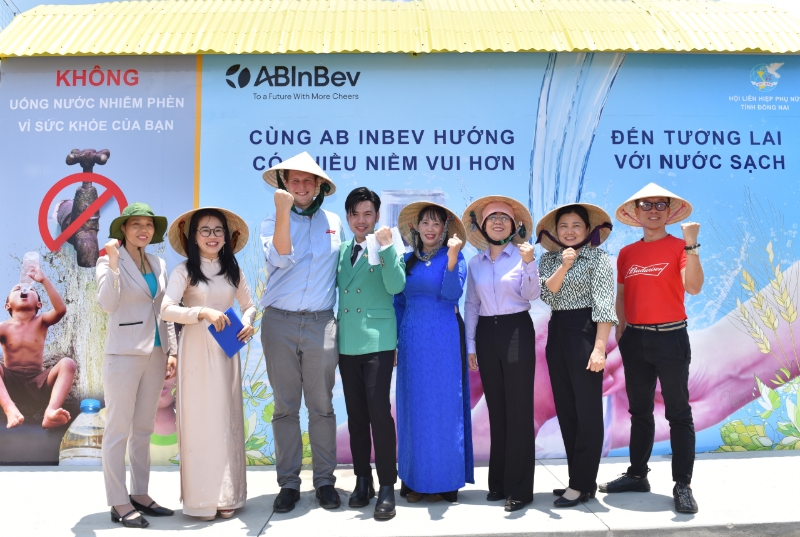
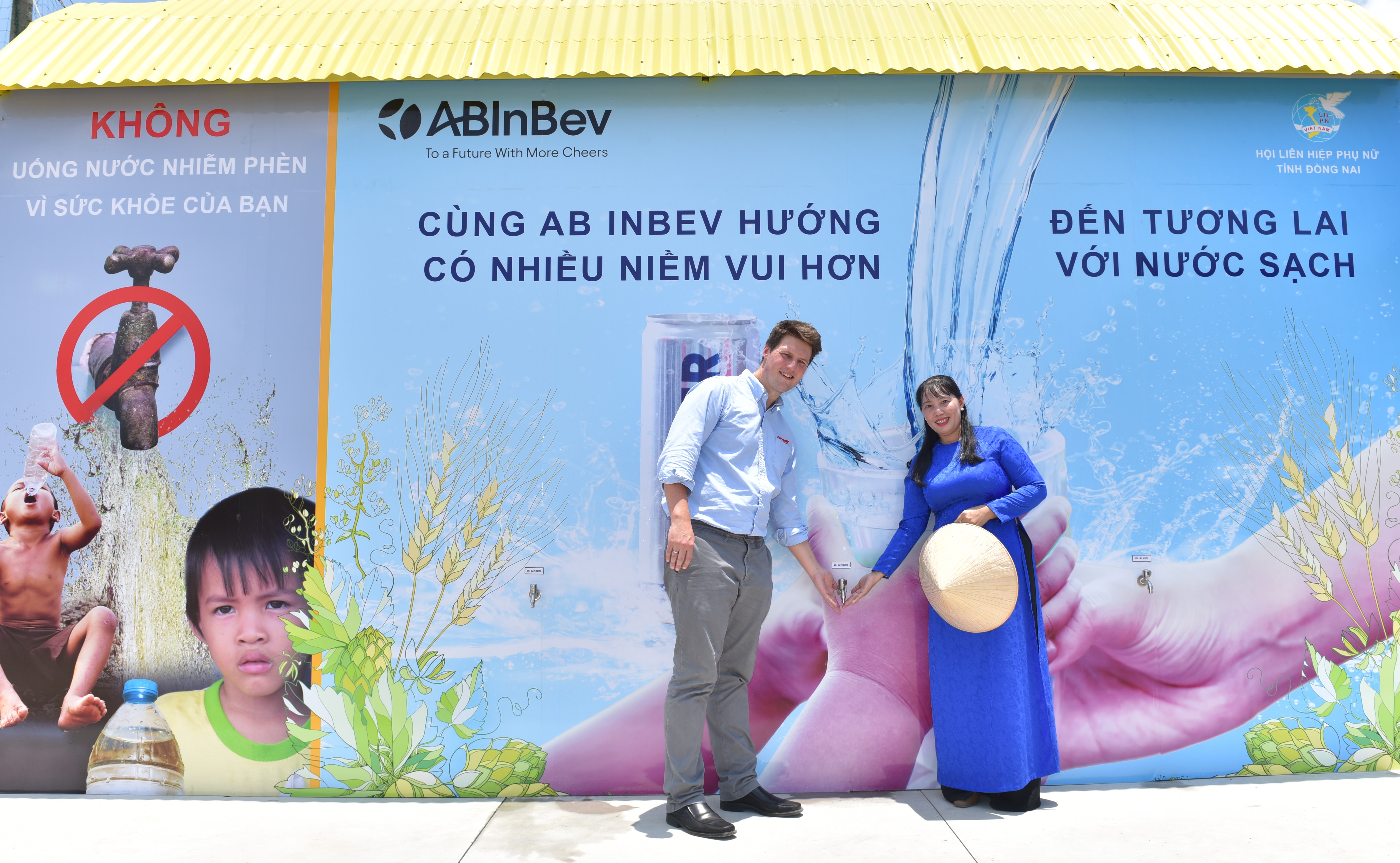
Understanding that and responding to World Water Day on March 22, AB InBev Vietnam worked with the Dong Nai Provincial Women’s Union to implement the “To a future with more cheers with AB InBev” program in Dong Nai’s Dinh Quan district. The program aims to create conditions for disadvantaged people in Thanh Son and Phu Hoa communes to have better conditions to access clean water and a healthy living environment through the funding package for the construction of a pure water purifier system in Thanh Son costing nearly VND500 million ($21,700)
Another program dredging canals and ditches, clearing flows for irrigation, and circulating water in residential areas along roads in Phu Hoa commune is also being implemented. The project officially began on March 21 and was handed over on April 6, bringing clean, fresh water for the physical and mental health of present and future generations.
At the handover ceremony, Mr. Craig Katerberg, Senior Director of Legal, External Relations and Communications at AB InBev, APAC, said clean water solutions have always been at the heart of its environmental, social, governance (ESG) journey over the years. “We are implementing these aspects of our business strategy,” he added. “In Vietnam, we have tested the water in Dinh Quan district for poor quality and believe that people always need clean water,” he said. “We therefore worked with local authorities, provincial and district Women’s Unions, and communities and people in the local area to solve this problem.”
The opening of a clean water filtration system in Dinh Quan again affirms that AB Inbev not only brings quality beer products to consumers but also wants to make a positive contribution to society by providing clean water to the community. “With AB InBev, economic benefits must be balanced with the benefits of ESG, so joy must be accompanied by responsibility in the company’s sustainable development journey,” he added. “With positive and comprehensive effects on the environment and the community, the program is an important part of our sustainable development strategy of ‘To a future with more cheers’.”

With its commitments and efforts in sustainable development, in 2023 AB InBev once again won a Golden Dragon Award to become one of the leading enterprises on the ESG journey.



 Google translate