


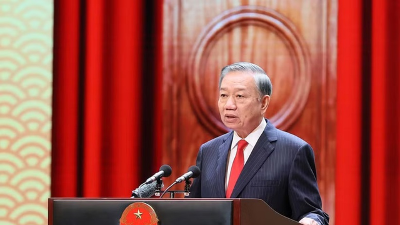
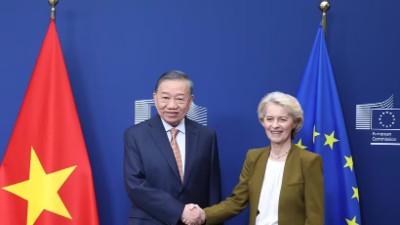
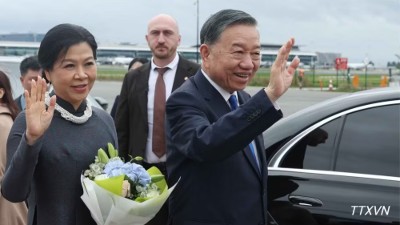
According to the Vietnamese Ministry of Foreign Affairs, at the invitation of French President Emmanuel Macron, General Secretary and State President To Lam, accompanied by his spouse and a high-level Vietnamese delegation, will pay an offcial visit to France and attend the International Space Summit in Paris from September 10 to 12.
The visit takes place against the backdrop of rapidly deepening France–Vietnam relations, particularly following the elevation of bilateral ties to a Comprehensive Strategic Partnership in October 2024, opening a broader framework for cooperation across a wide range of areas.
On this occasion, H.E. Olivier Brochet, Ambassador of France to Vietnam, spoke with VET about the significance of the visit, the progress and future direction of Vietnam-France relations, and the key areas of cooperation between the two countries, including energy transition, strategic industries, space, education, and research.
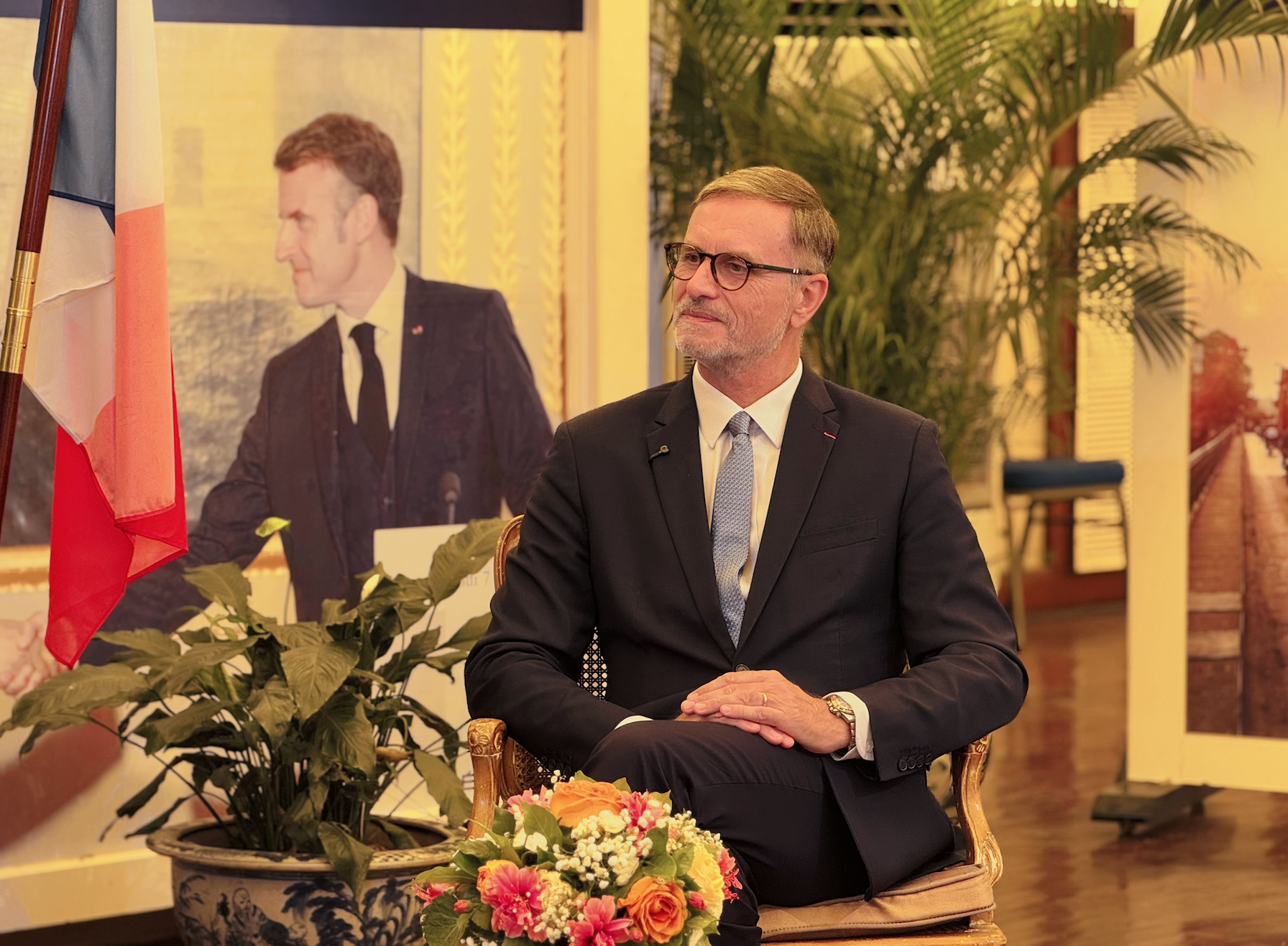
How should the significance and broader implications of this visit be understood? Does it represent a consolidation of bilateral relations, or does it mark the beginning of a new phase in the partnership between France and Vietnam?
Ambassador Olivier Brochet: It is both at the same time. It is clearly a consolidation, because over the past three years, the efforts undertaken have opened up new avenues for cooperation.
I am thinking in particular of France’s support for the development of Vietnam’s major strategic programs. More specifically, I am referring to the proposal to assist Vietnam in developing a defense industrial and technological base and in strengthening its sovereignty.
These are areas that should be further consolidated during this visit and through the discussions between the two Presidents. The two Presidents will also have an opportunity to take stock of the areas in which significant progress has already been made.
Let me give just one example: France’s commitment under the Just Energy Transition Partnership (JETP) to support Vietnam’s energy transition. The French Development Agency (AFD) has now committed more than two-thirds of the funding that France pledged four years ago, and France remains deeply committed to this area, with a large number of projects currently moving forward.
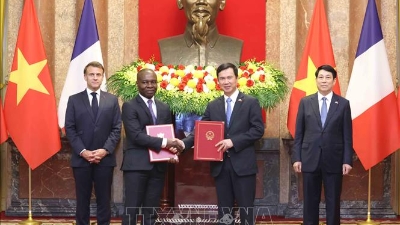
This is just one example among many. There are also major economic and industrial projects that are making good progress. In addition, during this summit, there will be several symbolic yet highly significant announcements that will demonstrate how firmly our two countries are building for the future, notably through French support for a wide range of development programs in Vietnam.
At the same time, this will clearly be a forward-looking meeting, aimed at exploring new areas of cooperation, as well as sectors where we believe we can do more together in the years ahead.
I am thinking of the space sector. I am thinking of energy and the development of low-carbon energy in Vietnam. I am also thinking of the development and valorization of Vietnam’s strategic minerals, and of how, in the mutual interest of both countries, we can work together in these areas.
More broadly, we will also look at ways to further strengthen cooperation in research, education, and training.
We are particularly pleased that General Secretary and State President To Lam has decided to visit Paris-Saclay during his stay in Paris, in order to visit France’s largest university and research cluster, which is today undoubtedly one of the most modern in Europe.
What does General Secretary and State President To Lam’s participation in the International Space Summit mean for France, and what are the key issues at stake for Vietnam and the countries of the Global South?
Ambassador Olivier Brochet: The participation of General Secretary and State President To Lam in the International Space Summit is very, very welcome news. We are extremely pleased and delighted that he will be attending.
The International Space Summit was initiated by President Macron and France because the governance of outer space has become a major issue that is not yet adequately addressed or managed by states or by the international community.
Outer space is a common heritage of humanity, yet today it is increasingly being appropriated by a limited number of states, as well as by private companies expanding their activities in this domain. This development could take place very rapidly, potentially at the expense of the sovereignty and interests of peoples.
At this Summit, France is proposing that heads of state and government, representatives of the business community, and members of the scientific community come together for a comprehensive reflection on outer space as a fundamental common good for the future of humanity, including how it should be governed. The aim is for concrete avenues for action to subsequently be brought before the United Nations, with a view to redefining an international legal framework governing outer space.
Today, we are still operating within a legal framework established in the 1960s by the three or four countries that had access to outer space at that time. Satellites did not play the same role then as they do today, and the context has fundamentally evolved. This framework therefore needs to be reconsidered and updated.
We are therefore very pleased that Vietnam will participate in the Summit and have the opportunity to make its voice heard. We need to hear from Vietnam, as well as from the countries of the Global South more broadly, about their needs and interests in relation to outer space, how these interests can be protected, and how access to this common good can be ensured for these countries.
This reflects France’s determination to work with everyone: with developed countries, with established space powers, of which France is one, but also with countries that may not yet be space powers but which nevertheless have the right to access and benefit from outer space.

 Google translate