


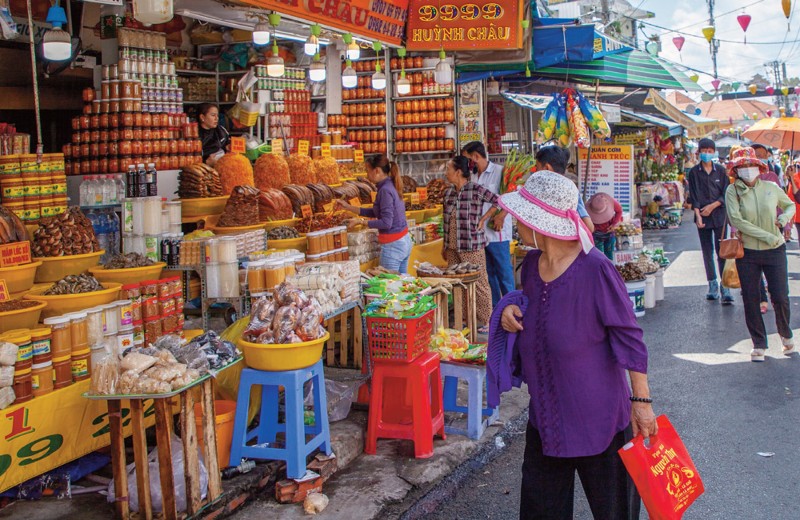
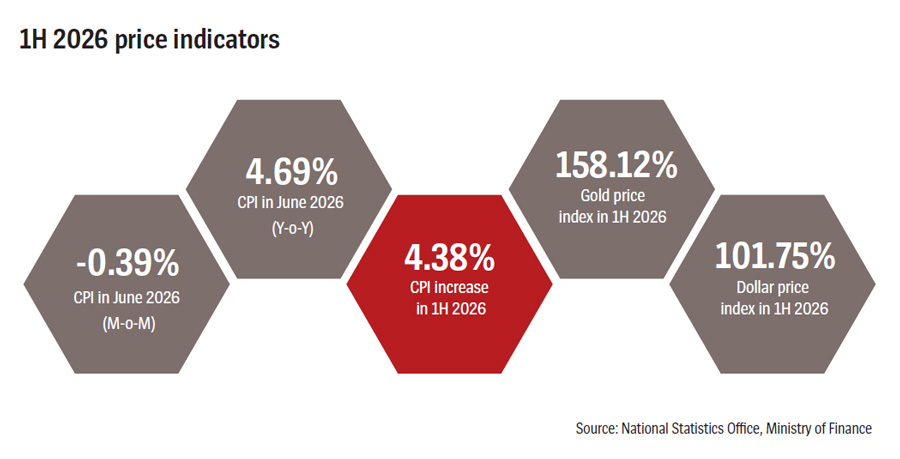
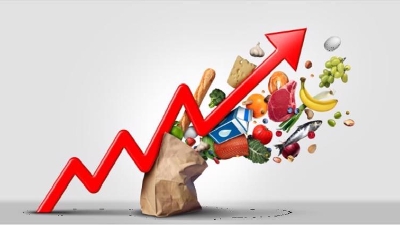
Despite ongoing global uncertainty, Vietnam successfully exerted control over domestic prices in the first half of 2026, with consumer inflation rising 4.38 per cent year-on-year. However, with inflation now approaching the government’s ceiling, policymakers face mounting challenges in managing prices during the second half of the year while safeguarding macro-economic stability.
According to the National Statistics Office (NSO) at the Ministry of Finance (MoF), the CPI fell 0.39 per cent in June compared to May, largely reflecting a sharp decline in domestic fuel prices following the global downturn in oil markets. Compared with December 2025, however, the June CPI was up 3.21 per cent, while annual inflation stood at 4.69 per cent.
Inflation under control
The CPI increased 5.25 per cent in the second quarter compared with the same period last year. For the first half, inflation stood at 4.38 per cent year-on-year; the highest first-half reading in five years, according to the NSO. The figure leaves little room to move under the National Assembly’s full-year inflation target of 4.5 per cent.
June’s price movements were mixed, with prices falling in four commodity and service groups while rising in seven others.
Transportation recorded the sharpest decline, down 4.85 per cent, shaving 0.48 percentage points off headline inflation. Clothing and footwear prices fell 0.09 per cent amid ample supply and promotional campaigns, while food and catering services edged down 0.07 per cent and other goods and services declined 0.06 per cent.
Conversely, culture, entertainment, and tourism prices rose 0.66 per cent; housing, utilities, and construction materials 0.46 per cent; household equipment and appliances 0.17 per cent; and beverages and tobacco 0.13 per cent. Communications, healthcare, and education posted modest increases, of less than 0.05 per cent each.
Core inflation rose 0.14 per cent in June against May and 4.5 per cent year-on-year. In the first half, core inflation stood at 4.12 per cent; below the headline inflation of 4.38 per cent and suggesting that recent price pressures were driven primarily by rising energy and food prices.
Multiple forces shaping price trends
According to Notice No. 345/TB-VPCP, summarizing the conclusions of Deputy Prime Minister Nguyen Van Thang, who is Head of the Price Management Steering Committee, domestic supply and demand remained broadly balanced throughout the first half of the year. Nevertheless, inflationary pressures continued to build amid a combination of domestic and external factors.
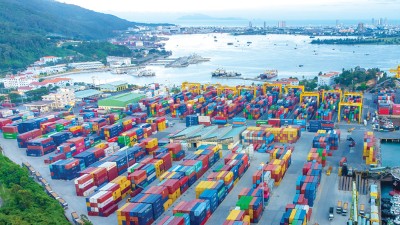
Internationally, elevated energy prices, transport costs, and logistics expenses persisted, while crude oil, natural gas, and gold prices as well as shipping rates remained highly volatile due to geopolitical tensions. These developments pushed up the cost of imported raw materials, increasing imported inflation.
Domestically, exchange rate pressures, together with a strong recovery in consumer demand and investment flows, also contributed to rising prices. The CPI rose by between 0.84 and 1.23 per cent from February through April, driven by Lunar New Year (Tet) seasonal demand and higher global prices for fuel, gas, and construction materials. Inflationary momentum eased only toward the end of the second quarter as domestic food supplies remained abundant.
Against this backdrop, both domestic authorities and international organizations have adopted cautious inflation forecasts. The MoF has updated three inflation scenarios for 2026, projecting rates of approximately 4.5 per cent, 5 per cent, and 5.5 per cent. Meanwhile, the State Bank of Vietnam (SBV) expects average inflation to range between 4.8 and 5.5 per cent, while international organizations forecast inflation between 3.8 and 5.2 per cent.
Four major challenges
The NSO identified four key challenges that could complicate inflation control over the remainder of the year.
The first is uncertainty in global energy markets. Oil and gas prices remain vulnerable to geopolitical developments. Though fuel accounts for only around 4.5 per cent of the CPI basket, its influence extends well beyond direct consumption, affecting transportation, logistics, and production costs across the economy.
Second, production input costs remain elevated. Producer prices and input material prices have continued rising year-on-year, and sustained cost pressures are expected to feed through to consumer prices over time.
Third, demand-driven inflation risks are likely to intensify during the year-end peak season. Consumer spending, investment, and tourism typically accelerate in the final months of the year and around the Tet holiday. While stronger demand supports economic growth, it can also fuel price increases if supplies are not adequately prepared.
Fourth, the planned adjustment of State-managed service prices poses an additional challenge. Any increases in healthcare, education, and other essential public service fees will need to be carefully timed and calibrated to balance market-oriented pricing reforms with overall inflation control.
Despite these risks, Vietnam retains several important advantages, including stable domestic agricultural production, resilient distribution networks, and increasingly proactive and flexible government price management.
Policy priorities
To achieve the dual objective of maintaining strong economic growth while keeping inflation within the target, the government has instructed ministries, agencies, and local authorities to focus on several key priorities.
Foremost among them is strengthening macro-economic forecasting and policy coordination. Authorities are expected to enhance early warning systems for inflationary risks, closely monitor global economic developments and major central bank policies, and prepare timely policy responses. Monetary policy will continue to be managed proactively and flexibly, with careful control exerted over credit growth and exchange rates to contain imported inflation while maintaining close coordination with fiscal policy.
The government has also called for prudent management of State-administered prices. Any adjustments to electricity tariffs, healthcare charges, or education fees should be thoroughly reviewed and implemented at appropriate times to avoid destabilizing inflation while preserving broader economic balances.
Specific responsibilities have been assigned across key ministries.
The MoF will closely monitor CPI developments, regularly update inflation scenarios, and provide policy recommendations to the Price Management Steering Committee. It will also continue implementing tax and fee reductions, exemptions, and extensions, to ease cost pressures on businesses. The SBV is to flexibly manage money supply, interest rates, and exchange rates to maintain financial and monetary stability, anchor inflation expectations, and mitigate external shocks.
The Ministry of Industry and Trade will closely monitor global energy markets and coordinate with the MoF to align domestic fuel prices with market developments while making flexible use of stabilization tools to support production and ensure uninterrupted supply. The Ministry has also been instructed to ensure adequate fuel supplies for production, business activities, and consumption, preventing shortages, hoarding, or speculative price increases. In parallel, it will oversee the nationwide balancing of supply and demand for essential goods to ensure sufficient availability of strategic commodities under all market conditions.
The Ministry of Agriculture and Environment will closely monitor production and supply-demand conditions for key food products, including rice, pork, seafood, and vegetables, while preparing contingency plans to prevent localized shortages and abnormal price spikes.
Meanwhile, provincial and municipal authorities have been directed to implement market stabilization programs tailored to local conditions, closely monitor prices and supplies of essential goods, and respond promptly to unusual price movements.
Local governments are also required to strengthen inspections and enforcement of pricing regulations, taking strict action against hoarding, speculation, price manipulation, and profiteering arising from natural disasters, disease outbreaks, or market disruptions.




 Google translate