


Vietnam is accelerating its ambition to develop an International Financial Center (IFC). From the World Alliance of International Financial Centers (WAIFC)’s perspective, what key strengths could help Vietnam establish itself as a competitive financial hub in the region?
Vietnam brings several strengths that few emerging markets can match. First, its people. It has a young, well-educated, entrepreneurial population that is digitally native and eager to embrace new financial solutions. This is the breeding ground for a thriving financial center.
Second, its position. Vietnam has positioned itself with remarkable skill in today’s complex geopolitical landscape, maintaining strong relationships with all major powers, and it sits at the heart of the rapidly-integrating ASEAN economies. That makes it a natural node for channeling investment into ASEAN and facilitating trade finance across the region.
Third, its economic engine. Unlike some financial centers that are detached from physical production, Vietnam is a global manufacturing powerhouse, providing a solid foundation for world-class supply chain and trade finance.
Based on the WAIFC’s global experience, what strategic positioning should Vietnam prioritize to differentiate itself from other financial centers in Asia?
The most successful new centers do not replicate others; they leapfrog them. For a new financial center, it is very difficult to compete head-on with London or New York in investment banking, capital markets, or reinsurance. It is much easier, and much smarter, to excel in the new frontiers: digital finance, digital assets, sustainable finance, and AI in finance. This is where the game is now being played, and where Vietnam can make its own distinct mark.
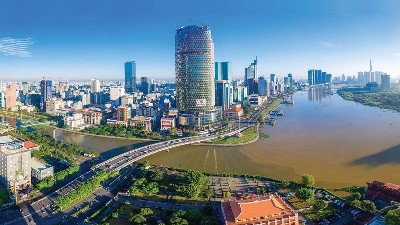
My recommendation for Vietnam has been to build a “21st-century-native” financial center - one founded on digital and green finance rather than traditional finance. Vietnam’s two-city model supports this well. Ho Chi Minh City should become the full-service international financial center, offering banking, capital markets, and connectivity to global capital to fuel national growth. Da Nang, meanwhile, should emerge as a fintech and innovation hub, leveraging its strengths in semiconductors, AI, and digital technology while supplying Ho Chi Minh City with cutting-edge solutions and skilled professionals.
If we look at mainland China, we can compare Ho Chi Minh City to Shanghai and Da Nang to Shenzhen. Without Shenzhen, China would have missed a large part of its financial development over the past 20 years. Vietnam has that same opportunity.
Beyond infrastructure and regulatory reforms, what are the most critical factors in building investor confidence and attracting high-quality international financial institutions to a new financial center like Vietnam?
Infrastructure and regulation are necessary, but they are not sufficient. From our work with financial centers globally, we see four factors that build lasting confidence.
First, it is necessary to focus on the domestic financial industry. By building an attractive and dynamic domestic ecosystem, global investors will come naturally because there is money to be made and value to be created. Attracting institutions with tax incentives or a light-touch regulatory regime alone is not a sustainable approach. If the domestic environment is not truly vibrant, they will pack their bags and move to the next hub that offers a better deal.
Second is talent. Both cities need young professionals who are fluent in English and have a deep knowledge of modern finance and technology. Developing and, crucially, retaining that talent is decisive. Vietnam needs not only bankers but also international accountants and fintech entrepreneurs.

My recommendation for Vietnam has been to build a “21st-century-native” financial center - one founded on digital and green finance rather than traditional finance.
Third is trust and the rule of law. International institutions need legal certainty and credible, efficient dispute resolution. Vietnam’s decision to make English the working language of its IFC, establish a specialized court and arbitration center, and allow the choice of foreign law in cross-border transactions sends exactly the right signal. On the trust side, investors will demand the free flow of capital into and out of the country for their investments, which remains a challenge that needs to be overcome.
Finally, this is a marathon, not a sprint. Confidence is earned through consistency and unwavering commitment over a decade or more, through the good times and the bad. Vietnam’s commitment so far has been more than outstanding.
As financial services are rapidly evolving with digitalization, fintech, sustainable finance, and AI, how can Vietnam integrate these emerging trends into the development of its IFC to remain competitive in the long term?
These trends are not add-ons; they should be the very foundation of Vietnam’s IFC. There are several practical considerations.
On fintech, a healthy ecosystem rests on several interdependent pillars, including talent, capital, real demand, enabling infrastructure such as digital identity and instant payments, and, crucially, proportionate regulation. Regulation is the real differentiator. My advice is to avoid the trap of overregulation: do not simply copy the most complex rulebooks from established centers, because frameworks that work well in mature markets are often too onerous for a dynamic, emerging market. A controlled regulatory sandbox that allows young companies to experiment while protecting investors strikes the right balance.
On sustainable finance, Vietnam can mobilize green bonds and climate capital to finance its transition toward Net Zero and position the center as a regional hub for green and environmental, social, and governance (ESG) products. This is a genuine growth market, not a compliance exercise.
On AI and digital assets, the enablers matter. Startups and established institutions alike need modern data centers, known as AI factories, to train their models efficiently, along with a talent pipeline skilled in AI, blockchain, and cybersecurity. If I was to picture Vietnam ten years from now, lending would be AI-driven and available in real time, payments would be seamless and free for consumers, and financial services would be embedded invisibly into everyday platforms. Vietnam’s digitally-native population makes this future not only possible but likely.
How will the WAIFC support Vietnam’s journey toward becoming an internationally-connected financial center, and what opportunities for collaboration would you recommend between Vietnam and the global financial center community?
I have been supporting the IFC in Ho Chi Minh City and Da Nang through their Advisory Councils, because I strongly believe in their mission. When the time is right, we expect the IFC to apply for membership of our Association and become part of our family of IFCs. Membership is subject to a due diligence process and a confirmatory vote by our General Meeting. Our members support one another in their international outreach, share best practices, and connect their communities.
For Vietnam’s IFC, membership would demonstrate to international investors and partners that it is fit and proper and adheres to the highest standards. I am convinced that the IFC will not only become a valued and respected member of our Association but also rank among the world’s leading centers in innovation and investment.



 Google translate