


Minister of Agriculture and Environment Tran Duc Thang has signed and issued the Action Program to implement Government Resolutions No. 01/NQ-CP and 02/NQ-CP on key tasks and solutions for carrying out the 2026 socio-economic development plan, the state budget estimates, and improving the business environment and national competitiveness.
The Action Program sets out the overall goal of developing agriculture rapidly, sustainably, effectively, and responsibly under the orientation of “ecological agriculture, modern countryside, civilized farmers.”
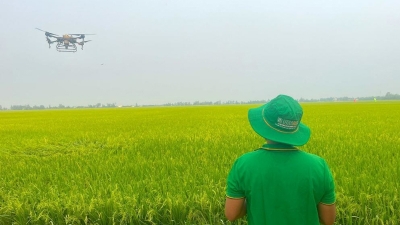
The agricultural sector will continue to shift strongly from a production mindset to an agricultural economy mindset, developing agricultural, forestry, and fishery production with integrated multi-value commodities, based on the advantages of each region and locality, applying science and technology to improve productivity, quality, and competitiveness.
One major focus is to firmly ensure national food security and nutrition security, while improving farmers’ income, quality of life, role, and position. The sector will promote non-agricultural job creation, diversify livelihoods, and contribute to sustainable poverty reduction in rural areas, especially among ethnic minority communities.
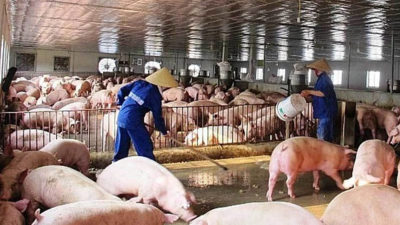
Agricultural development will be closely linked with building modern, green, and sustainable new rural areas. Cooperative economies and value chain linkages will continue to be strengthened; new-style agricultural cooperatives and production–processing–consumption linkages will be expanded, creating a foundation for large-scale commodity production with traceable origins, meeting the increasingly high demands of domestic and international markets.
The Action Program sets out specific targets for 2026. Among them, the agricultural sector’s GDP growth rate is expected to reach 3.7%; export turnover of agricultural, forestry, and fishery products is projected at USD 73–74 billion. The multidimensional poverty rate is expected to decrease by 1–1.5%; among ethnic minorities, the reduction is about 3%.
Institutional reform, improved business environment
A key highlight of the Action Program is institutional reform and improvement of the investment and business environment. The Ministry aims in 2026 to cut and simplify 100% of unnecessary, conflicting, overlapping, or unclear business investment conditions; abolish all business investment conditions for industries and sectors not on the conditional list under the Investment Law.
The sector also sets targets to improve international rankings, including raising the Property Rights Index (IPRI) by at least 3 places; achieving an average Public Administration Reform Index (PAR Index) of 84.7%; and reaching 86% in the Satisfaction Index of Public Administration Services (SIPAS).
The Action Program emphasizes the pivotal role of digital transformation. The sector will focus on building digital infrastructure, digital platforms, and centralized, unified, and secure data systems; connecting and sharing data with the National Data Center, turning data into a resource for management and development.
Several major databases will be completed, such as the national land database, agricultural market data, waste source data, water resources, and biodiversity. Disaster prevention management, reservoir operations, and support for local governments at two levels will increasingly rely on digital data and modern technology.
Alongside economic development, the sector identifies environmental protection and proactive climate change adaptation as consistent requirements. Solutions will be implemented vigorously, including reducing greenhouse gas emissions, piloting the carbon market, tackling air pollution in Hanoi and Ho Chi Minh City, addressing river pollution, conserving wetlands, and biodiversity. Disaster prevention and response—especially for flash floods, landslides, and extreme weather—will continue to be enhanced in forecasting and preparedness capacity.







 Google translate