


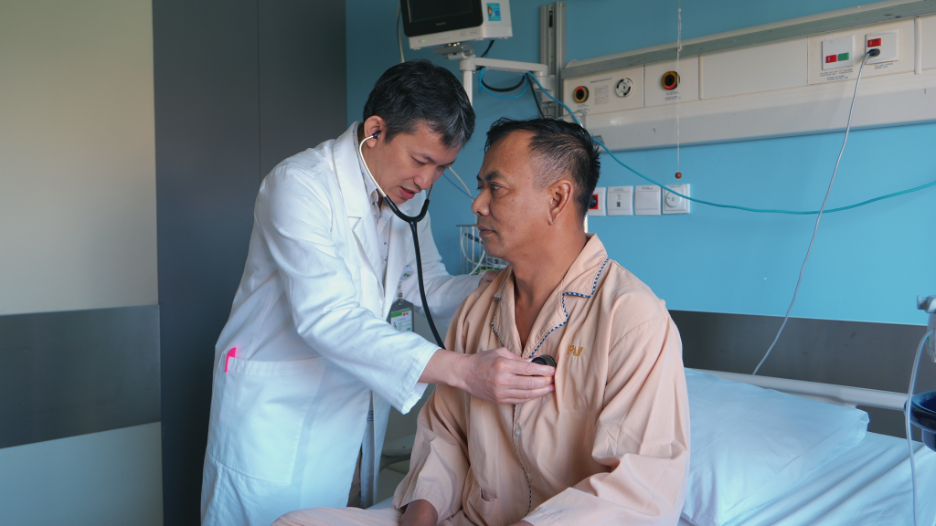
A 48-year-old Malaysian man was rushed to FV Hospital after experiencing repeated episodes of transient dizziness over two consecutive days. Initially attributing the symptoms to fatigue from working on an offshore oil rig, he was later diagnosed with 95 per cent carotid artery stenosis, a life-threatening condition that placed him at imminent risk of stroke.
Transient dizziness reveals severe carotid artery disease
While working on an offshore oil rig off the coast of Ba Ria-Vung Tau, Mr. Rentap Ngunbong suddenly experienced dizziness followed by a brief blackout. Each episode lasted one to two minutes before resolving spontaneously, but recurred several times a day.
After monitoring his condition for two days, the physician on the oil rig recognized the symptoms could indicate a serious cardiovascular or neurological condition and advised him to seek immediate evaluation at FV Hospital.
During the examination, Dr. Ho Minh Tuan, PhD, Head of Cardiology and Interventional Cardiology at FV Hospital, detected abnormalities involving the patient's carotid artery. A carotid ultrasound followed by CT angiography confirmed more than 95 per cent narrowing of the artery, which was nearly occluded by atherosclerotic plaque.
According to Dr. Tuan, the condition posed an immediate risk because severely restricted blood flow to the brain can trigger transient ischemic attacks (TIAs), causing symptoms such as dizziness, blurred vision, or near-fainting. Without prompt treatment, the artery could become completely blocked or plaque fragments could break away and travel to the brain, resulting in an ischemic stroke.
"According to international clinical guidelines, symptomatic carotid artery stenosis should be treated within one week of diagnosis to minimize the risk of stroke," Dr. Tuan said.
Because Mr. Rentap is a Malaysian national, his family initially wanted to transfer him home for treatment. However, the FV medical team advised that delaying intervention could significantly increase the risk of stroke, particularly during travel.
After receiving a detailed explanation of his condition and treatment options, Mr. Rentap agreed to undergo emergency intervention at FV Hospital.
Restoring blood flow in 30 minutes
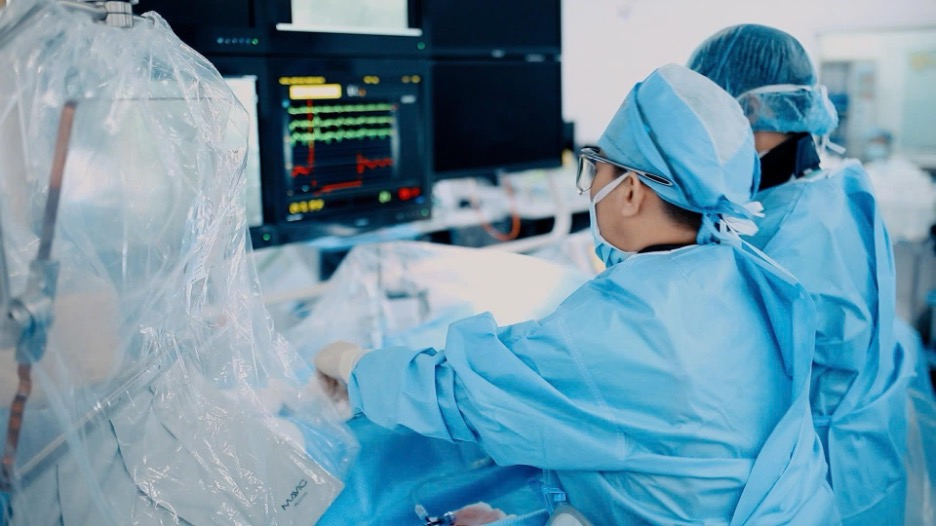
For patients with carotid artery stenosis of less than 90 per cent, physicians typically insert a distal embolic protection device beyond the narrowed segment before deploying a carotid stent to restore blood flow while minimizing the risk of plaque fragments traveling to the brain.
Because Mr. Rentap's artery was more than 95 per cent narrowed, the interventional team first performed balloon angioplasty to create enough space for the protection device before successfully placing the carotid stent. The entire procedure took about 30 minutes.
Immediately afterward, Mr. Rentap's symptoms resolved completely. His blood pressure stabilized, and he recovered quickly, returning to normal daily activities within two days.
"I am extremely satisfied with the care I received at FV Hospital. Everything was excellent. The quality of care here is comparable to that of leading hospitals in Malaysia. I will certainly recommend FV Hospital to my friends," Mr. Rentap said before being discharged.
Recurrent dizziness should not be ignored
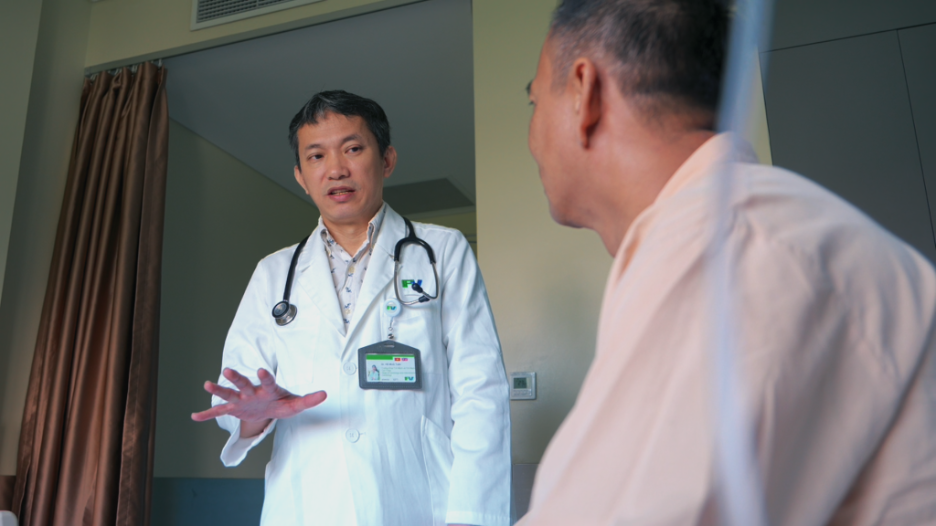
According to Dr. Tuan, carotid artery stenosis is one of the leading causes of ischemic stroke. The disease often progresses silently over many years as atherosclerotic plaque gradually accumulates inside the artery without causing noticeable symptoms.
Smoking remains the leading risk factor for carotid artery stenosis. People with hypertension, diabetes, dyslipidemia, obesity, or a history of cardiovascular disease are also at increased risk and should undergo regular cardiovascular screening because the condition can remain asymptomatic for years.
Anyone experiencing recurrent dizziness, near-fainting, transient vision loss, difficulty speaking, or sudden numbness or weakness on one side of the body should seek prompt medical evaluation at a healthcare facility with expertise in cardiology or neurology.
FV Hospital, one of southern Vietnam's specialized cardiovascular centers, regularly treats complex cardiovascular conditions in both Vietnamese and international patients. Equipped with a state-of-the-art catheterization laboratory and an experienced team of interventional cardiologists, the hospital performs advanced procedures involving the coronary, carotid, and peripheral arteries, as well as other complex vascular interventions.
The hospital has also developed an optimized cardiovascular emergency pathway that reduces emergency treatment time to about 70 minutes, helping maximize the "golden hour" for emergency care. According to the hospital, the streamlined process has improved survival rates while reducing long-term neurological complications for many patients.
For more information about FV Hospital's cardiovascular services, visit 06 Nguyen Luong Bang Street, Tan My Ward (formerly District 7), Ho Chi Minh City, or call (028) 3511 3333.



 Google translate