


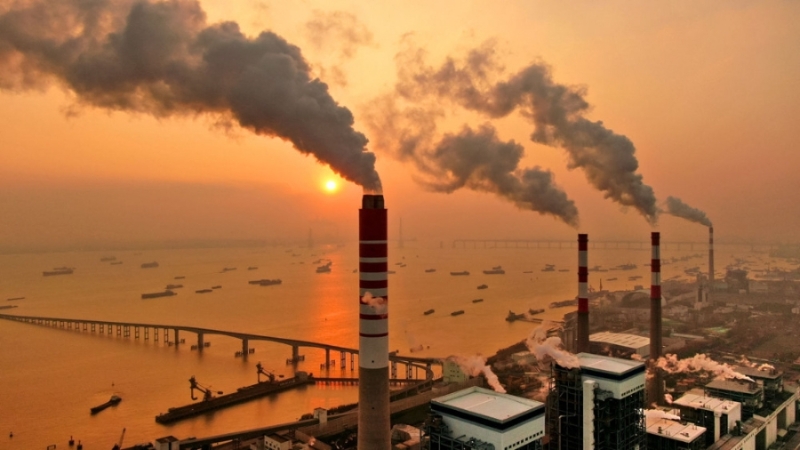
Deputy Prime Minister Tran Hong Ha chaired a meeting on December 24 to review the approval of total greenhouse gas (GHG) emission quotas for the 2025-2026 period. This marks the first time Vietnam will implement a formal allocation of emission quotas.
The Ministry of Agriculture and Environment has utilized operational data from 2022 and 2023 provided by enterprises, along with 2024 GHG inventory data—which has been appraised by provincial People’s Committees—to develop the proposed pilot quotas.
The ministry has collaborated with various associations, corporations, and relevant government agencies to establish "quota adjustment factors," which are calculated on the basis of three key pillars: national growth targets, emission reduction objectives, and the specific technological capacity of each facility.
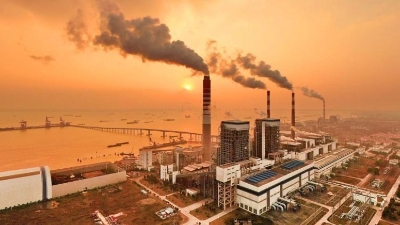
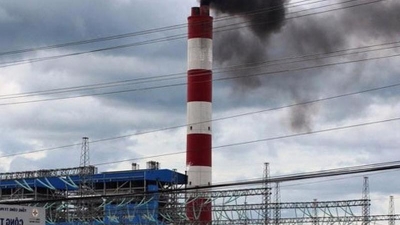
According to the list of GHG-emitting entities required to conduct inventories under Decision No. 13/2024/QD-TTg (issued on August 13, 2024), 110 industrial facilities have been identified as eligible for the pilot allocation. These include 34 thermal power plants, 25 steel production facilities, and 51 cement plants. These facilities will be reported to the Prime Minister for final consideration and approval to begin the pilot program.
Deputy PM Ha stated that the allocation of quotas and their practical implementation will create the necessary pressure for businesses to transform. This initiative aims not only to reduce pollution and greenhouse gas emissions but also to drive enterprises to invest in advanced technologies, refine management practices, enhance production capacity, and improve environmental protection.
Furthermore, the Deputy PM emphasized that policies must be comprehensive, allowing entities that successfully reduce emissions to sell, commercialize, or exchange their surplus quotas with others. This aims to build a market-based mechanism that transforms emission reduction into a valuable resource.
As this is the first time Vietnam has implemented emission quota allocation, the Deputy PM noted that while the program is a pilot intended to help stakeholders familiarize themselves with emission controls, it must be executed seriously with clear legal regulations to avoid becoming a mere formality.
Highlighting the importance of this pilot program as a crucial stepping stone to perfecting management mechanisms before nationwide mandatory application, he requested that the pilot process includes specific quota calculations for each sector (such as cement, steel, and power). He also called for a clear determination of the scale of participating enterprises to draw lessons and prepare for full-scale implementation across all emitting entities in the future.
The pilot program extends beyond mere quota figures; it is a process of synchronizing measurement, statistics, reporting, and appraisal methods, alongside legal and technical frameworks. These methods must be based on a solid scientific foundation and aligned with international standards (such as the United Nations Framework Convention on Climate Change - UNFCCC) to ensure international recognition of the data. This effort is closely linked to Vietnam's responsibilities and commitments under the Nationally Determined Contributions (NDC).
Regarding the roadmap, the Deputy PM directed that the period from now until 2027 will focus on the pilot phase to complete the synchronized mechanisms and policies. Starting from 2028, emission quota management will be officially and mandatorily implemented nationwide across all sectors and enterprises.


 Google translate