



Although the FDI sector is consistently regarded as a vital engine for Vietnam's economic growth and exports, its presence on the stock market remains inversely proportional to its actual scale.
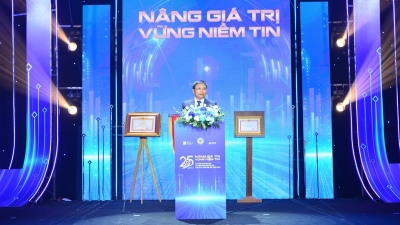
Citing data at a conference held on December 9 to disseminate regulations on public company registration, listing, and trading for foreign-invested economic organizations, Ms. Vu Thi Chan Phuong, Chairwoman of the State Securities Commission (SSC), noted that the market welcomed several FDI listings between 2003 and 2017. However, as of now, only 10 FDI enterprises maintain their listing and trading registration on both stock exchanges.
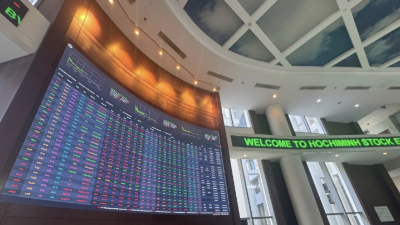
When compared to the nearly 1,600 companies currently listed and registered for trading across the entire market, this figure of 10 enterprises is extremely modest. According to data from the Public Company Supervision Department, the total share volume of this group stands at only about 1.2 billion units, equivalent to a mere 0.17% of the total market.
"This scale does not accurately reflect the potential of these enterprises. I am aware of many FDI companies that have been present and operating factories in Vietnam for many years, boasting excellent revenue and profits, while also harboring a strong desire to list on the Vietnamese stock market," Ms. Phuong said.
One of the strategic objectives of "opening the door" for FDI enterprises to list is to restructure sectoral weightings. Currently, Vietnam's stock market structure is heavily skewed toward the finance, banking, and real estate sectors. The scarcity of large-scale manufacturing enterprises is a weakness that needs to be addressed.
"I have high hopes that a 'fresh breeze' from large-scale, efficiently operating FDI enterprises will increase the supply of quality investment products for investors. Consequently, the proportion of listed companies in the manufacturing and business sectors will rise, creating a more balanced and sustainable market structure," said the SSC leader.
Facilitating conditions for listed enterprises
To realize this vision, the SSC has proactively coordinated with ministries and sectors to remove regulatory bottlenecks. To date, with approval from the Government and the Ministry of Finance, the legal corridor is gradually being cleared to continue considering FDI enterprises for listing.
The most significant highlight of this institutional reform is the introduction of new regulations, such as the Decree amending Decree 155, which details the implementation of several articles of the Law on Securities. This represents a breakthrough in administrative procedures.
Previously, the "listing" process for enterprises often faced a "bottleneck" between two stages: the Initial Public Offering (IPO) and the Listing. After receiving IPO approval from the SSC, enterprises often had to wait a long time for listing approval from the Stock Exchanges. This delay led to two negative consequences: enterprises lost business opportunities, and investor excitement and the appeal of the issuance were diminished.
To address this issue, new regulations have shortened the coordination process between the SSC and the Stock Exchanges to within just 30 days, requiring enterprises to provide explanations only once.
The effectiveness of this reform is evident: recently, 4-5 enterprises have completed their IPOs, and it is expected that about 3 enterprises will list on HoSE this December. Notably, some enterprises completed the process in less than 30 days. Shortening the document preparation time and ensuring seamlessness and synchronization not only improves capital mobilization efficiency but also maximizes convenience for investors accessing opportunities.
The consistent stance on equal treatment between domestic and FDI enterprises was also affirmed by Vice Chairman of the SSC, Hoang Van Thu. He stated that, in the spirit of Politburo Resolution 50-NQ/TW, FDI enterprises are an integral component of the economy.
Therefore, once restrictive regulations in investment certificates are removed, FDI enterprises can fully participate in the stock market if they meet the conditions under the Law on Securities, just like Vietnamese enterprises, said Mr. Thu.






 Google translate