


The European Union (EU) has recently implemented three stringent regulations affecting imports into its market, aiming to tighten environmental standards and promote sustainable development.
These regulations include the EU Deforestation Regulation (EUDR), the Illegal, Unreported, and Unregulated (IUU) Fishing Yellow Card, and the Carbon Border Adjustment Mechanism (CBAM).
KBSV Securities has analyzed specific cases and impacts of these regulations on exports from Vietnam.
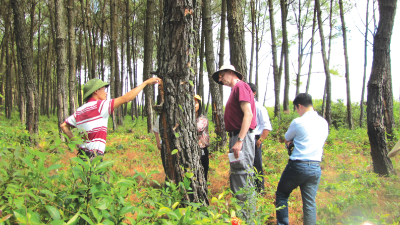
Regarding the EUDR, most Vietnamese wood and rubber processing and exporting companies will face negative impacts due to the complex requirements of proving the non-deforestation origin of materials post-2020-2021. This is particularly challenging given Vietnam's wood supply chain's reliance on dispersed sourcing from smallholder forest growers. However, the export share of these products to the EU is not significant, allowing businesses time to adjust their supply chains or shift to alternative markets to compensate for EU demand when the EUDR is officially enforced. Listed wood companies such as SAV, PTB, GTA, and TTF have an estimated EU market revenue share of about 10-15%. Natural rubber companies like GVR and PHR will experience relatively minor impacts as they primarily export to China and serve the domestic market. In contrast, processed rubber companies like CSM, SRC, and DRC will face greater challenges, with EU market revenue accounting for about 5-10% of their total revenue.
Concerning the IUU Fishing Yellow Card, the European Commission issued this warning in October 2017, due to numerous Vietnamese offshore fishing vessels operating without national flags and violating foreign fishing rights. Over the years, in efforts to have the "yellow card" removed, domestic authorities have enacted significant regulations requiring all fishing vessels to fly the Vietnamese flag and connect offshore data for strict monitoring. Additionally, the Prime Minister has mandated the resolution of 100% of outstanding IUU violations and issued a stern warning that ministers, sector leaders, and coastal province officials will be held directly accountable and face disciplinary action if they falsify data, report inaccuracies about IUU fishing, or allow managed fishing vessels to continue violating foreign waters. Anti-IUU fishing efforts have been supported by the national fisheries database (VNFishbase). The registration and data update rate has reached an absolute 100%, covering all 79,360 fishing vessels nationwide. In key areas like Quang Ngai province, reports indicate that the locality has completed all 19 assigned tasks, and 100% of active fishing vessels have been issued valid fishing licenses. Most businesses focus on the "Aquaculture" model rather than "Wild Capture Fisheries," so the direct negative impact (even in the worst-case scenario) from the IUU regulation is quite limited.
Finally, regarding the CBAM, this mechanism will be officially applied to imported steel, cement, and fertilizer products into the EU market from January 1, 2026, to mitigate the impact of production activities and carbon leakage.
Accordingly, importers are required to purchase CBAM certificates after the transition period from 2023 to 2025. For the steel industry, the application of CBAM is estimated to increase import costs by 15-25% (depending on EAF/BF furnace technology), making steel imports from Vietnamese manufacturers less competitive. Opportunities will arise for producers who can quickly adapt and transition to green practices in the long term. During the 2026-2027 period, the impact of CBAM is relatively limited for Vietnamese steel manufacturers as domestic companies are shifting towards the domestic market due to increased demand driven by the growing construction activities in the Residential Real Estate and Public Investment sectors. Similarly, for the cement and fertilizer industries, consumption is primarily concentrated in the domestic market, so the risk of negative impact from CBAM is very low, according to KBSV Securities.





 Google translate