


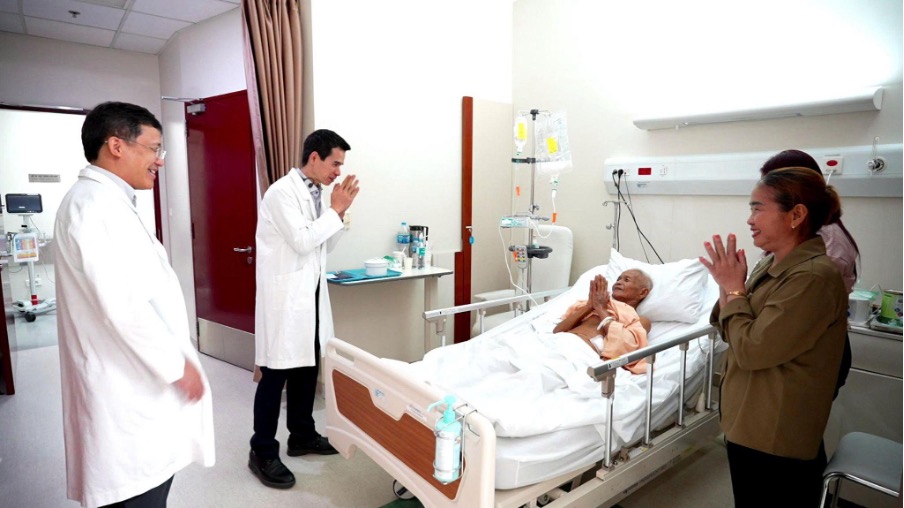
A Cambodian patient with esophageal cancer has successfully undergone robotic surgery using the da Vinci Xi system at FV Hospital. After waking up from the six-hour procedure, he was surprised to feel almost no pain and even struggled to locate the surgical incisions.
A large esophageal tumor caused severe difficulty swallowing
Mr. Oung Voeun (born in 1953, Cambodian) sought treatment at FV Hospital after experiencing persistent difficulty swallowing, which gradually affected his ability to eat and led to a decline in his overall health.
“Even eating porridge or drinking water made me choke. My voice also became hoarse, and I could no longer speak as clearly as before,” Mr. Voeun recalled.
Following an endoscopy and a series of diagnostic tests, Dr. Doan Ngoc Giao, gastrointestinal surgeon at the FV da Vinci Robotic Surgery Centre, determined that the patient had a large tumor in the middle third of the esophagus, accompanied by enlarged lymph nodes surrounding the lesion.
After multidisciplinary consultations, particularly with oncology specialists, the patient underwent concurrent chemoradiotherapy before surgery. Following three cycles of treatment and more than three months of follow-up, reassessment showed the tumor had shrunk significantly and the previously detected lymph nodes had become almost undetectable on imaging, making it the optimal time for curative surgery.
According to Dr. Doan Ngoc Giao, PhD, the complexity of the case stemmed not only from the esophageal tumor itself but also from the patient’s history of severe chest trauma many years earlier. He had suffered multiple rib fractures, pulmonary contusions, and pleural bleeding, leaving extensive scar tissue and adhesions within the chest cavity that significantly altered the normal anatomy.
“The patient no longer had a natural pleural cavity. The entire right pleura had become fibrotic and adherent because of the old trauma. Instead of the anatomical landmarks we normally rely on, we had to carefully separate all the adhesions, dissect the pleura, and manage multiple anatomical changes caused by the previous injury,” Dr. Giao explained.
As a result, the surgical team had to operate in an extremely challenging environment. The usual anatomical landmarks had almost disappeared, while diffuse bleeding from the dissection surfaces further complicated the procedure. Meanwhile, the esophagus lies in close proximity to many vital organs and structures within the chest.
In addition to completely removing the cancer, the surgeons also had to dissect the complex adhesions while ensuring maximum safety for surrounding organs.
The da Vinci robot demonstrates its advantages in a highly complex procedure
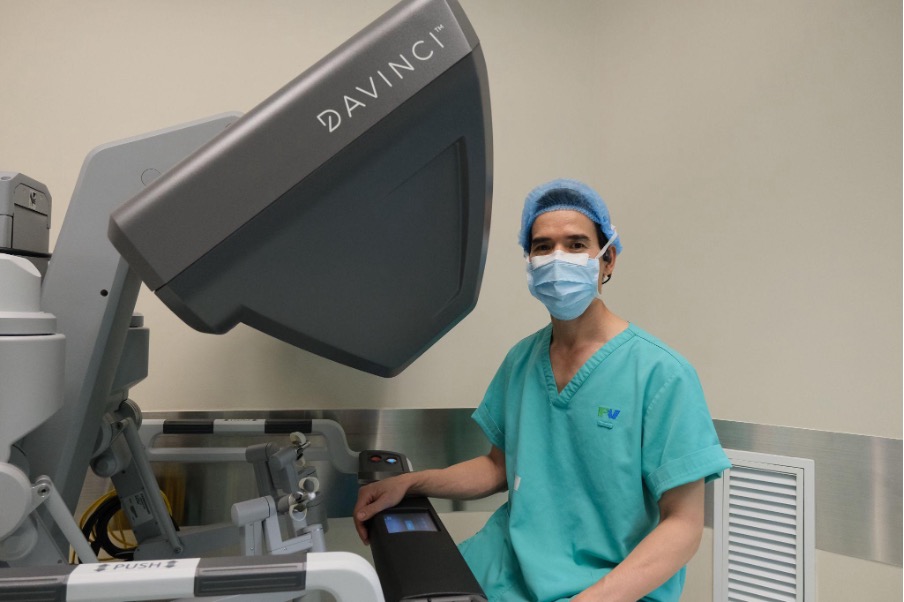
Given the challenges posed by the patient’s previous injuries, the medical team recommended robotic surgery using the da Vinci Xi system. According to Dr. Giao, the case clearly illustrates the advantages of robotic technology in gastrointestinal surgery.
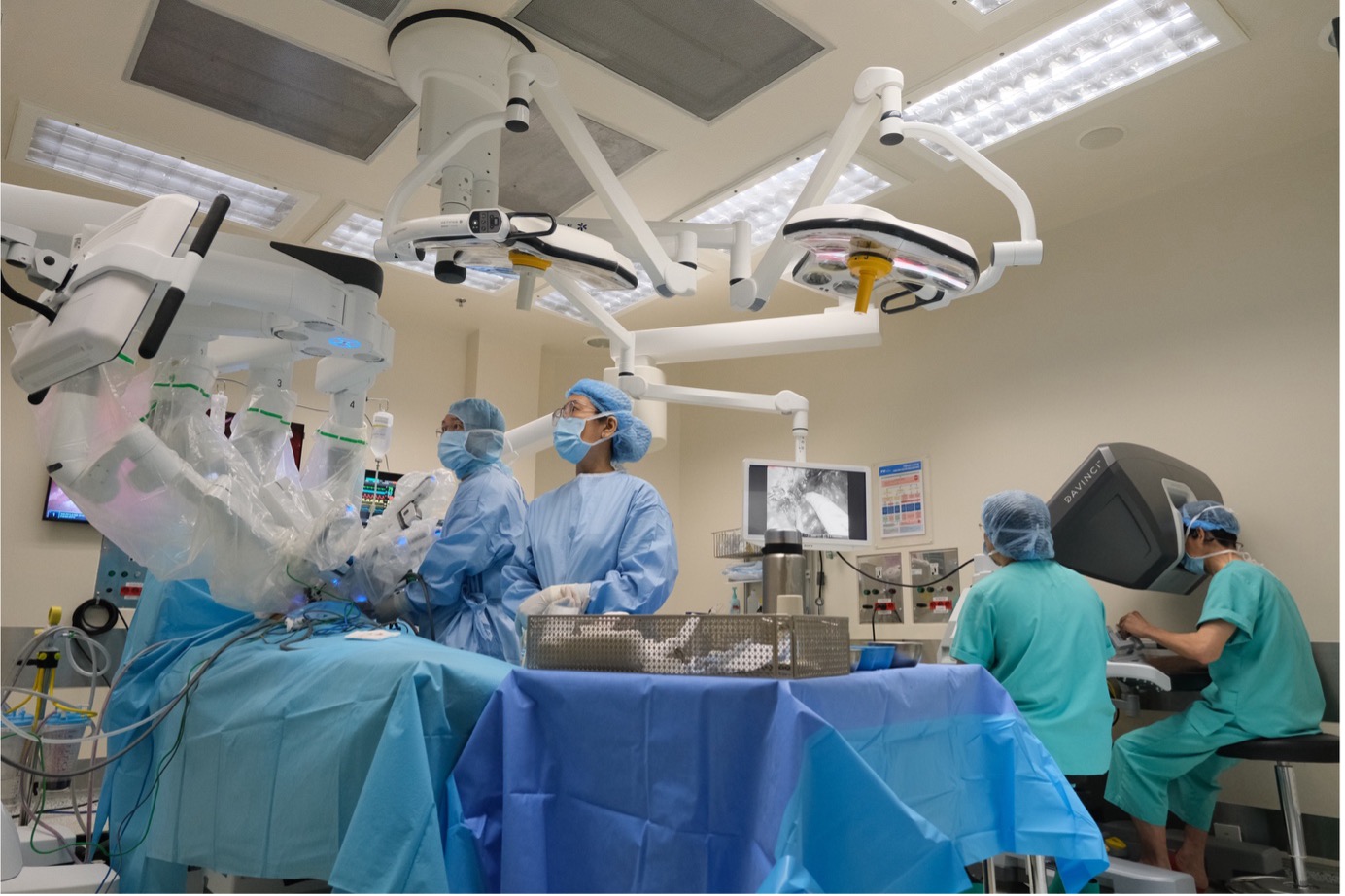
When internal structures have been altered by trauma, surgical dissection requires exceptional precision to minimize the risk of damaging critical organs. Equipped with a high-definition three-dimensional imaging system, the da Vinci Xi robot allows surgeons to visualize tissue planes more clearly, accurately identify complex adhesions within the chest cavity, and perform safer dissections.
Its robotic arms provide a greater range of motion, eliminate natural hand tremors, and enable highly precise movements in confined spaces, facilitating meticulous microsurgical techniques.
“For complex conditions such as esophageal cancer, especially technically demanding cases, robotic technology provides tremendous support to surgeons throughout the procedure,” Dr. Giao said.
After more than six hours of surgery, the team successfully removed the tumor, managed the extensive adhesions, and completed lymph node dissection according to the treatment plan.
Patient recovers after six days, surprised he couldn’t find the surgical scars
What surprised Mr. Voeun most after surgery was how much easier the recovery was than he had imagined. “When I woke up, I felt almost no pain. I couldn’t even tell where the surgery had been performed because I could barely see the incisions,” he said.
According to Dr. Doan Ngoc Giao, PhD, the patient’s recovery has been remarkably positive six days after surgery. “He is alert, in good condition, communicating normally, and has resumed eating and daily activities without difficulty,” the surgeon said.
Beyond the treatment outcome itself, Mr. Voeun was also highly impressed by the quality of care at FV Hospital. “The doctors, nurses, and hospital staff took excellent care of me. Whenever I needed help, I simply pressed the call button and someone came immediately,” he said.
According to specialists, advances in robotic surgery are creating new treatment opportunities for complex conditions that require highly sophisticated techniques. In addition to improving surgical precision, robotic technology also contributes to faster recovery, offering meaningful benefits for patients.
For more information about robotic surgery for esophageal cancer, contact FV Hospital at 6 Nguyen Luong Bang Street, Tan My Ward, Ho Chi Minh City, or call (028) 3511 3333.


 Google translate