



In 2026, the state budget allocated VND95 trillion ($3.7 billion) for science, technology, innovation, and digital transformation, yet disbursement reached only about 42.2% of the estimate by the end of October. With funding slated to rise to VND120 trillion ($4.68 billion) in 2027, authorities face mounting pressure to accelerate capital deployment.
Continuing the agenda of the National Assembly (NA)'s second session on November 12, lawmakers held a question-and-answer session focusing on the science and technology sector.
Responding to NA deputies, Minister of Science and Technology Vu Hai Quan explained the root causes behind the sluggish budget disbursement and outlined measures to clear bottlenecks in deploying public funds for science, technology, and innovation.
Why is disbursement slow?
NA Deputy Nguyen Huu Toan from Lai Chau Province noted that while Vietnam posted an impressive GDP growth rate of over 9% in the first nine months of the year, budget disbursement for science, technology, and innovation stood at roughly 42% of the annual estimate. He asked the Minister to clarify the correlation between the two figures, the sector's actual contribution to GDP growth, and when science, technology, and innovation will become the primary driver of economic expansion.
Minister Quan stated that the Ministry of Science and Technology (MST) is pursuing a dual-track strategy. The first track focuses on identifying sectors capable of delivering immediate growth impacts by integrating science, technology, innovation, and digital transformation into operations. The second targets long-term strategic sectors aimed at achieving technological self-reliance and resilience. Both tracks are being implemented in parallel.
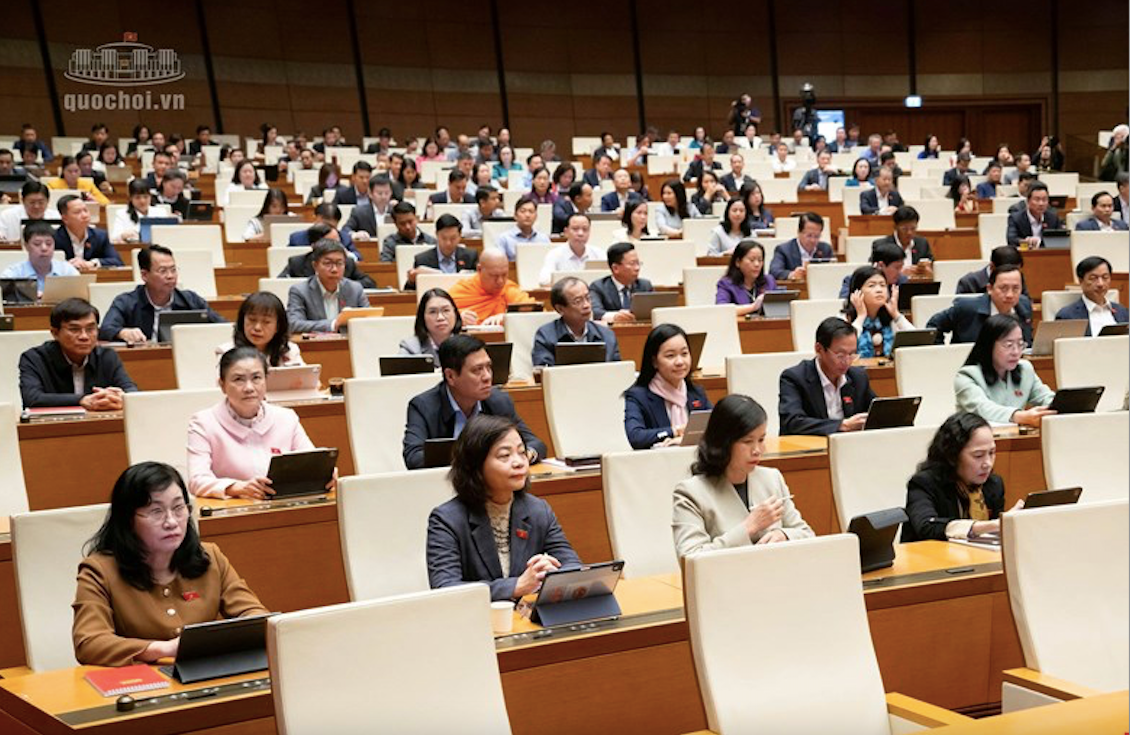
Meanwhile, NA Deputy Nguyen Thi Thu Dung from Hanoi asked the Minister to pinpoint the biggest bottlenecks slowing down fund utilization despite budget allocations already being in place.
Minister Quan identified four primary causes: a sudden surge in budget scale: Previously, recurrent expenditure for science and technology stood at roughly VND12 trillion (over $467 million), whereas total funding for science, technology, innovation, and digital transformation has now expanded sevenfold; policy and regulatory lags; fundamental shifts in task scoping; and limited execution capacity: organizational constraints at certain agencies and units, compounded by risk aversion when rolling out new initiatives, which hampers resource utilization.
Heavy disbursement pressure ahead
Questioning the efficiency of public investment in the sector, NA Deputy Hoang Minh Hieu from central Nghe An Province pointed out that out of the VND95 trillion budgeted for 2026, State Treasury statistics showed disbursement stood at just 42.2% through October. He urged the Minister to clarify accountability and the rationale for proposing a budget hike to VND120 trillion in 2027.
Minister Quan explained that budget allocation involves shared responsibility across three parties: ministries, sectors, and localities draft budget estimates and define project outputs; the Ministry of Science and Technology (MST) consolidates and appraises proposals; and the Ministry of Finance executes fund allocation. Delays can occur at multiple stages, including during the MST's consolidation process.
To address these shortcomings, Mr. Quan said his ministry will work directly with local authorities to improve budget estimation quality, while rolling out an online budgeting system and appraisal support tools to shorten allocation timelines.
"Disbursement pressure is immense as startups and innovative enterprises urgently need resources to bring new ideas and products to market. However, accelerating capital disbursement for science, technology, and innovation must go hand in hand with spending efficiency," he said.










 Google translate