


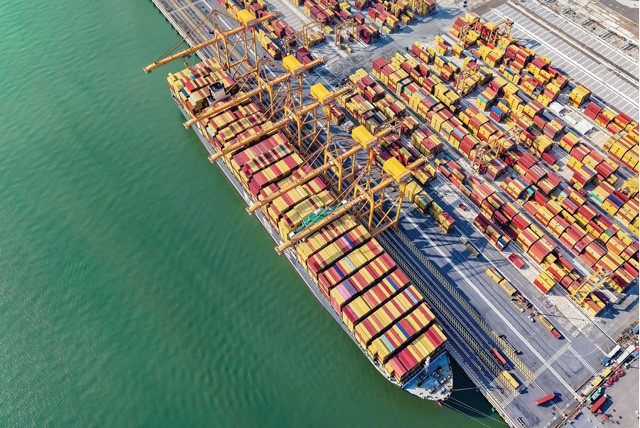
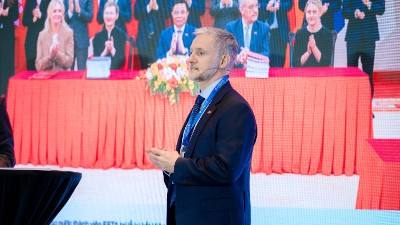
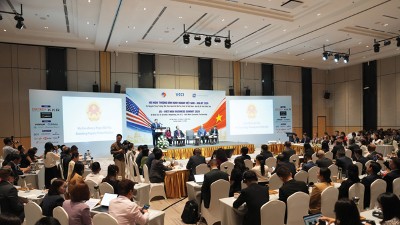
On October 18 in Hanoi, in the presence of Party General Secretary and State President To Lam, Minister of Industry and Trade Le Manh Hung and representatives from the member states of the European Free Trade Association (EFTA) signed the Vietnam-EFTA Free Trade Agreement (VEFTA), opening up opportunities to boost trade between Vietnam and the four EFTA member states of Switzerland, Norway, Iceland, and Liechtenstein.
Notably, for Norway, this development is significant in terms of expanding the market for seafood exports, a category that currently accounts for the bulk of the country’s total commodity exports to Vietnam. “One of the most clear-cut benefits is that the agreement will create a more level playing field for seafood products from Norway, particularly salmon,” said Ambassador of Norway to Vietnam, H.E. Stein Iversen. “This is a significant sector that accounts for a large share of the bilateral trade relationship between the two countries.”
Promoting bilateral trade
According to the Ministry of Industry and Trade (MoIT), trade turnover between Vietnam and Norway stood at $644 million in the first nine months of 2026, an increase of 7.7 per cent against the same period of 2025. Of this, Vietnam’s exports reached $221 million, a 56.7 per cent rise that surpassed the total for 2025 as a whole.
The latest data from the Norwegian Seafood Council (NSC) showed that imports of Norwegian salmon into Vietnam have now exceeded 22,400 tons, a volume greater than the combined total of imports from all other major suppliers. Previously, as of February 2026, exports of fresh salmon to Vietnam had increased by 16 per cent in volume compared with the same period last year.
Frozen salmon products also saw significant growth, with volumes rising by approximately 37 per cent. Vietnam has become the fastest-growing market for Norwegian salmon in Southeast Asia. The NSC said that once the VEFTA takes effect, Norwegian salmon will be exempt from import duties upon entry into Vietnam, while tariffs on Norwegian mackerel will be phased out over a three-year transition period.
Currently, whole Norwegian salmon is subject to a 10 per cent import duty, while salmon fillets are subject to a 15 per cent duty. Meanwhile, some other suppliers already benefit from preferential tariff treatment through various FTAs. This disparity affects the price competitiveness of Norwegian products in the Vietnamese market to some extent. According to the NSC, the elimination of import duties is expected to enhance the competitiveness of Norwegian salmon in Vietnam while providing importers with greater flexibility to optimize their business costs.
At an event showcasing Norwegian salmon at the WinMart supermarket chain in Hanoi on October 17, Ms. Astrid Bergmål, State Secretary of the Norwegian Ministry of Foreign Affairs, said that over the past 55 years Vietnam and Norway have built a strong partnership that has evolved alongside Vietnam’s own development.
Trade plays an increasingly important role in this relationship, she continued, with Norwegian salmon and seafood having become familiar staples in the Vietnamese market. “The recently signed FTA will reduce tariffs, facilitate smoother trade, and make business operations more predictable,” she added. “Consequently, Norwegian seafood, especially salmon, will become more competitive in Vietnam, and I hope this will ultimately bring high-quality Norwegian salmon to the tables of Vietnamese consumers.”
Ms. Åshild Nakken, Director for Southeast Asia at the NSC, said the newly-signed VEFTA will lead to the elimination of import duties on Norwegian salmon and the simplification of customs procedures, thereby creating a more level playing field for Norwegian salmon in Vietnam. “Smoother import operations will allow distributors, supermarkets, and restaurants to better plan their business activities, manage inventory, and maintain consistent supply,” she noted.
During a meeting with Ms. Bergmål on October 18, Deputy Minister of Industry and Trade Luong Hoang Thai noted that the scale of bilateral trade remained modest relative to the potential of the two economies. The MoIT is working urgently to finalize the procedures required for the VEFTA to enter into force.
As Norway serves as the depositary for the agreement, Mr. Thai requested close coordination with the Norwegian side to ensure that the ratification process is completed promptly. He also proposed that Norway and the other EFTA member states develop a technical assistance program specifically designed to support implementation of the agreement, helping businesses, particularly small and medium-sized enterprises, understand their commitments and effectively leverage available incentives.

One of the most clear-cut benefits is that the agreement will create a more level playing field for seafood products from Norway, particularly salmon. This is a significant sector that accounts for a large share of the bilateral trade relationship between the two countries.

Furthermore, he suggested that both sides expand cooperation in areas such as the harvesting and processing of aquatic and agricultural products, as well as the maritime economy.
Benefiting consumers
For Vietnamese consumers, a more efficient and stable import and distribution process can help maintain the supply of Norwegian seafood while preserving its freshness and quality. Reduced trade costs may also make it easier for families seeking safe, high-quality seafood from reliable sources to access Norwegian products.
With the VEFTA, Ambassador Iversen believes that the tariff reductions under the agreement will facilitate a greater presence of Norwegian seafood products in the Vietnamese market. “This means that an increasing number of Vietnamese consumers will be able to enjoy Norwegian salmon and other high-quality seafood at more affordable prices,” the Ambassador said. “Conversely, it is hoped that the people of Norway will soon be able to enjoy more of Vietnam’s coffee and tropical fruit.”
According to the NSC, fresh Norwegian salmon is becoming increasingly familiar among Vietnamese people. “I am delighted that Norwegian salmon has gained such popularity in Vietnam, not only for its delicious taste but also for its high nutritional value,” Ms. Nakken said.
In addition, consumer trends in Vietnam are showing a clear shift toward high-quality products with transparent origins. One of the key factors contributing to the competitive advantage of Norwegian seafood is the rigorous quality management process implemented throughout the entire production chain.
The Norwegian Food Safety Authority conducts official oversight at every stage, from farming and production to processing, while the Institute of Marine Research carries out independent testing of farmed fish destined for the market, screening for banned substances, veterinary drug residues, and environmental contaminants. Strict attention is also paid to processing, chilling, and temperature-controlled transportation to ensure that the freshness, texture, and quality of products are maintained from Norway to distribution points, restaurants, and households in Vietnam.
In this context, strengthening consumer trust has become a key priority, anchored in factors such as consistent quality, sustainable production processes, and full traceability. Ms. Bergmål affirmed that people would notice the agreement’s impact through a stronger Norwegian presence in local supermarkets, daily life, and the workplace, driven by expected growth in bilateral trade.





 Google translate