


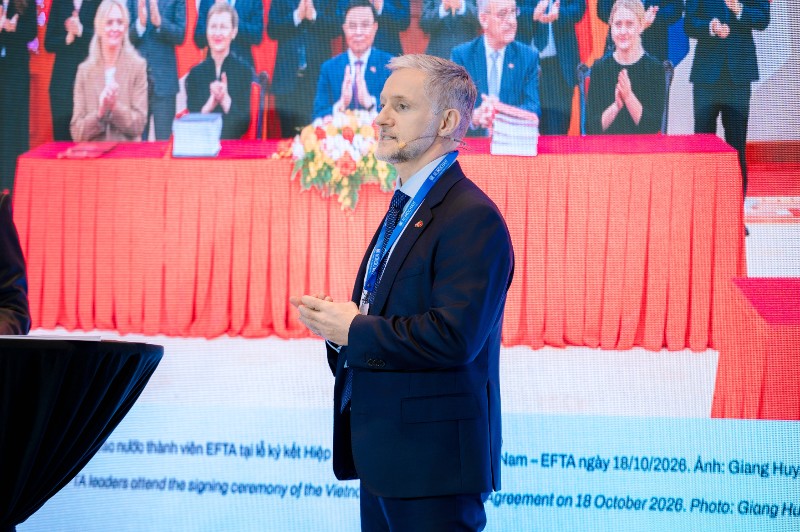
The Nordic Business Forum 2026, held in Ho Chi Minh City on October 29, brought together more than 100 senior business representatives, policymakers and experts to discuss opportunities for cooperation between Vietnam and the Nordic countries.
Under the theme “A New Decade of Growth: Unlocking Vietnam’s Potential and Nordic Strengths”, the forum was organised by the Nordic Chamber of Commerce in Vietnam (NordCham Vietnam), in collaboration with the embassies of Denmark, Finland, Norway and Sweden in Vietnam, and with the support of the Ho Chi Minh City Investment and Trade Promotion Centre (ITPC), the Vietnam Chamber of Commerce and Industry’s Ho Chi Minh City Branch (VCCI-HCM), and the Ho Chi Minh City Centre for the Fourth Industrial Revolution (C4IR).
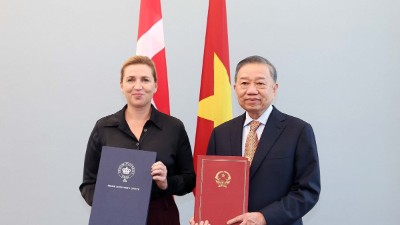
The event took place amid growing momentum in Vietnam’s economic relations with the Nordic countries. Vietnam has established new strategic partnerships with Sweden, Finland and Norway, while Vietnam and the European Free Trade Association (EFTA) signed a free trade agreement in Hanoi on October 18. Vietnam and Denmark also upgraded their relationship to a Comprehensive Strategic Partnership on October 20, during the State visit to Denmark by Party General Secretary and President To Lam of Vietnam.
These developments are creating opportunities for businesses on both sides to expand trade, investment and cooperation in areas where Nordic expertise complements Vietnam’s development priorities.
Addressing the forum, Mr. Thue Quist Thomasen, Chairman of NordCham Vietnam, said the business community had an important role to play in translating diplomatic agreements and policy commitments into tangible economic outcomes. These could include investment projects, cooperation agreements, stronger supply chains and new employment opportunities, he said, adding that NordCham Vietnam, with a network of 196 member companies, could help connect businesses and facilitate partnerships.
Mr. Bui Minh Thanh, Vice Chairman of the Ho Chi Minh City People’s Committee, said Vietnam was seeking to improve the quality of its economic growth by strengthening technological capabilities, developing its workforce and increasing participation in global value chains.
He noted that the Nordic countries had strengths in innovation, green technologies and sustainable development that aligned with the city’s priorities. Cooperation should therefore go beyond trade and investment to include technology transfer, knowledge sharing and the development of local capabilities.
For Ho Chi Minh City, the challenge was not only to attract international resources but also to ensure that these resources contribute to the development of domestic businesses and the wider economy.
Speaking at the forum, H.E Stein Iversen, Norwegian Ambassador to Vietnam, highlighted the significance of the newly signed Vietnam-EFTA Free Trade Agreement for businesses in both countries, particularly in seafood, maritime industries and green energy. He also discussed how businesses could prepare to make the most of the agreement.
“Together with the Norway-Vietnam Green Strategic Partnership, the Vietnam-EFTA Free Trade Agreement brings fresh momentum to Norway-Vietnam economic relations and strengthens the foundation for Nordic businesses in Vietnam. Nordic strengths in innovation, sustainability and responsible business are particularly relevant to sectors such as green energy, maritime industries, aquaculture and the circular economy.
“My message to businesses is simple: make use of this momentum, strengthen partnerships and turn Nordic expertise into concrete business opportunities in Vietnam’s dynamic economy,” the ambassador said.
In an interview with VnEconomy / Vietnam Economic Times, Ambassador Stein Iversen discussed how the Vietnam-EFTA FTA could influence Norwegian companies’ investment strategies, create opportunities for Vietnamese suppliers and support deeper integration between the two economies.
Local conditions key to long-term investment
Beyond increasing exports, the FTA could encourage Norwegian companies to consider a broader range of activities in Vietnam, including establishing local partnerships, expanding service operations and making investments, Ambassador Iversen said.
Once the agreement enters into force, improved market access and greater predictability could support these decisions. Companies may also look to develop local supplier networks, provide maintenance and after-sales services, and bring production capabilities and technical expertise closer to customers.
However, investment decisions would continue to depend on commercial considerations and the availability of viable local partnerships. The Ambassador identified seafood and aquaculture, maritime industries, renewable energy and the circular economy as areas where Norwegian strengths could complement Vietnam’s priorities.
He pointed to VARD, a Norwegian maritime group that has operated in Vietnam since 2006, as an example of a company developing a substantial local presence. The company has more than 2,500 employees in Vietnam, including contractors. In 2024, it expanded the capacity of its Vung Tau shipyard from four to seven vessels at any given time, supporting the construction of specialised vessels. It has also established the Vard Design and Engineering Vietnam (VDV) Centre in Ho Chi Minh City, with plans to expand its team to more than 40 engineers. “The experience of companies such as VARD illustrates the importance of a stable and supportive business environment for long-term investment,” Ambassador Iversen said.
Clear and transparent regulations, predictable licensing and approval procedures, consistent policy implementation, skilled workers and reliable local partners are all important factors. The FTA can strengthen this framework, but an agreement alone does not generate investment.
For companies already operating in Vietnam, identifying practical obstacles and working with local authorities and business partners to address them will remain essential.
Vietnamese suppliers seek deeper integration into value chains
The Ambassador also sees opportunities for Vietnamese companies to move beyond the role of suppliers and become long-term partners in regional and international value chains.
In the seafood sector, cooperation could cover processing, animal feed, fish health, aquaculture technology and cold-chain logistics. Vietnam could also serve as a processing base for Norwegian mackerel before the products are re-exported to other markets.
In maritime industries, opportunities extend to components, fabrication, engineering services and maintenance. To participate more deeply in these supply chains, Vietnamese businesses will need to meet international technical, quality and delivery standards.
The Norway-Vietnam Green Strategic Partnership, alongside the Vietnam-EFTA FTA, provides a framework for expanding cooperation in sustainable ocean industries, renewable energy and the circular economy. “I believe the real opportunity is to build value chains together, combining Norwegian technology and expertise with Vietnamese industrial capacity, skills and local knowledge. That can help Vietnamese companies move further into higher-value activities while making Norwegian operations in Viet Nam more locally integrated and competitive.” the ambassador said.
Such cooperation could help Vietnamese businesses move towards higher-value activities while enabling Norwegian companies to build more integrated operations in Vietnam. The green transition is another area where the two countries could expand their business ties, particularly in renewable energy, circular economy solutions and environmental technologies.
The Ambassador cited TOMRA’s deposit return system as an example of technology that can support more sustainable resource use and waste management. Such solutions could create opportunities for Vietnamese companies to adapt international technologies to local conditions and develop new business models.
He noted that cooperation in this area should focus not only on introducing technologies but also on building the capabilities needed to implement and operate them effectively.
For Vietnamese businesses, this could mean developing expertise in technology adaptation, service provision and local supply chains. For Norwegian companies, partnerships with Vietnamese firms could provide a stronger understanding of the market and support the expansion of solutions suited to local needs.
Ultimately, Ambassador Iversen said, closer economic relations would depend on businesses on both sides identifying commercially viable opportunities and building partnerships that deliver long-term value.


 Google translate