


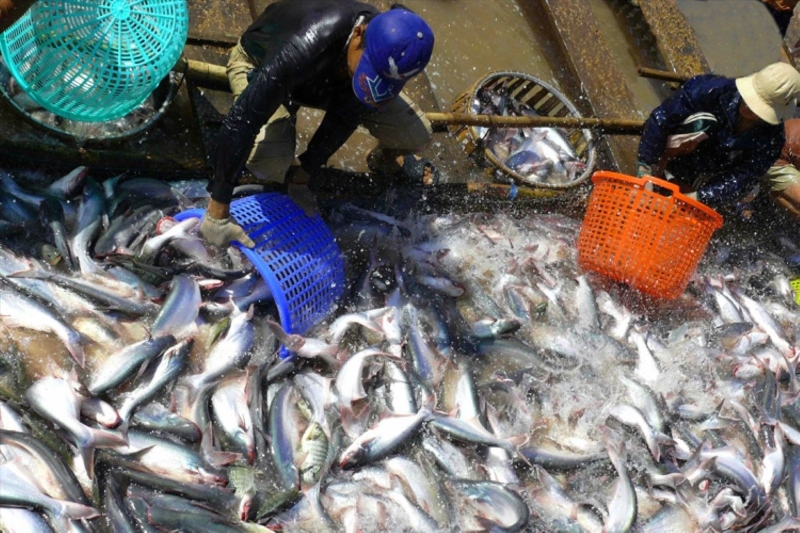
Vietnam’s pangasius exports generated over $177 million in January, a year-on-year increase of more than 33%.
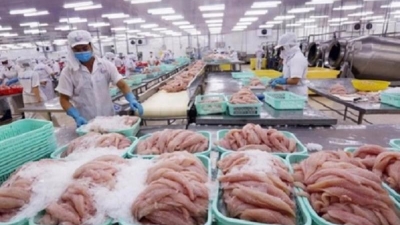
A strong recovery in demand from China, ASEAN, and Japan has propelled pangasius to the top of the seafood growth charts, continuing the upward momentum seen in 2025.
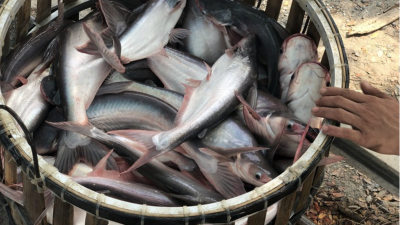
According to the Vietnam Association of Seafood Exporters and Producers (VASEP), alongside positive export signals, the pangasius market in the Mekong Delta has recorded an unprecedented price surge. In key farming hubs such as Dong Thap, An Giang, and Can Tho, commercial pangasius (size 0.8–1 kg per fish) has reached a record high of VND35,000 ($1.35)/kg—an increase of VND5,000–7,000/kg compared to previous peaks.
The primary driver behind this sharp price hike is a shortage of raw materials. Because the pangasius farming cycle lasts six to eight months, a prolonged period of low prices in the past led many farmers to suspend operations, reduce stocking density, or leave the industry entirely. As processing and export demand recovered, the volume of fish ready for harvest became insufficient to meet market needs, putting significant upward pressure on procurement prices.
The fingerling (seed) market has also experienced a price explosion. Cold weather and adverse climate fluctuations have increased mortality rates during the nursery stage, making the supply of young fish increasingly scarce.
In 2025, Vietnam’s pangasius export turnover reached an estimated $2.2 billion, up approximately 8% compared to 2024 and exceeding the initial target by 5%. While exports to the European Union (EU) remained relatively stable, monthly data showed clear fragmentation. Unlike the steady demand seen in 2024, the year 2025 was characterized by alternating periods of growth and decline, reflecting inconsistent import demand across various EU member states.
VASEP expects the growth trend to persist throughout 2026, with pangasius maintaining its role as the backbone of Vietnam’s freshwater seafood industry. The total farming area is expected to remain stable at around 6,400 ha, with a projected output of 1.67 million tons. Demand from major markets—including the US, China, Europe, and the Middle East—is forecasted to recover further, providing significant room for growth.
However, challenges remain. The current active farming area across the region sits at only 6,000–6,500 ha, which may not be enough to satisfy long-term demand. Additionally, exporters are facing pressure from geopolitical shifts, trade barriers, tariffs, and increasingly stringent quality requirements from importing nations.
Industry experts warn that the traditional development model—centered on high volume, low costs, and price competition—is reaching its limits and will be difficult to sustain in the long run. While record-high prices are a positive signal for the industry's recovery, they also carry the risk of "hot development"—spontaneous and uncontrolled production growth that could lead to future instability.





 Google translate