


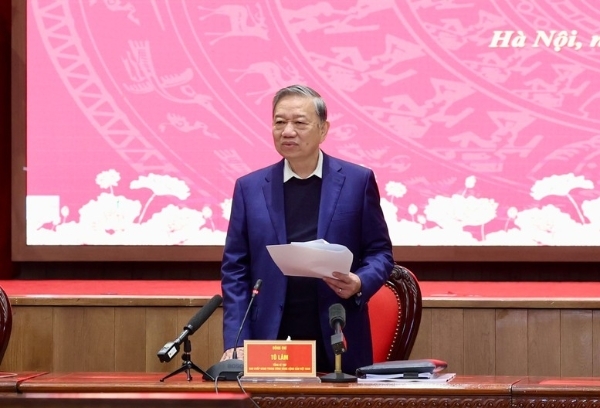
The 100-year vision for Hanoi’s Capital Planning must be integrated into the national development strategy, with institutional reform as the breakthrough, developmental space as the foundation, and quality of life as the primary metric.
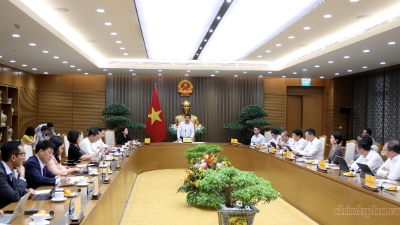
This guiding principle was emphasized by Party General Secretary To Lam during a working session with the Standing Committee of the Hanoi Party Committee on January 10. The session focused on the proposed Capital Master Plan with a 100-year vision, linked to institutional perfection, the establishment of a socio-economic development model, and double-digit growth targets.
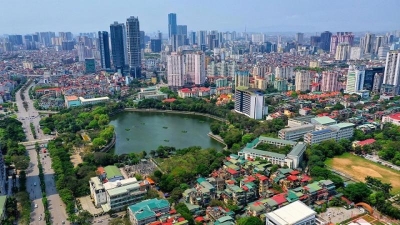
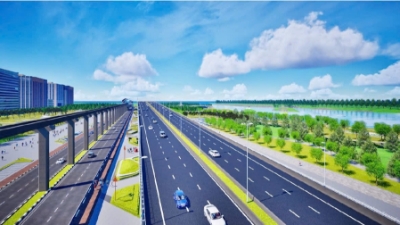
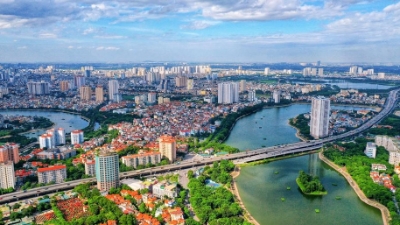
According to reports at the meeting, the Capital Master Plan is being developed to expand developmental space and enhance regional connectivity with the Red River Delta, the Northern Midlands and Mountains, and the Hanoi Metropolitan Area. A core focus of the plan is to resolve major bottlenecks in traffic, urban infrastructure, the environment, and urban management—factors that directly impact the quality of life and the city’s growth potential.
The city also aims to restructure its urban landscape to achieve fundamental improvements in architecture, scenery, housing, and heritage. The planning mindset is shifting from "preservation and renovation" to "value reconstruction," forming a new spatial structure to unlock land resources and create new developmental values while fundamentally addressing infrastructure bottlenecks.
Regarding the socio-economic development model, the city has identified three synchronized pillars: economy, environment, and society. For the 2026–2030 period, science-technology, innovation, and the digital economy are designated as the primary growth drivers. These will generate new productivity through four key pillars: institutional completion; development of digital infrastructure and smart platforms; enhancement of governance efficiency and digital government; and the growth of a digital economy and society.
Hanoi also identifies tourism—particularly cultural tourism—as a spearhead economic sector.
The city will continue to improve its investment and business environment, utilizing public investment to lead and catalyze private and foreign direct investment (FDI). Furthermore, the city aims to bolster the private sector while enhancing the efficiency of the state-owned economy.
Speaking at the session and highlighting the nation’s new development context, the General Secretary stated that Hanoi must move beyond the mindset of merely a large locality. Instead, it must be positioned and operated as a hub for fostering national development, playing a leading role with a broad effect. He noted that every issue effectively resolved by Hanoi would significantly influence the mindset and approach of other localities across the country.
Regarding the Capital Master Plan with a 100-year vision, the General Secretary basically agreed with major orientations, including the proposal to transition to a "multi-polar, multi-center, multi-layered, and multi-tiered" development model.
He required that the planning must place Hanoi within the overall national development strategy, taking the people and their quality of life as the highest metrics. He emphasized ensuring harmony between modernity and tradition, maintaining a long-term vision with open development space, and building Hanoi into a national center for innovation and knowledge. Furthermore, the plan must guarantee national defense, security, and social safety, while the planning process itself must be conducted scientifically, democratically, publicly, transparently, and consistently.
Concerning the double-digit growth target, the General Secretary urged Hanoi to remain steadfast in its pursuit of high growth, specifically striving to reach at least 11% by 2026. He stressed that growth drivers must be rooted in increased labor productivity, science and technology, innovation, digital transformation, and high-quality human resources—all closely integrated with institutional reform and an improved investment and business environment.
Supporting solutions to remove major bottlenecks in Hanoi, the Party leader emphasized the requirement to delegate maximum authority to the capital city. This would allow the city to proactively resolve its own challenges with a spirit of acting "fast, correctly, effectively, and seeing tasks through to the very end."

 Google translate