


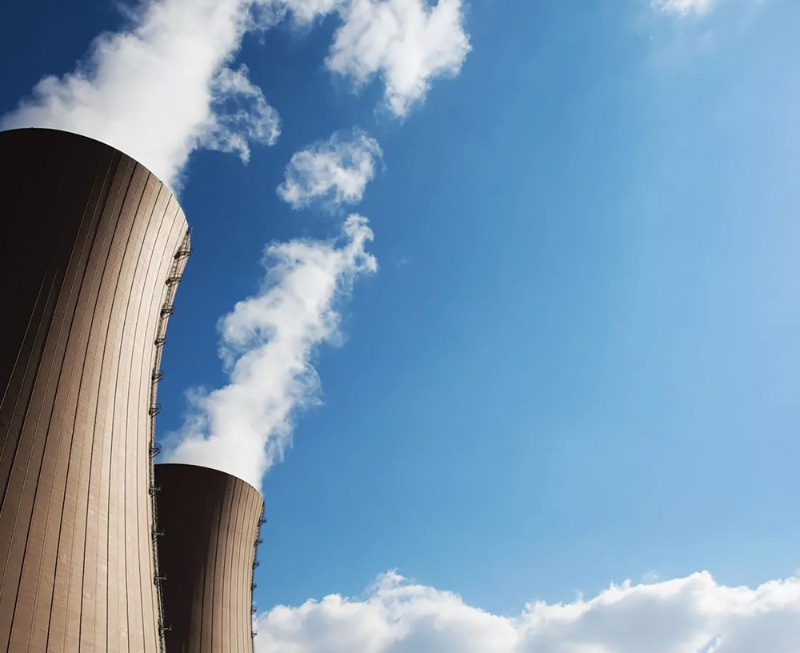
As AI becomes the new infrastructure of the digital economy, electricity is increasingly emerging as a form of “national competitiveness.” According to experts, Small Modular Reactors (SMRs) have become one of the most promising technologies to address the energy demands of the AI era.
Speaking at an international seminar entitled “Small Modular Reactors: Strategic Solutions for Vietnam’s Energy Security,” jointly organized by Vietnam Economic Times / VnEconomy and the Vietnam Atomic Energy Institute (VINATOM), Dr. Nguyen Ngoc Hung, Head of the Energy Economics Division at the Institute of Energy under the Ministry of Industry and Trade, emphasized that Vietnam’s electricity demand is entering an entirely different growth phase from previous decades, and electrification is no longer confined to households or traditional industries but is rapidly expanding into electric vehicles (EVs), data centers, AI, and high-tech industries.
Electricity crunch
According to Dr. Hung, multiple forecasts suggest Vietnam’s electricity consumption pattern in the years ahead may resemble those of countries such as South Korea and the US during periods of rapid industrial acceleration. However, a major difference lies in the much faster growth of new demand sources such as data centers, EVs, and green hydrogen.
“Non-traditional demand is expected to grow significantly, including data centers, electric transportation, and, in later decades, green hydrogen production powered by electricity,” he said. “These demand sources need to be forecast separately because of their importance and scale in driving total electricity demand,” he said.
In reality, this trend is not unique to Vietnam. Globally, AI is pushing electricity demand higher again after years of relatively slow growth. Major technology companies such as Microsoft, Google, Amazon, and Meta are rapidly expanding AI-focused data centers at an unprecedented pace.
This trend is prompting many countries to reassess the role of nuclear power as a reliable baseload energy source for the AI economy. Unlike solar and wind power, which depend on weather conditions, AI data centers require continuous, uninterrupted, high-capacity electricity supplies.
In this context, nuclear energy is increasingly viewed as a critical solution for achieving net-zero targets while ensuring energy security and maintaining technological competitiveness.
According to Dr. Tran Chi Thanh, President of VINATOM, the global energy market is entering an increasingly volatile period, prompting many countries to rethink their long-term baseload energy strategies. “Nuclear power is no longer viewed solely through the lens of emission reductions, but is increasingly tied to energy security and the long-term stability of the economy,” he said.
One of nuclear energy’s greatest advantages is its ability to store fuel for the long term, reducing the risk of supply chain disruptions amid rising geopolitical instability. For Vietnam, this pressure is becoming increasingly evident. While the country remained a net energy exporter in 2010, by 2025 approximately 43.9 per cent of primary energy supply depended on imports.
SMRs: The energy piece
According to experts, as electricity demand rises sharply, SMRs have been attracting growing interest worldwide. Unlike traditional nuclear power plants, which typically involve very large capacities and lengthy construction timelines, SMRs are designed on a smaller scale, allowing modular assembly and more flexible deployment.
Dr. Thanh said there are currently around 100 different SMR designs under R&D globally. These technologies differ in cooling methods, fuel types, and reactor materials, but share a common objective: improving safety and optimizing operations. He added that SMRs could open a new pathway for nuclear power markets thanks to their smaller scale, lower upfront investment requirements, and more manageable financial risks. This is particularly important for developing countries such as Vietnam, where financing and implementing large-scale infrastructure projects remain major challenges.
Beyond that, the flexibility of SMRs is considered better suited to future energy systems, where renewable energy is expected to account for an increasingly larger share of the electricity mix.
According to experts, as wind and solar output fluctuates rapidly depending on weather conditions, power systems will require flexible baseload sources capable of balancing loads. This is seen as one of SMRs’ key advantages. In addition to supporting national power systems, SMRs are also viewed as having significant potential to supply electricity to high-tech industrial parks, data centers, and other areas with concentrated electricity demand.
Looking ahead, many experts believe large-scale AI data centers could be directly connected to small-scale nuclear power sources to ensure stable electricity supply while reducing carbon emissions.
Dr. Thanh stated that beyond SMRs, the world is also exploring Micro Modular Reactors (MMRs) with capacities below 10 MWe for specialized applications. However, he cautioned that most SMR technologies remain in the early stages of commercialization and continue to face multiple challenges. In addition, many SMR technologies rely on High-Assay Low-Enriched Uranium (HALEU) or other specialized fuels that are not yet widely available in the market. “If reactors are built without securing a reliable fuel supply, the risks are considerable,” he warned.
Even so, as AI and the digital economy reshape global electricity demand, many countries continue to view SMRs as a strategic technology for the future. For Vietnam, this could represent an opportunity to participate early in a new energy technology cycle rather than continuing to lag behind in core technologies.
Culture of safety
While SMRs are generating considerable optimism, experts agree that the most critical factor in nuclear power development is not the pace of technological advancement but governance capacity and a strong culture of safety.
According to Dr. Thanh, the key lessons from disasters such as Chernobyl and Fukushima Daiichi highlight that human factors remain the greatest source of risk. This is why next-generation SMR technologies are increasingly focused on passive safety systems designed to reduce reliance on human intervention.
Mr. Dmitry Aleksandrovich Raspopin, Head of the Representative Office at the State Atomic Energy Corporation Rosatom in Vietnam, said many new safety mechanisms were added to modern reactor designs such as the VVER-1200 following the Fukushima disaster. These systems allow plants to remain safe even during total power loss or without human intervention.
For SMRs, one key feature is the natural circulation mechanism within the reactor itself, functioning as a passive safety system to minimize accident risks.
However, Dr. Thanh stressed that technology is only part of the equation. More importantly, countries must develop a skilled workforce and a strong safety culture. “It is essential that people working in nuclear energy truly understand and internalize a culture of safety,” he said. “Those who genuinely work in a nuclear environment understand that safety comes first, without exception.”
Vietnam, he continued, has developed a basic nuclear workforce, but the pool of highly-specialized experts remains limited. A key priority is therefore building domestic nuclear training capacity instead of relying entirely on overseas education. At the same time, Vietnam will need deeper cooperation with international partners to access technology, train talent, and gradually strengthen domestic capabilities.
Mr. Dao Quang Binh, General Director of Tap chi Kinh te Viet Nam / Vietnam Economic Times / VnEconomy, told the seminar that the global energy sector is approaching a historic turning point, as climate pressures and supply chain disruptions have turned Vietnam’s net-zero emissions by 2050 commitment into a “new rule of the game” shaping global investment flows. “We do not simply need energy for growth; we need an energy source that is truly clean, stable, and self-reliant,” he explained, adding that rapid advances in AI and science and technology are making the path forward increasingly clear for Vietnam.
“In an era of rapidly advancing AI and science and technology, we must move faster and leverage cooperation with strategic international partners to access technology, management expertise, and workforce training,” Mr. Binh said, noting that if Vietnam establishes early foundations for cooperation, it could narrow the gap and move faster than many regional peers in nuclear energy, securing stable power for economic growth, high-tech industries, and future data centers.




 Google translate