




I believe there is growing consensus that AI not only generates significant economic value but also improves quality of life in many ways, particularly in mobility and transportation. Among the clearest benefits we can already see are greater operational efficiency, time savings, and lower costs.
In Vietnam, multiple pathways are emerging to build a more sustainable transportation future, ranging from the transition to electric vehicles and expanded public transportation to AI-driven logistics optimization, smart transportation systems, and shared mobility platforms. Each pathway plays a distinct role, but in my view, AI is the “common thread” connecting every part of this ecosystem, enabling it to operate more efficiently and cohesively.
However, ambition alone is not enough. The pace and sequencing of implementation matter just as much. Developing smart transportation systems will take decades and cannot outpace the practical limits of infrastructure or workforce capacity. Investments in infrastructure, training, and workforce upskilling therefore require time and must be realistically reflected in long-term implementation plans.
Another major challenge is data fragmentation. To fully unlock AI’s potential in mobility, Vietnam will need to establish a centralized data system capable of effective integration and sharing among stakeholders. Equally important is developing a clear roadmap for AI adoption, something I believe should be prioritized at this stage.
I believe public-private partnerships and trust-based data-sharing mechanisms will play a pivotal role in driving innovation. At the same time, regulatory coordination, along with policy stability and predictability, will form an important foundation for attracting long-term investment. Institutional capacity and a transparent, clearly defined legal framework are also essential to this transition.
In particular, I believe Vietnam should adopt more flexible policy frameworks, including AI-supported policy sandbox mechanisms. Such an approach would allow new models to be tested, refined, and gradually scaled in a safe and controlled manner. More importantly, AI deployment must remain inclusive and people-centered, ensuring that all groups have access to opportunities and that no one is left behind in the course of technological transformation.

Drawing from experience in developing smart city platforms and currently operating electric transportation infrastructure in Vietnam, I believe the country’s transportation challenge extends beyond congestion. At a deeper level, the problem lies in the fragmentation of the overall system.
Vietnam currently has multiple transportation modes operating in parallel, including motorcycles, private cars, buses, taxis, ride-hailing services, electric vehicles (EVs), and more recently, urban rail systems in Hanoi and Ho Chi Minh City. However, these systems remain fragmented, lacking connectivity in data, planning, and operational coordination.
By contrast, in countries such as Singapore and South Korea, residents can simply open a mobile application to know exactly when a bus will arrive, which metro line is departing next, or even which platform location is most convenient to minimize travel time. This allows users to choose the most efficient mode of transport.
Based on this reality, I believe AI can help Vietnam address four key transportation challenges.
First is improving visibility into and forecasting transportation demand. Cities need to understand where people are traveling, when they are traveling, and for what purposes. AI can help predict mobility demand while identifying underserved areas.
Second is addressing pressure on urban space. In cities such as Hanoi, congestion is not limited to roads but also extends to parking facilities, sidewalks, pick-up and drop-off points, and public spaces. AI can help analyze and identify emerging “pressure hotspots.”
Third, AI can support the planning, forecasting, and deployment of environmentally-friendly transportation, particularly EVs. However, introducing EVs to the market is only the first step. More important are the operational systems behind them, including charging and battery-swapping management, vehicle maintenance, traffic coordination, safety, and maintaining a stable and convenient user experience.
Fourth is measuring sustainability. If Vietnam wants more investment in green and sustainable transportation, cities and investors will need reliable data on usage rates, emission reductions, safety, and accessibility. AI can help analyze such data, but only if eliable data infrastructure exists.
In my view, Vietnam needs a clear operational framework in which the private sector has room to invest, while the public sector plays a supporting and coordinating role, thereby fostering public-private partnerships and resource sharing. Vietnam must also establish data standards, as AI is only effective when input data is sufficiently high quality. The country needs to prioritize practical pilot programs rather than stopping at conceptual ideas, and transportation systems should be designed with people at the center.

In the context of AI development and innovation today, I believe public-private partnerships (PPPs) need to be broadened beyond resource sharing to encompass a shared vision between the government and the private sector to jointly build mechanisms and policies that foster the growth of the technology ecosystem.
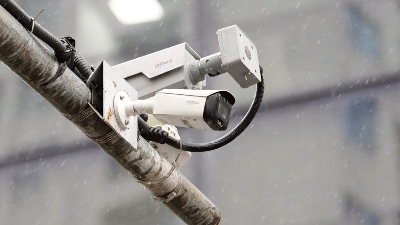
This direction has become increasingly evident in recent years as the government has introduced a list of strategic technology sectors and strategic technology products, including AI and products such as traffic cameras. This demonstrates that the government is not only acting as a regulator but also proactively shaping the market and signaling confidence for businesses to invest more boldly in AI research, development, and application.
At the same time, the government has gradually strengthened the legal framework surrounding AI, from risk management mechanisms to policies encouraging responsible AI development and deployment. Most recently, Decree No. 182/2025 on PPP mechanisms in science, technology, and innovation was introduced.
In my view, this is a highly-open mechanism that enables organizations such as the National Innovation Center to work with businesses in developing, commercializing, and operating science- and AI-based applications. More importantly, it creates more flexible collaboration space between the public and private sectors in advancing technology.
Another particularly important area is public-private cooperation in infrastructure development and resource sharing, especially data infrastructure. In AI, data is a decisive factor. The government is currently accelerating the establishment of national data centers and the integration of databases across ministries and agencies.
I believe that once databases are integrated and shared at an appropriate level, the private sector will be better positioned to develop AI models and build more effective applications for logistics, transportation, and mobility. This will also provide an important foundation for AI to move into practical operation.
Beyond data infrastructure, today’s PPPs should also focus on building an open ecosystem. All stakeholders exist within the same ecosystem and are both affected by and beneficiaries of it. Therefore, it is essential to connect all participants, from government agencies, investors, and startups to research institutes and universities.
In recent years, the National Innovation Center has launched multiple incubation programs for AI startups, including solutions for logistics, seaports, transportation, and automation. At the same time, Vietnam is selectively attracting major technology corporations to participate in the domestic innovation ecosystem in order to foster more comprehensive AI development.
Beyond traditional PPP models, I also believe Vietnam should place greater emphasis on a “triple helix” cooperation model involving government, universities, and businesses. This is a major policy direction aimed at linking education, research, and markets to address broader economic and sectoral challenges. In this context, the role of connecting stakeholders across the ecosystem will become increasingly important to the development of AI and innovation in Vietnam.

AI is already having a major impact on transportation monitoring. It is increasingly clear that public behavior changes significantly when it is introduced into traffic surveillance systems. Road users become more conscious of complying with traffic rules, as virtually all vehicles and participants are now within the monitoring system.
From this perspective, if Vietnam wants to accelerate the transition from gasoline-powered vehicles to electric vehicles, technology- and data-driven regulatory tools can be deployed. For example, cities could introduce congestion charges based on transportation zones, with fees increasing progressively toward central urban areas. Such measures would not need to be implemented immediately but could instead follow a gradual roadmap, allowing citizens time to adapt.
In my view, the key is to create mechanisms that encourage people to voluntarily choose more suitable transportation options. If revenues generated from such policies are reinvested into small-scale public electric vehicles systems, this could gradually help shift travel habits away from private vehicles and toward public transportation. The transition should be transparent, phased, and provide adequate adaptation time for citizens rather than being imposed abruptly.
More broadly, transportation and logistics are becoming increasingly diversified. Many cities around the world have begun deploying drone delivery systems, developing the low-altitude economy, and expanding water-based transportation models. This suggests that future mobility will no longer revolve solely around land-based transport, but rather evolve into a multilayered, multimodal ecosystem.
As a result, the concept of transportation safety will also change. Citizens will no longer focus only on road safety but will also be concerned about risks emerging from airspace and autonomous vehicles. To manage such a complex system in an integrated way, the first requirement will be unified governance infrastructure.
Future transportation will involve not only vehicles, but also data, software, cybersecurity, safety, and the management of moving objects across multiple physical environments.
For this reason, all stakeholders, from individuals to businesses, should contribute data to a national data system through appropriate mechanisms. Only with sufficiently large datasets can AI generate solutions that are both intelligent and accurate. On that basis, the government can play a regulatory role, establish differentiated governance layers, and develop tailored applications for different user groups.
For example, ordinary citizens could access applications that recommend optimal transportation options, while logistics companies could benefit from deeper layers of data and more specialized solutions for operations and freight coordination. With a shared platform of this kind, the transportation ecosystem could function more efficiently and provide fairer access across user groups.
However, centralized digital systems and data concentration also introduce new risks. One of the most significant is energy security. Power outages or natural disasters affecting infrastructure could disrupt the entire platform. As a result, contingency plans, backup systems, and risk mitigation mechanisms will be essential to ensure operational continuity.

In my view, public-private partnership (PPP) mechanisms play a critical role in developing AI applications for transportation and mobility in Vietnam. This is neither solely the responsibility of government agencies nor of businesses. Rather, it requires the participation of multiple stakeholders. For PPPs to function effectively, the first step is to clearly define the principles of coordination between participating parties.
The first priority is determining which types of risks can be managed most effectively by which stakeholders. In traditional PPP models, governments typically focus on systemic risks such as legal frameworks, policymaking, and macro-level issues, while businesses address market-related challenges. However, AI introduces a new category of risks that both sides must jointly manage, namely, process- and data-related risks.
This is also the most important part of today’s challenge. Data remains a relatively new field, where everything from collection methods and usage processes to the scope of deployment requires both business-led innovation and government oversight. Without clear mechanisms for allocating responsibility and sharing data, it will be difficult to establish an effective AI foundation for transportation.
More specifically, businesses can focus on areas aligned with their strengths, such as data collection, information processing, and digital infrastructure development. For example, AI-powered traffic sensors and data platforms are areas where companies can contribute effectively. Businesses can also provide data services to government agencies, including travel demand forecasting and projections for future transportation corridor development.
In some cases, government agencies may be well suited to initial implementation, but when systems move into continuous, uninterrupted operation, businesses are often better positioned to manage them efficiently. This also creates opportunities for companies to generate revenue through data services and technology platforms supplied to the public sector.
Meanwhile, the government’s role is to establish policy mechanisms that incentivize private-sector participation while ensuring vulnerable groups, including workers, older adults, and small and medium-sized enterprises, can still access AI-enabled transportation services. Ultimately, businesses must prioritize profitability, while many disadvantaged groups may not be able to access services entirely through market mechanisms.
Another equally-important issue is establishing standards for AI in transportation. These standards should not only cover data interoperability and infrastructure specifications, but also AI ethics, data governance processes, and secure data-sharing mechanisms. Questions such as who can access data, under what procedures, and according to which sharing standards while maintaining safety and security all need to be clearly defined.
Even in developing these standards, however, PPPs remain essential. In practice, regulators may understand broad principles, but businesses often possess deeper expertise in technical standards through direct engagement with technology and markets. At the same time, without proper safeguards, proposed standards could end up serving the interests of certain businesses rather than the broader public good.
For this reason, standards development requires open dialogue between government and businesses, while also ensuring a balanced alignment of interests.
Finally, current PPP mechanisms still tend to focus primarily on relationships between the State and businesses, while the voices of citizens remain relatively muted. In the context of AI in transportation, citizens and workers are the ultimate beneficiaries. While the benefits to any one individual may appear small, collectively across society they become highly significant.
As such, stronger mechanisms are needed to directly incorporate public feedback so that AI development in transportation genuinely serves the broader public interest.

When discussing AI in transportation, the most important question is where it can make an impact and which areas it is best positioned to support. In my view, AI can contribute to three key pillars of transportation: governance, infrastructure and vehicles, and end-users.
In terms of governance, I believe transportation management in Vietnam remains largely reactive. By contrast, AI’s greatest strength lies in its ability to shift the system from reactive responses to prediction and prevention. This represents one of AI’s most valuable contributions to transportation. Rather than responding only after congestion or incidents have occurred, AI can help forecast potential risks in advance, enabling authorities to proactively regulate traffic and implement appropriate solutions.
However, achieving this requires one essential condition: synchronized data and a shared data system. In my view, if every organization continues developing separate datasets in isolation, AI will struggle to reach its full potential. Therefore, AI development in transportation must go hand-in-hand with stronger data interoperability and information sharing across agencies and levels of government.
The second issue concerns infrastructure and vehicles. Smart transportation systems and AI deployment require infrastructure that is adequately prepared. We need to clearly define what additional investments are necessary, from traffic signals and cameras to operation centers and data infrastructure. At the same time, vehicles participating in the transport system must be equipped with technologies that enable connectivity and AI integration.
We are already seeing the emergence of connected transportation models, including vehicle-to-infrastructure, vehicle-to-vehicle, and vehicle-to-center communication systems. In my view, Vietnam needs to establish an appropriate roadmap for these models. This will be a critical foundation if AI is to play a meaningful role in transportation operations.
The third issue concerns users. Transportation needs differ across population groups. Residents in Hanoi, for example, have different mobility patterns and demands from those in Ho Chi Minh City or other localities.






 Google translate