


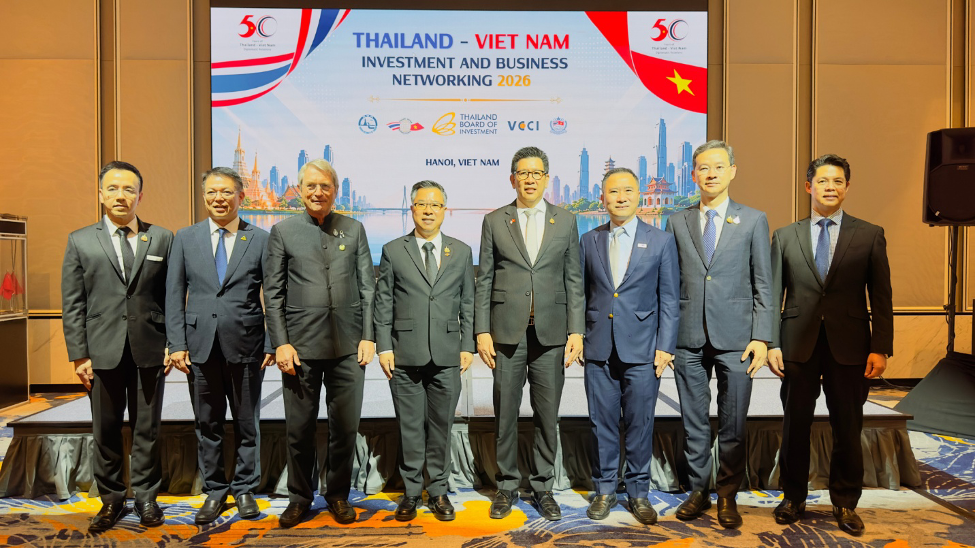
Marking a half-century of diplomatic ties, the Vietnam-Thailand relationship has matured beyond the traditional exchange of goods. Today, the partnership is defined by deep integration in cross-border investment, supply chain synchronization, and sustainable development. While state-level agreements build the necessary framework, it is the private sector that animates this connectivity. Forward-looking enterprises are no longer merely participating in these markets; they are actively shaping them, turning bilateral policies into tangible growth and regional resilience.
Vietnam’s strategic role in regional economic transformation
This growing role of businesses reflects a broader transformation in the regional economic landscape. Vietnam has established itself as a strategic anchor in the reconfiguration of regional supply chains. As global trade dynamics undergo profound transformation, the Vietnam-Thailand economic corridor is evolving from a traditional import-export channel into a highly integrated ecosystem supported by stronger logistics networks, infrastructure development, high-value manufacturing, and a shared commitment to the green economy.
The latest economic data underscores this accelerating momentum. Following robust bilateral trade of $10.91 billion in 2025, trade has continued to gain momentum. In the first four months of 2026 alone, Vietnam’s exports to Thailand surged 36.2 per cent to $3.76 billion, while imports from Thailand increased 15 per cent to $4.84 billion.
These figures highlight Vietnam’s growing importance in regional market expansion and cross-border investment flows. However, state-level diplomacy and free trade agreements provide only the structural framework. The true engine driving this economic integration is the private sector, where visionary businesses transform macroeconomic potential into active market linkages and industrial modernization.
The corporate catalyst: Translating policy into market vitality
For multinational corporations such as TCP Group, this macroeconomic shift represents an opportunity to move beyond market presence and become long-term partners in Vietnam’s growth journey. Through its flagship brand, Red Bull, and a nationwide distribution network reaching more than 100,000 retail touchpoints across traditional and modern trade channels, TCP has built a strong foundation in Vietnam. Yet its presence extends beyond commercial reach, reflecting a deeper commitment to understanding local markets, developing partnerships, and contributing to the broader business ecosystem.
TCP Group has continuously invested in comprehensive market insights, strengthening its product development capabilities to tailor offerings to local preferences and market nuances. Moreover, by building robust partnerships with local distributors, suppliers, and retailers, TCP expands market accessibility while simultaneously strengthening local retail and logistics capabilities.
These strategic efforts demonstrate how private-sector investment can translate regional policy opportunities into tangible business activity. By embedding itself throughout the local supply chain, TCP not only creates immediate commercial value and greater consumer access but also strengthens local business networks. In doing so, the company plays a direct role in forging stronger, more resilient cross-border commercial linkages between the Vietnamese and Thai economies.
Beyond the balance sheet: TCP’s 70-year journey of creating shared value
In today’s economic landscape, the true measure of a multinational corporation’s impact extends far beyond its balance sheet. Long-term investment is fundamentally a commitment to ecosystem development, not merely the pursuit of sales growth. This philosophy is deeply embedded in TCP’s 70-year journey, a legacy that consistently reinforces its commitment to sustainable and inclusive growth.
As the company expands its presence in Vietnam, it continues to align business growth with the core principles of Creating Shared Value (CSV). This means commercial objectives are pursued alongside sustainability initiatives and community development programs. By investing in workforce development, supporting community well-being, and adopting responsible business practices, TCP demonstrates that corporate success must go hand in hand with societal progress.
A notable example of TCP’s commitment to supporting communities in Vietnam is its partnership with the Central Committee of the Vietnam Youth Federation (CVYF). Entering its seventh year in 2026, the partnership was further strengthened through the signing of a Memorandum of Understanding (MoU) in May, extending initiatives that support young people across Vietnam. TCP believes that when young people are empowered with the right opportunities and guidance, they can become a driving force for positive change, contributing to Vietnam’s long-term sustainable development.
This strategic approach ensures that as TCP grows, it also strengthens the capabilities, resilience, and long-term competitiveness of the communities it serves. It shifts the corporate narrative from resource extraction toward ecosystem development, providing a clear blueprint for how foreign direct investment can serve as a catalyst for local empowerment.
A shared vision for regional prosperity
Looking ahead, the future of Vietnam-Thailand bilateral cooperation will increasingly be defined by collective regional competitiveness. Achieving this ambition requires a business ecosystem that is not only highly productive but also sustainable and resilient in the face of global economic shocks.
Businesses like TCP are at the forefront of this transition. By demonstrating how private enterprises can bridge markets, empower local partners, and create shared value, they show that long-term corporate commitment is essential to translating diplomatic milestones into tangible economic benefits. Ultimately, it is this enduring partnership between dynamic nations and responsible businesses that will continue to shape a more competitive, connected, and prosperous Southeast Asia for generations to come.

 Google translate