


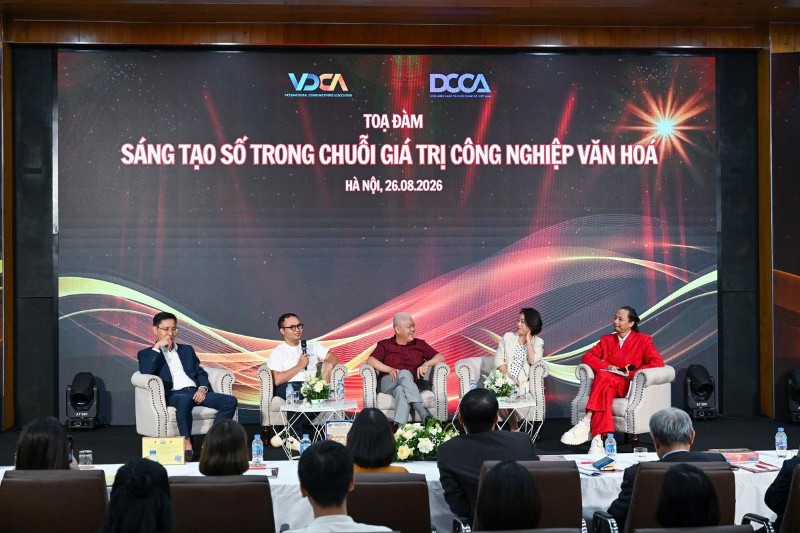
The estimate was shared by Mr. Nguyen Lam Thanh, Country Director of TikTok Vietnam, during the panel discussion titled “Digital Creation in the Cultural Industry Value Chain” at the Vietnam Digital Content Creation Awards 2026 (VCA 2026), organized by the Vietnam Digital Communications Association (VDCA) on August 26.
He noted that this growing digital economic footprint remains largely unmeasured due to legacy policy frameworks.
However, Mr. Thanh also added that culture was historically viewed primarily through the lens of spiritual enrichment, managed and subsidized by the state, rather than as a proper economic sector. As a result, enterprises, entrepreneurs, and products within the cultural space have lacked commensurate investment and resources to thrive.
He emphasized that the Politburo's Resolution 80 on the development of Vietnamese culture, alongside expectations surrounding the forthcoming Law on Cultural Industry Development, will serve as a crucial catalyst to foster businesses, entrepreneurs, and creative products in this domain.
Unlike traditional economic sectors governed by clear legal frameworks, the content creation community operates at an expanding scale without comprehensive measurement of its economic impact.
Illustrating its commercial footprint, Mr. Thanh cited how a single music video can reach millions of viewers and yield substantial economic value, while promotional content, local stories, or short films can attract millions of tourists to a destination.
The TikTok executive expressed optimism that the upcoming Law on Cultural Industry Development will streamline mechanisms for millions of digital content creators to participate seamlessly in the economy, lowering barrier hurdles related to capital, ownership, and organizational structures.
Echoing this sentiment, lawyer Tran Thi Tam, Director of IPCom Vietnam, described the 7% GDP target as ambitious and stressed the urgent need for a standardized measurement methodology to assess the industry’s revenue.
“I hope the forthcoming Law on Cultural Industry Development will clarify standardized measurement criteria for GDP contributions and cross-industry mechanisms,” Ms. Tam stated.
She highlighted intellectual property (IP) protection and asset valuation as vital prerequisites for growth. While recent legal updates allow IP rights to be recorded on balance sheets and used as bank collateral, implementation remains hindered by a lack of detailed guiding regulations.








 Google translate