


As B2B e-commerce rapidly becomes a core component of global business, Vietnam has set an ambitious target: 100% of enterprises using electronic contracts by 2030.
However, experts warn that shifting a signature from paper to a digital environment involves a comprehensive overhaul of transaction models—from contracting, authentication, and data storage to logistics, payments, and management.
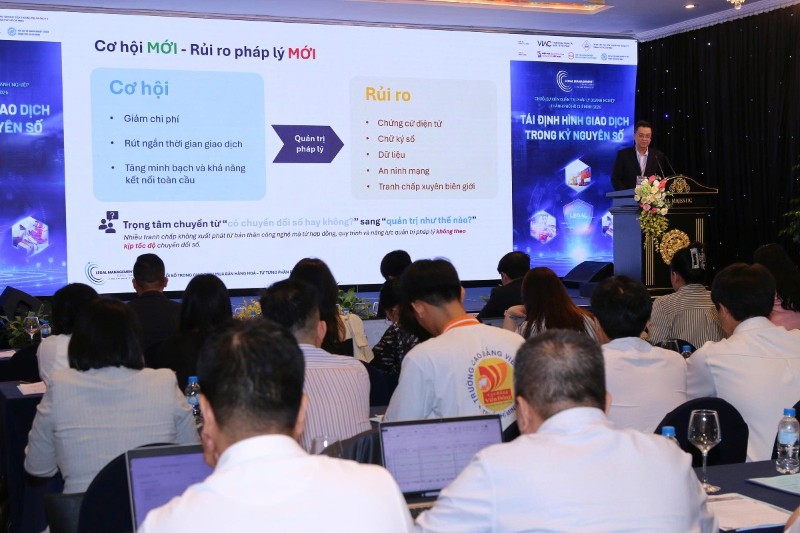
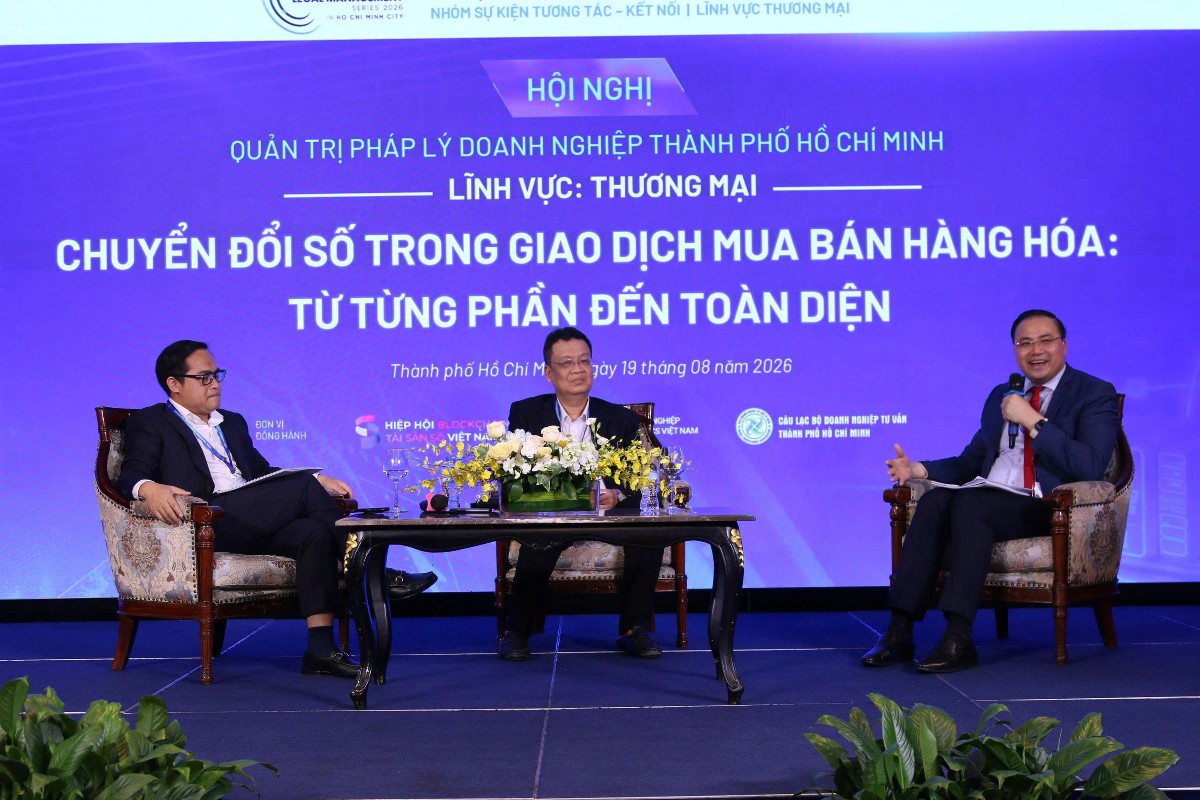
At a conference titled "Digital Transformation in Commodity Trading: From Partial to Comprehensive," co-organized on August 19 by the Investment and Trade Promotion Centre of Ho Chi Minh City (ITPC) and the Vietnam International Arbitration Centre (VIAC), experts emphasized a shift in the digital landscape. They noted that the primary challenge is no longer whether the law recognizes electronic transactions, but rather whether businesses and stakeholders within the same supply chain are sufficiently synchronized to make digital transactions safe, verifiable, and enforceable.
According to lawyer Chau Viet Bac, Deputy Director of VIAC’s Ho Chi Minh City Branch, technology is doing more than just updating tools; it is directly reshaping the structure and methods of corporate transactions.
On a global scale, the B2B e-commerce market in 2024 was estimated at approximately $28 trillion, equivalent to 34.4% of the total GDP of over 45 major economies. In alignment with this global trend, Vietnam set a roadmap for 80% of businesses to utilize e-contracts by 2025, reaching a universal adoption rate of 100% by 2030.
Lawyer Luu Xuan Vinh, managing partner of Asia Legal and a VIAC arbitrator, observed that most businesses are currently utilizing "partial e-contracts." In this model, the process of concluding and executing agreements remains a hybrid of human intervention and machine processing. This serves as a vital transitionary step before moving toward fully automated electronic contracts.
However, experts cautioned that as businesses move deeper into automation, the question of legal liability becomes more complex. Assoc. Prof. Dr. Nguyen Xuan Minh, permanent deputy director of Foreign Trade University (HCMC Campus) and VIAC arbitrator, noted that while a system can automatically handle everything from ordering and inventory checks to invoicing and delivery, human oversight remains essential at critical stages, depending on the level of risk and the specific nature of the business.
Highlighting a core principle of digital transaction governance, Mr. Minh said "Process automation does not mean the automation of responsibility."
This distinction is particularly vital when systems begin to autonomously take actions that carry legal consequences. Businesses must clearly define which data messages are official, who has the authority to issue them, the exact moment a transaction is considered accepted, and when delivery obligations are fulfilled. Furthermore, robust contingency plans must be in place to address potential data breaches or system failures.
Cross-border transactions: the risks of “globalization”
While domestic transactions have already introduced new challenges, international trade is significantly more complex as it involves multiple legal systems and various technological platforms.
According to Mr. Minh, international trade cannot rely solely on Vietnamese law. Businesses may face the fact that the laws of Vietnam, the partner’s country, or even a third country are not always synchronized.
"Through nearly 10 years of resolving disputes at VIAC, I have seen that approximately 90% of contracts do not clearly specify the applicable law. When a dispute arises, the Arbitral Tribunal must spend considerable time determining the appropriate legal system. This is a weakness that businesses can entirely prevent at the time of signing the contract," he said.
Agreeing with this view, lawyer Vinh recommended that in cross-border transactions, parties should include a specific clause regarding the recognition and use of electronic signatures. An e-signature does not merely represent the intent of the parties; it also requires an identity verification mechanism to ensure that the individual performing the signature is indeed the authorized person.
According to Assoc. Prof. Minh, an international trade transaction involves numerous stakeholders: buyers, sellers, carriers, insurers, warehouse operators, lawyers, arbitrators, and judicial authorities. Each party may operate on different legal and technical platforms. Therefore, businesses must consider the requirements of the entire supply chain rather than just optimizing for their own convenience. This is also why data interoperability is becoming the new bottleneck in digital transactions.
Notably, experts argued that many disputes do not stem from the technology itself, but from the fact that corporate legal governance is failing to keep pace with technological advancement. While messages and emails can be sent in seconds, their authority, binding nature, liability, and legal validity must be established through clear processes and agreements.








 Google translate