


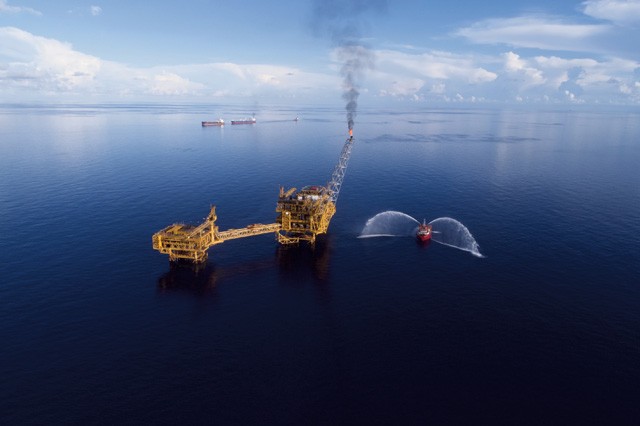
The global energy sector is undergoing profound changes driven by geopolitical volatility, climate change, emission reduction requirements, and rapid advances in science and technology. In Vietnam, ensuring energy security is not simply a matter of balancing immediate supply and demand; it is also essential to sustaining long-term economic growth.
For decades, the oil and gas industry has played a vital role in supplying fuels and industrial feedstocks, contributing to the State budget, and laying the foundations for the country’s industrial and energy sectors. However, the decline of some traditional resources, the energy transition, and intensifying competitive pressures have created an urgent need to renew the industry’s development model. The time has come to identify new growth drivers and increase the value the industry delivers to the economy.
Renewing the development model
Oil and gas exploration and production in Vietnam face increasingly challenging conditions. Many fields that have been in production for decades are entering a phase of natural decline. Meanwhile, developing new resources may require operations in deepwater and remote offshore areas or locations with complex geological and technical conditions.
Some new discoveries are relatively small or marginally economic, requiring substantial capital investment while carrying significant technical risks during exploration and development. As a result, opportunities for growth through conventional oil and gas extraction are becoming increasingly limited. To maintain its important role in the economy, the industry must improve the efficiency of existing operations while developing new sources of growth.
Against this backdrop, the transformation of the Vietnam National Oil and Gas Group into the Vietnam National Industry - Energy Group (Petrovietnam) represents more than a name change. It signals a long-term development strategy: strengthening the oil and gas foundation, diversifying energy sources, expanding industrial value chains, and proactively adapting to the energy transition.
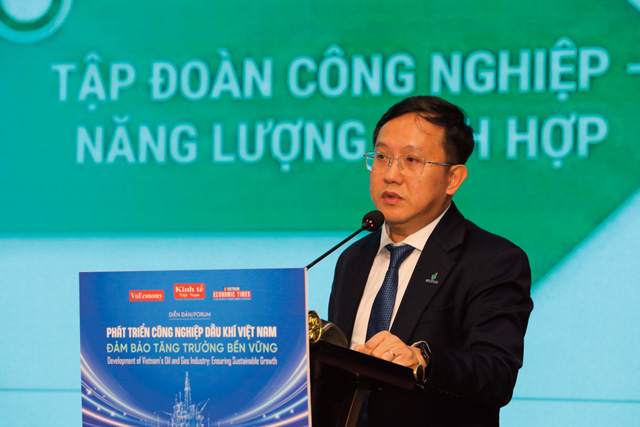
Building on its established capabilities in oil and gas, Petrovietnam plans to expand across the industrial and energy value chain, combining the efficient exploitation of conventional energy resources with the selective development of new and low-emissions energy sectors.
The development model is built around three complementary pillars: Energy; Industry; and Manufacturing, Oil and Gas Services, and New Energy.
The Energy pillar will continue to leverage conventional oil and gas while expanding into new areas based on market demand, competitive advantage, and investment efficiency. The Industry pillar will focus on improving processing efficiency and increasing the share of higher-value-added petrochemical, chemical, and materials products. And the Manufacturing, Oil and Gas Services, and New Energy pillar will build on the Group’s capabilities in surveying, engineering, fabrication, construction and installation, operations, and maintenance for energy infrastructure, gradually expanding service offerings in domestic and international markets.
This transformation reflects a fundamental shift in development thinking: from primarily extracting resources to organizing and optimizing industrial and energy value chains; and from responding to the decline of traditional resources to proactively pursuing new growth drivers. It provides a foundation for the Group to strengthen its competitiveness and create long-term value.
Five strategic priorities
To realize this transformation, Petrovietnam is focusing on five complementary strategic priorities to improve operational efficiency, strengthen competitiveness, and create value across the entire value chain. These priorities are interconnected, spanning upstream, midstream, and downstream operations while extending into industry, technical services, and new energy sectors.
First, sustain and improve the efficiency of core operations. As the energy transition progresses, oil and gas will continue to play an important role in supplying energy and industrial feedstocks. Improving the efficiency of domestic oil and gas exploration and production therefore remains a necessary priority.
The Law on Petroleum 2026 has established a new legal foundation for oil and gas operations. As implementing regulations are developed and preparations for enforcement proceed, particular attention should be paid to translating investment incentives into practical measures, supporting the development of small and marginal fields, maximizing resource recovery, and improving oil and gas recovery rates. These measures must be accompanied by transparent and workable implementation procedures.
Second, develop integrated value chains to increase added value. Rather than organizing individual segments as relatively independent operations, Petrovietnam aims to strengthen links across exploration, production, transportation, processing, and distribution, aligning production with market demand.
In the gas sector, the priority is to develop integrated natural gas and liquefied natural gas (LNG) value chains, connecting domestic and imported gas supplies with transportation and storage infrastructure, power generation, and demand from industrial customers.
In refining and petrochemicals, the Group needs to continue improving operational efficiency, optimizing its product mix, and selectively developing higher value-added petrochemicals, specialty chemicals, and materials. In parallel, developing technical services and support industries for renewable energy could leverage manufacturing, construction, installation, and operational capabilities accumulated through the oil and gas sector.
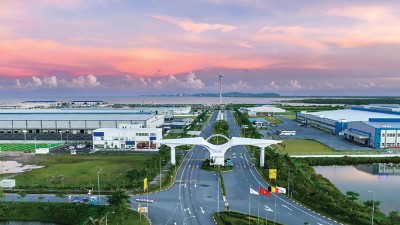
Third, develop integrated industrial and energy hubs. This model aims to connect energy sources, processing industries, technical services, and logistics infrastructure within a shared ecosystem. Depending on local conditions, feedstocks, energy, waste heat, and byproducts can be utilized according to the principles of industrial symbiosis and the circular economy.
Companies operating within these hubs could share technical infrastructure, seaports, warehouses, logistics facilities, and selected support services. They could also strengthen collaboration in research, technology, and data where appropriate. With effective planning and operations, this model could reduce costs across the value chain, attract investment, foster support industries, and create additional growth opportunities for local economies.
Fourth, selectively develop new energy sectors by leveraging existing strengths. In offshore wind, for example, the oil and gas industry can draw on its experience in surveying, engineering, fabricating offshore structures, installing facilities, and operating offshore infrastructure to take on a greater role in the supply chain. Another opportunity lies in carbon capture and storage (CCS), including the potential use of suitable geological formations and some existing oil and gas infrastructure, subject to comprehensive assessments of technical feasibility, safety, environmental impacts, and economic viability.
Fifth, make science, technology, innovation, and digital transformation cross-cutting drivers of growth. The technical complexity of the oil and gas industry requires sustained investment in technology, workforce capabilities, and operational management.
To improve recovery from fields with increasingly challenging geological and technical conditions and strengthen the competitiveness of refined and petrochemical products, the industry needs to accelerate the adoption of new technologies. Automation, data analytics, AI, and digital asset management solutions can help optimize operations, reduce costs, increase productivity, and improve safety.
In new energy sectors, research and innovation should be closely aligned with market needs and the feasibility of testing and commercializing technologies. Developing in-house technological capabilities, alongside cooperation with domestic and international partners, will help strengthen the Group’s long-term competitiveness.
Enabling strategy execution
Turning these strategic priorities into tangible results requires the right institutional framework, financing, technology, market access, and organizational capabilities. On the institutional front, the immediate priority is to complete implementing regulations for the Law on Petroleum 2026 in a timely, consistent, and practical manner. Policies spanning multiple sectors also need to be further developed for offshore wind, carbon storage, and other new energy areas, ensuring transparency, predictability, and investment efficiency.
In terms of resources, Petrovietnam plans to strengthen cooperation with domestic and international partners to access capital, technology, management expertise, and markets. It will also place greater emphasis on investment efficiency and connectivity across infrastructure and value chains.
In management, performance assessment should move beyond a primary focus on output and revenue to give greater weight to investment returns, efficiency of value chains, technological capabilities, added value, and sustainable development.
Building on its conventional oil and gas foundation, developing integrated value chains, and capitalizing on a supportive institutional environment, Petrovietnam aims to establish a competitive industrial and energy group that makes a meaningful contribution to Vietnam’s energy security and sustainable economic growth.
(*) Mr. Dang Thanh Tung is Deputy Head of Development Strategy at the Vietnam National Industry - Energy Group (Petrovietnam).



 Google translate