


A new government decree has established detailed criteria for the development of special economic zones and free trade zones, creating a more comprehensive legal framework for key economic models.
Decree No. 378/2026/ND-CP, which provides detailed regulations and implementation measures for the Law on Urban Development, sets requirements covering infrastructure, population, land area, security and digital data management for such zones.
Under the decree, a commune, ward or special administrative zone may be considered for recognition as a special economic zone if it meets the criteria stipulated in Article 43 of the Law on Urban Development.
First, it must have a strategic location that aligns with national socio-economic development plans and contributes to national defence and security. The area must be located within a province or centrally governed city identified as a growth pole or national economic-driving region, or as a regional growth pole, economic centre or key development area under regional planning.
It must also be identified in provincial or municipal plans as a growth pole, the core of a key economic region, an economic centre or a coastal economic zone, while playing an appropriate role in national defence and security, and the protection of territorial sovereignty.
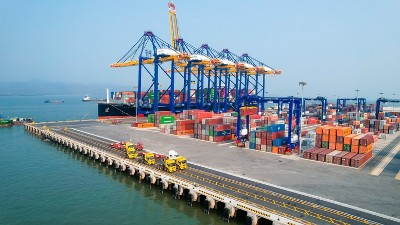
Second, the area must contain an international airport or a special-grade or Grade I seaport.
Third, it must have a relatively independent and easily manageable geographical space, together with a large population and land area. Eligible areas include special administrative zones or island communes, or areas where at least 50% of their administrative boundary is coastline or where at least 50% of their natural boundaries with adjacent administrative units consist of rivers, lakes or protected forests.
The area must have a population of at least 50,000 and a natural land area of at least 500 square kms.
Alongside special economic zones, the Decree also sets out criteria and conditions for establishing free trade zones in Vietnam.
Under the decree, selected areas for special economic zones must have favourable geographical locations for the development of international trade, logistics and related activities, and cover a minimum area of 1,000 hectares.
Where a free trade zone is organised into separate, non-contiguous areas, it must ensure connectivity in terms of infrastructure, as well as unified operation and management.
The establishment of a free trade zone must also demonstrate socio-economic effectiveness and efficient land use. In addition, the zone must have complementary links with existing economic zones, industrial parks, logistics centres and other functional areas.
These requirements are intended to ensure that free trade zones are developed in locations with strong trade and logistics potential while being effectively integrated with existing economic and industrial infrastructure.




 Google translate