



Dr. Vuong first rose to prominence after winning the Gold Cup at the 2006 Tri Tue Viet Nam (Vietnamese Wisdom) IT competition. He later earned his bachelor’s degree from Nanyang Technological University (Singapore) and went on to complete his Ph.D. in Computer Science at the University of Wisconsin - Madison (US) with a perfect GPA.
Prior to founding Innosearch AI and Cyfendo, he spent over a decade in senior engineering management and machine learning research roles at global technology giants including Google, Meta, and Walmart.
From vulnerability detection to verified patching
Before founding Cyfendo, you held leadership roles in AI and cybersecurity at major tech corporations like Google and Meta. What motivated you to leave those environments to build your own tech company in Silicon Valley?
Two primary reasons drove my decision.
First, despite working at leading technology corporations with professional, modern environments and strong compensation, I always harbored a desire to build my own company and products. I wanted to create solutions that deliver tangible value to users while giving back to the community, including Vietnam. Second, the rapid advancement of AI in recent years has unlocked tremendous new opportunities.
Problems that were previously daunting, or even impossible to solve can now be tackled more simply and effectively with AI. This technology is also paving the way for entirely new product categories and business models. Among these opportunities, applying AI to security and cybersecurity stood out as an area of immense potential. AI can resolve complex challenges where traditional methods fall short.
Therefore, I decided to turn my entrepreneurial ambition into reality by founding a company focused on AI-driven cybersecurity. In fact, the idea of starting my own company had been brewing for a long time, and in 2026, I officially took the plunge.
The market already offers numerous solutions for scanning and detecting vulnerabilities in source code. How does Cyfendo differentiate its approach from traditional tools?
Detecting vulnerabilities in source code is not a new field; many companies, including major tech firms, have developed solutions for this problem. However, most traditional tools still rely on rule-based methodologies to flag potentially flawed code segments. The drawback of this approach is that it frequently generates a high volume of false positives, undermining overall testing efficiency.
At Cyfendo, we deploy advanced AI models across three stages: discovery, vulnerability validation, and patch generation. Our first key differentiator is the ability to verify detected vulnerabilities. Specifically, our system places suspected flawed code into a sandbox environment and simulates a hacker’s attack workflow to test whether the vulnerability actually allows system intrusion.
Only when exploitability is confirmed does the system classify it as a genuine vulnerability posing real risk to the enterprise. Our second differentiator is automated patch generation to remediate the flaw. A patch must not only resolve the security vulnerability but also ensure that all other software functionalities continue operating normally without introducing new bugs.
Simultaneously detecting, validating, and patching vulnerabilities demands high precision. What concrete benchmark results has Cyfendo achieved in testing?
In this domain, two key metrics are typically used to evaluate product performance. The first is recall, the ability to detect actual vulnerabilities out of the total existing flaws. Cyfendo achieves approximately 94% on this metric. The second is alert precision, the proportion of flagged vulnerabilities that are genuine security flaws. On this front, we achieve around 96%.
Currently, some products on the market detect a high number of bugs at the expense of high false-positive rates, while other tools maintain high precision but miss critical vulnerabilities. Cyfendo’s goal is to excel simultaneously on both metrics: missing virtually no vulnerabilities while minimizing false alerts.
These results were benchmarked against the OWASP Benchmark, a widely recognized standard developed by the Open Worldwide Application Security Project (OWASP), a leading authority in application security.
Source code is a vital corporate asset containing highly sensitive data. When clients connect their code repositories to Cyfendo’s platform, how are data privacy and security guaranteed?
This is a very practical concern for our clients. With our solution, clients can run the system directly on Cyfendo’s servers. In this setup, source code is encrypted both in transit and at rest. Even internal Cyfendo employees are barred from accessing client source code, and all code data is automatically purged from the system after 15 days.
For clients who prefer not to share their source code externally, we offer a Private Scan mode. This allows organizations to use their own large language models (LLMs) and execute the entire scanning process on their own internal servers. No data is shared with Cyfendo, neither source code nor details of the vulnerabilities discovered.
SME challenges in cybersecurity
Why are small and medium-sized enterprises (SMEs) a core customer segment for Cyfendo? What obstacles do they typically face when implementing security solutions?
SMEs are a primary focus for Cyfendo not only in Vietnam but across all our target markets. These businesses generally encounter three main hurdles.
First, budget constraints.
Second, a shortage of dedicated personnel. These two barriers are very common, as not every business has the resources to invest heavily in security tools or build an in-house team of specialized security engineers.
Third, and equally critical is a lack of deep cybersecurity expertise. Through conversations with many clients, I’ve found that most recognize security as essential and are willing to invest, yet they simply do not know where to begin.
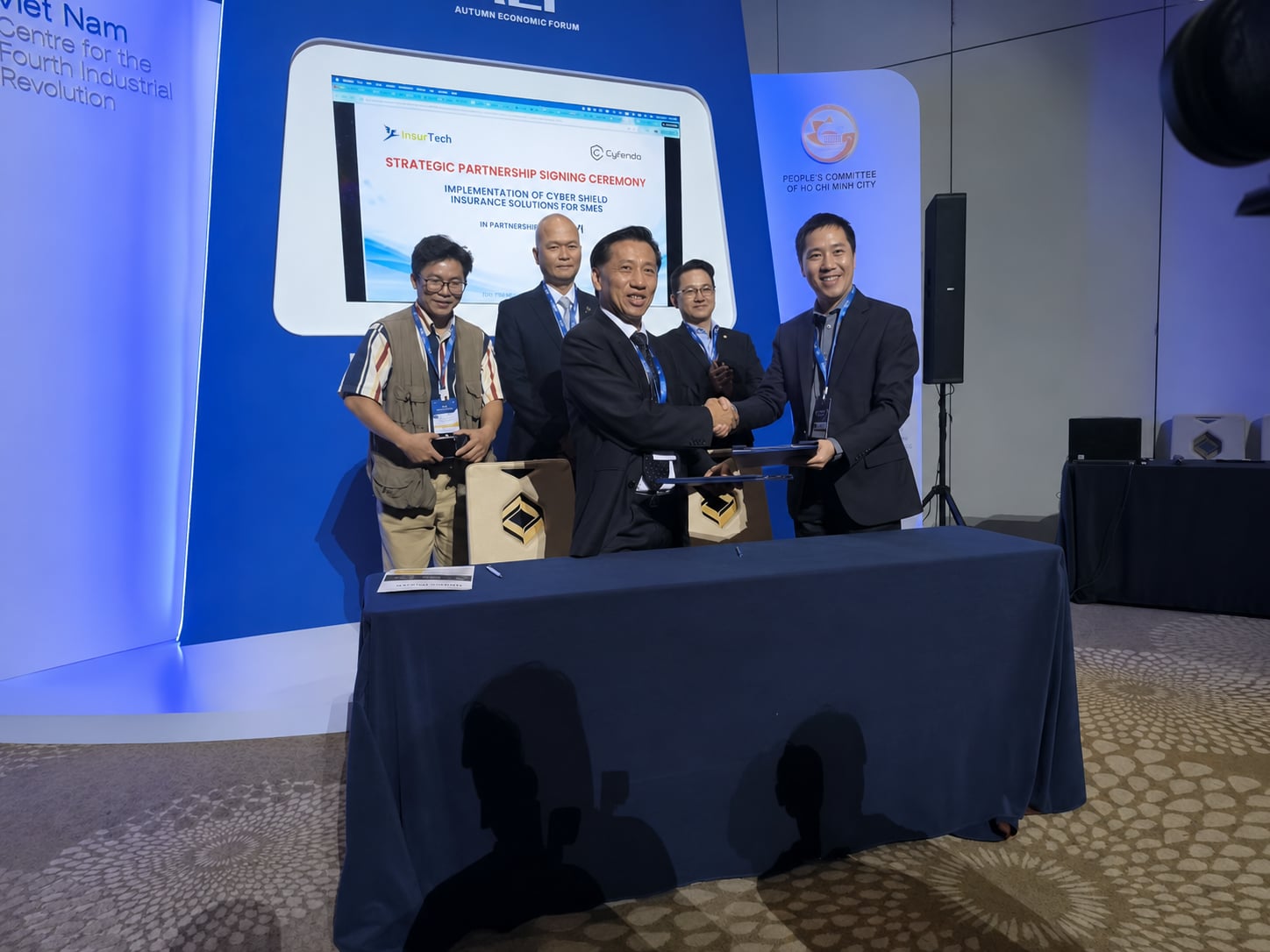
Cybersecurity is a vast, complex field with countless products and solutions serving different purposes. Selecting the right tools and deploying them effectively to match practical business needs remains a major challenge for SMEs.
Cyfendo is a Silicon Valley-born startup founded by a Vietnamese entrepreneur with global ambitions. What advantages does this background provide when approaching international clients, and what challenges do you face in bringing the product to market?
One of our distinct advantages is being incorporated in the US, combined with my background working in this specialized domain at tech giants like Google and Meta.
When engaging with clients in the US and other international markets, building trust is paramount. When clients have confidence in the capabilities of the founding team and the company, they are far more open to exploring, partnering with, and adopting the product.
Thus, our Silicon Valley roots and founding track record give Cyfendo an edge in initiating conversations and establishing credibility with prospective clients. Nevertheless, Cyfendo is still a young company without widespread brand recognition. When clients are unfamiliar with a company and its offerings, they naturally require more time to evaluate and build confidence, making it challenging to persuade them to adopt a new solution.
Our second challenge relates to human resources. Operating with the lean headcount of an early-stage startup makes it demanding to reach and support a large volume of customers simultaneously. We need sufficient talent to drive market expansion while maintaining top-tier customer support throughout product adoption.
Vietnam’s tech workforce is well regarded for its technical aptitude. What plans does Cyfendo have to collaborate with universities to nurture AI and cybersecurity talent in Vietnam?
We are currently in discussions with several universities regarding potential partnerships, including Nguyen Tat Thanh University in Ho Chi Minh City, though these initiatives are still in their early stages.
Our first objective is to collaborate with universities to bring practical knowledge of AI and cybersecurity closer to students, particularly seniors preparing for graduation.
Second, we aim to establish hands-on training programs where students can apply their knowledge to real-world problems. For example, we could organize bootcamps in which students work together to solve a specific project, gaining practical experience beyond classroom theory.
Additionally, Cyfendo will work with universities to identify high-potential students passionate about technology, AI, and cybersecurity, creating pathways for them to join our team directly.








 Google translate