


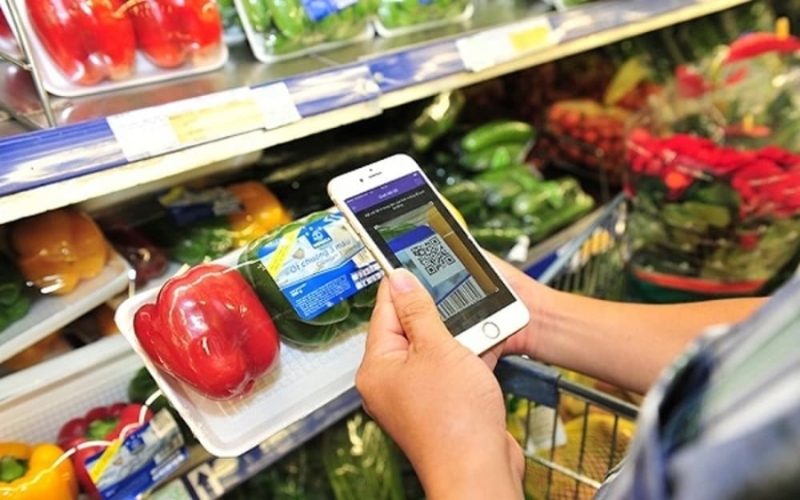
What made you decide to start Checkee - your venture into product traceability?
At the end of 2015, I had the opportunity to visit Japan for a short-term training program. What truly impressed me there was the country’s incredibly strict food traceability system. From supermarkets to the smallest convenience stores, every product carried a detailed “profile” - from its place of origin and farming process to information about the farmers themselves. This transparency not only builds consumer trust but also reflects a deep-rooted culture of accountability in Japan.
Returning to Vietnam, I became increasingly concerned about counterfeit goods and, more critically, food safety. I spent time studying the issue and came to believe that traceability could be the key to rebuilding consumer confidence and improving the quality of Vietnamese products.
What makes Checkee’s solution different from others on the market?
Checkee has built a multi-layered data ecosystem that connects information across businesses, products, processes, independent verification, and consumers. This structure ensures data is no longer one-way; it is cross-checked and verified at each layer, enhancing transparency and real trust.
Through this system, businesses can manage transparency across different data layers, apply multi-level anti-counterfeiting verification, and store authentication logs using Checkee’s smart anti-fraud solution, State Lock. We also advise clients on choosing the right data carriers for their products and business models, as well as how to use traceability codes for marketing purposes. This allows businesses to prove product quality and strengthen brand credibility.
One of Checkee’s first clients was Sopet Gas One, a Japanese gas company in Vietnam, followed by a local fertilizer business with 20 years of operations. It seems you didn’t start with small businesses?
That’s right. With my previous experience in developing technology solutions and recognizing that market needs at the time weren’t being met, I chose a more difficult path, focusing on large enterprises first to establish credibility. For me, solution providers and users form a symbiotic relationship.
With that approach, more than 10,000 businesses, from large corporations to micro-enterprises, now use Checkee’s solutions. Our systems record around 30 million traceability checks each month. Most proudly, Checkee recently became the first Vietnamese company to be certified by the National Barcode Center for successfully connecting with the National Product Traceability Portal.
Beyond combating counterfeits and boosting sales, what tangible benefits does product traceability bring to businesses willing to invest in it?
The biggest advantage is a shift in management and investment mindset, transforming how an entire production system operates. Modern traceability technology helps businesses demonstrate transparency and accountability, thereby enhancing product value, strengthening competitiveness, and improving the customer experience.
Take Coffee 15, for instance. Based in the central highlands and with access to quality raw materials, the company faced challenges a few years ago when the coffee market was flooded with mixed and low-quality products, making it hard for honest producers to prove authenticity.
In response, Coffee 15 invested in a full traceability solution, managing farm logs by growing area, categorizing raw materials, and assigning unique digital identities to each product. By making its entire process transparent, the company not only protected consumers but also strengthened its brand. Today, Coffee 15’s products are exported to the US and sold nationwide in major supermarket chains.
As a solutions provider, how do you assess the current state of product traceability in Vietnam?
Traceability in Vietnam is moving from ad-hoc adoption to standardized and regulated implementation, especially in agriculture, food, pharmaceuticals, and exports. The government has already issued a legal framework, national standards, and technical guidelines. Most recently, the amended Law on Product and Goods Quality stipulates that, from January 1, 2026, traceability will be mandatory for all Group 3 products - those with higher risk levels.
True traceability, however, is more than just “attaching a QR code” or “embedding a chip”. It requires compliance with key standards: standardized product and process information; standardized product and data carrier identifiers; standardized digital data systems (ensuring transparent, chain-based storage integrated with IoT [Internet of Things] devices); mechanisms for monitoring and verification; and adherence to legal and technical regulations. Both regulators and consumers must be able to access and verify product information.
Given the variety of traceability and anti-counterfeiting systems in use today, what technologies do you think will define the future?
It depends on the product category and applicable standards. Today, businesses use a mix of physical anti-counterfeit labels (such as holograms, break seals, or heat-sensitive stickers), QR codes, barcodes, SMS-based electronic labels, and proprietary local systems. However, most face challenges, including fragmented systems, inconsistent identifiers, and unreliable data authentication.
In the future, effective traceability will require integration across multiple layers: physical labels, secure identifiers (QR, RFID, and NFC), and certified storage systems (GS1 or the National Traceability Portal), all built on blockchain technology and enhanced by IoT devices suited to each product type and business scale.
How do you see the future for Checkee and the broader traceability technology market?
Checkee recently adopted a target of VND150 billion ($5.8 million) in revenue over the next three years. In the near term, we will focus on three pillars: standardizing and digitizing supply chains for our partners in line with Vietnamese standards; expanding our transparent data ecosystem; and integrating blockchain, AI, and big data to enable proactive anti-counterfeiting. Our goal is to contribute to the development of a comprehensive national traceability ecosystem across all sectors.
For the broader market, I see three defining trends: traceability will become mandatory and fully standardized; technology will shift from physical to digital anti-counterfeiting and intelligent data systems; and traceability data itself will become a business asset.
Vietnam will move fast in this field, just as it did with digital tax systems, e-invoicing, and QR-based payments. The companies that are more transparent, more trusted, more data-driven, and more compliant with standards will be the ones to thrive sustainably.


![[Interactive]: Economic overview - September 2026](https://premedia.vneconomy.vn/files/uploads/2026/10/06/9e0f403040dd4384ad690004bc1911ab-124594.png?w=400&h=225&mode=crop)

 Google translate