



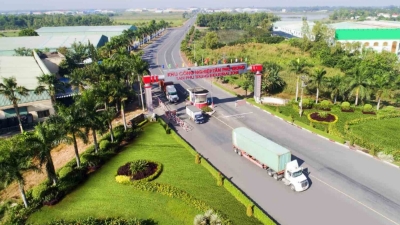
Instead of only developing new industrial parks based on green criteria, southern Dong Nai City is setting out a roadmap to transform existing industrial parks into green and ecological models.
From cleaner production and industrial symbiosis to efficient energy use and greenhouse gas inventories, this process is being concretized through a series of plans in 2026.
The city's plan No. 76/KH-UBND on transforming existing industrial parks into green and ecological industrial parks by 2030, with a vision to 2050, was issued by the Dong Nai Provincial People’s Committee (now Dong Nai City People's Committee) in early February 2026.
This is an important policy foundation for the city to shift from traditional industrial park development to reorganizing production activities, infrastructure, and relationships among enterprises in industrial parks toward resource efficiency, emission reduction, and improved energy use.
The plan sets the goal of promoting the formation of green and ecological industrial parks, linked with digital transformation, green transition, innovation, and the target of net-zero emissions by 2050.
Infrastructure investors and enterprises in industrial parks are tasked with participating in this roadmap, including requirements to carry out at least one industrial symbiosis activity, apply resource efficiency solutions, cleaner production, and emission reduction.
By 2030 the city aims to have at least two industrial parks certified as ecological industrial parks; at least 10% of enterprises in industrial parks applying resource efficiency and cleaner production solutions; and 90% of industrial parks adopting energy-saving and efficient use solutions.
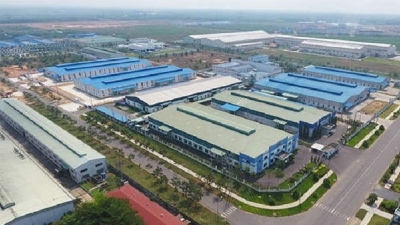
The focus of the program is not only on building new industrial parks with green infrastructure but also on transforming those already in operation. This presents a different challenge in terms of scale and implementation, as existing industrial parks have long-established infrastructure, enterprises, factories, and production processes.
According to the plan, enterprises are guided to implement solutions for efficient use of raw materials, water, energy, and chemicals; reduce waste, scrap, and emissions into the environment. Alongside this, they are encouraged to adopt production and environmental management systems aligned with international standards and to prepare ESG reports in line with local orientation.
In the ecological industrial park model, enterprises do not merely operate in parallel but can establish symbiotic relationships, where by-products, waste, or unused resources from one enterprise can become inputs for another.


 Google translate