



The Ho Chi Minh City (HCMC) People’s Committee has submitted a proposal to the City People’s Council to designate the Committee as the competent authority for the implementation of the Thu Thiem – Long Thanh urban railway project.
The project is planned as a Public-Private Partnership (PPP) and will run through both HCMC and Dong Nai Province.
The metro line will span 42 km, starting at Thu Thiem Station (HCMC) and ending at Long Thanh Station (Dong Nai). The route is expected to include approximately 20 stations and one depot for operations and maintenance. The project is scheduled for implementation from 2025 to 2031.
The total investment for the project is estimated at approximately VND84.75 trillion (over $3.2 billion).
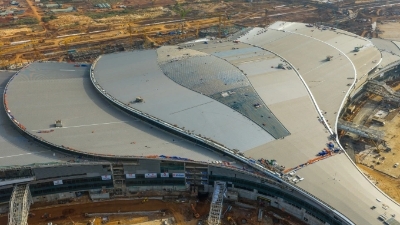
According to current plans, Long Thanh International Airport is expected to begin commercial operations by mid-2026. However, the existing transport infrastructure connecting the new airport to central HCMC remains limited.
Consequently, the Government Steering Committee for Key National Railway Projects, chaired by the Prime Minister, has identified the transport link between Tan Son Nhat International Airport and Long Thanh International Airport as a high-priority investment for the current period.
The project is regarded as a strategic transport solution between HCMC and Dong Nai, aimed at enhancing regional connectivity and significantly reducing travel time for passengers between the hai localities. Crucially, the line will also meet the transport demands of foreign experts and investors working at the Vietnam International Financial Center in HCMC.
The City People’s Committee noted that early investment in a completed urban railway system will not only address growing passenger demand and alleviate pressure on the currently overloaded road network but also open up new development potential for the city.






 Google translate