


In 2026, the global economic landscape remains fraught with uncertainties, from geopolitical tensions and supply chain disruptions to inflationary pressures and exchange rate fluctuations. Amidst this backdrop, Nghe An province's industrial production results in the first month of the year stand out as a noteworthy highlight.
According to statistics, the central province's industrial production index (IIP) for January 2026 is estimated to have increased by 20.62% compared to the same period last year. This is a relatively high increase, projecting a positive recovery in production activities after the Tet holiday, and demonstrating the capacity of local enterprises to maintain their output.
In the overall growth structure, the province's mining industry increased by 30.69%; manufacturing and processing increased by 20.95%; and electricity and gas production and distribution increased by 14.21%. Notably, while mining continues to grow strongly, the main driver of the entire sector remains the manufacturing and processing industry—a sector that creates high added value and plays a key role in industrial restructuring.
The nearly 21% increase in the manufacturing and processing industry indicates that the internal strength of industrial zones in Nghe An is being effectively utilized. Instead of relying primarily on resource extraction, Nghe An's industrial structure is shifting towards a more sustainable direction, increasing the proportion of industries with high technology content and added value.
This recovery stems from the proactive efforts of businesses in seeking orders, expanding export markets, and effectively leveraging opportunities from international trade policies. Domestic consumption has recovered strongly, along with positive signals from key export markets, creating additional growth space for many industry groups.
Some industrial products recorded outstanding growth in the first month of the year, such as fish sauce increasing 2.7 times; wireless earphones increasing by 89.27%; construction stone increasing by 75.90%; and Tien Phong plastic pipes increasing by 51.41%. These figures indicate that both production for export and the domestic market are showing signs of prosperity.
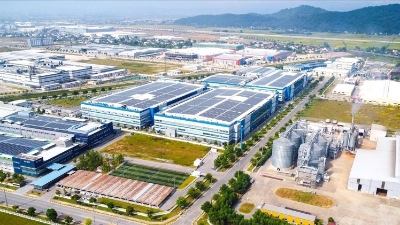
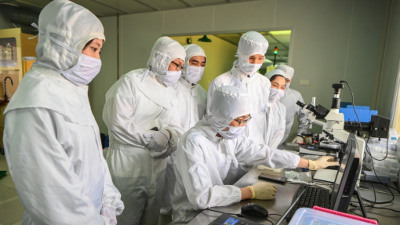
Notably, the electronics and electronic components sector continues to be a bright spot in the industrial production landscape. The strong increase in high-tech products reflects the increasingly clear role of foreign-invested enterprises in the production value chain in Nghe An.
Meanwhile, the presence of large FDI corporations in the electronics sector, such as Luxshare-ICT and Goertek, has significantly contributed to the industrial production growth of Nghe An. Wireless earphones increased by 89.27% and charging docks increased by 28.85%, clearly demonstrating the operational efficiency of large-scale FDI projects.
One of the important factors helping FDI enterprises maintain stable orders is effectively utilizing tariff preferences from the US market. The US's reduction of countervailing duties from 46% to 20% has enhanced the price competitiveness of goods produced in Nghe An, thereby expanding orders and elevating the province's role in the global electronic component supply chain.
Not only export industries, but the strong recovery of domestic consumption is also becoming an important driver of industrial production. Increased demand for goods has helped many factories increase capacity, while also creating positive ripple effects in the intra-provincial supply chain.
Accordingly, supporting industries and packaging have grown in line with the recovery of domestic consumption. The paper packaging industry increased by 56.69%, and beer can packaging increased by 24.78%, indicating increasingly tight linkages between production sectors, from food and beverage processing to packaging and logistics.
Additionally, the recovery of the construction materials production group, such as construction stone increasing by 75.9%, cement increasing by 27.63%, and plastic pipes increasing by 51.41%, are indicators that public investment activities and the construction market are moving.
In the context of high electricity prices and input material costs, the significant increase in the industrial production index shows that businesses have gradually optimized production processes, reduced costs, and diversified supply sources. Along with that, the provincial leadership's close guidance in resolving interest rate and exchange rate difficulties has helped businesses feel secure in maintaining output and stabilizing operations.
However, the industrial production landscape still has some dark spots. Some items, such as carton boxes decreasing by 16.41%, fresh milk decreasing by 5.76%, and bottled beer decreasing by 0.96%, still face difficulties due to declining export orders and high input costs. These are sectors heavily dependent on the purchasing power of the low-end segment or facing significant competition from imports, requiring businesses to continue innovating designs, improving quality, and controlling costs to regain growth momentum.



 Google translate