



Carbon pricing methods such as carbon markets and carbon taxes have become increasingly popular policy tools in recent years, gaining momentum worldwide as governments seek to reduce emissions and promote green growth.
At the “Navigating Global & Vietnam’s Carbon Market: Post-COP30 Insights and the Way Forward” seminar, held in Hanoi on November 25-26, Mr. Nguyen Tuan Quang, Deputy Director of the Department of Climate Change at the Ministry of Agriculture and Environment (MAE), noted that the Law on Environmental Protection 2020 provides the legal foundation for establishing and operating a carbon market in Vietnam.
Following this, the government issued Decree No. 06/2022/ND-CP and Decree No. 119/2025/ND-CP amending Decree No. 06, which set out a clear roadmap for carbon market development. Under this plan, Vietnam will pilot the carbon market through 2028, before moving to full-scale operations from 2029 and linking with international carbon markets.
Groundwork for carbon trading
To further strengthen the policy framework in line with this roadmap, the MAE is leading the drafting of a decree on the international exchange of mitigation outcomes and carbon credits, along with a decree on forest carbon sequestration and storage, which were submitted to the Prime Minister in December. Meanwhile, the Ministry of Finance has been tasked with drafting a decree on a domestic carbon exchange.
According to Mr. Quang, decisions adopted at COP30 have not only reshaped the global climate finance landscape but also created new opportunities and challenges for both the global carbon market and Vietnam in the years ahead.
Many countries, both globally and within the region, have already adopted these tools. The EU, for example, has operated a carbon market for nearly two decades. In Asia, countries such as China and South Korea have established Emissions Trading Systems (ETS), while within ASEAN, Singapore has implemented a carbon tax. Other countries, including Vietnam and Indonesia, remain in the early stages of carbon market development.
Carbon markets are generally divided into compliance markets and voluntary markets. Compliance markets operate through ETS, while voluntary markets encourage organizations and businesses to implement emission reduction projects and generate carbon credits.
At the same time, a growing number of countries are introducing climate-related technical barriers, such as the EU’s Carbon Border Adjustment Mechanism (CBAM). The US and the UK are also considering similar measures. These developments were among the key topics discussed at COP30 in Brazil. Participation in carbon markets can help enhance the competitiveness of enterprises, particularly exporters to markets applying climate-related trade measures.
In Vietnam, the government has clearly defined the carbon market’s primary role as supporting emission reductions in line with the country’s Nationally Determined Contributions (NDCs), while contributing to the goal of net-zero emissions by 2050. Carbon markets are also seen as a cost-effective mechanism for emission reductions, helping build a low-carbon economy that is more resilient to climate change.
To ensure effective market operations, the government has assigned the MAE to draft decrees on international carbon credit exchanges and forest carbon sequestration and storage, while the Ministry of Finance is responsible for preparing a decree on a domestic carbon exchange. Together, these regulations will form the legal basis for enterprises to participate in trading emissions allowances and carbon credits.
The decree on forest carbon sequestration and storage is currently being finalized and will include provisions on registering carbon credit generation projects and trading forest-based carbon credits. This is expected to create new revenue streams for enterprises investing in afforestation and forest protection.
Experts emphasize that carbon markets are not only a climate policy tool but also an economic opportunity to enhance the value of forest resources and promote low-emissions development. However, to fully capitalize on this opportunity, Vietnam will need a transparent, comprehensive legal framework aligned with domestic conditions and capable of meeting emerging global standards in the post-COP30 era.
The Department of Climate Change added that the decree on the international exchange of mitigation outcomes and carbon credits, expected to be issued in 2025, will provide a legal basis for Vietnamese enterprises to participate in international carbon markets while safeguarding national NDC commitments.
In parallel, ministries and agencies have issued technical guidance, particularly on Measurement, Reporting, and Verification (MRV) of greenhouse gas inventories and mitigation outcomes, helping businesses familiarize themselves with emissions accounting and generating critical data for the effective operation of the carbon market.
Roadmap and key considerations
Under Decision No. 232/QD-TTg issued by the Prime Minister on January 24, 2025, on the establishment and development of Vietnam’s carbon market, a clear roadmap was defined.
In the period prior to June 2025, the focus was on developing and finalizing the legal framework for trading carbon allowances, carbon credits, and offset mechanisms, ensuring a legal basis for piloting a carbon exchange. This phase also included building the infrastructure needed to operate the carbon market, strengthening the capacity of regulatory authorities, and raising awareness among businesses and individuals about participation in the market.
From June 2025 to 2028, the preparation and pilot phase continued to expand market infrastructure and pilot a domestic carbon exchange. At the same time, the legal framework governing carbon market operations was further refined, regulatory capacity enhanced, and awareness among businesses and individuals further improved. The stated objective is for Vietnam to officially operate its carbon market from 2029.
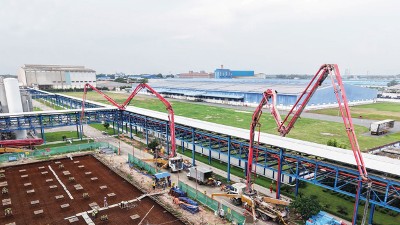
During the pilot phase, around 150 major-emitting facilities and enterprises, primarily in steel production, cement manufacturing, and thermal power generation, were included in the carbon market. These facilities will be allocated emissions allowances free of charge at 100 per cent. Greenhouse gas emissions from these three sectors account for nearly 40 per cent of Vietnam’s total national emissions.
Experts have noted that across all three phases, the continued development and refinement of policies and legal regulations is essential for effective carbon market operation, as this remains a relatively new and specialized market in Vietnam.
In terms of market principles, facilities are required to surrender greenhouse gas emissions allowances based on emissions inventory results for the 2025-2026 period. Facilities may borrow up to 15 per cent of the emissions allowances allocated for the subsequent compliance period to meet their current surrender obligations. Unused allowances after compliance in the current period may be carried over to the next period. Notably, facilities are allowed to use carbon credits to offset no more than 30 per cent of their allocated emissions allowances.
At a recent roundtable discussion on the issue, Dr. Nguyen Sy Linh, Head of the Department of Climate Change at the Institute of Strategy and Policy on Agriculture and Environment (ISPAE), noted that Decree No. 119 includes a particularly important provision setting the offset ratio at 30 per cent. Enterprises subject to emission reduction quotas during the pilot phase may purchase carbon credits to offset up to 30 per cent of emissions exceeding their allocated allowances. This provision directly concerns carbon credit suppliers and creates an opportunity for carbon credits to participate in the compliance market.
According to experts, Vietnam’s carbon market is attracting growing interest not only from domestic enterprises but also from international organizations and partners. To participate, facilities must first conduct greenhouse gas inventories. This is a critical step in understanding their emissions profile and determining whether and how to engage in the carbon market. To participate in carbon credit projects, facilities must invest in project development costs, hire third-party verifiers, and prepare greenhouse gas emission reduction plans, among other requirements.
From framework to function
Vietnam’s carbon market is in the formative stage and gradually moving into operation. Dr. Linh noted that, depending on the development phase and maturity of the carbon market, Vietnam will make appropriate adjustments related to carbon credit pricing and support policies to create a more enabling environment for market participants.
To promote the carbon market, he said that for the compliance market, specifically the ETS, Vietnam needs to promptly develop and issue detailed regulations on emissions allowance allocation and the allocation roadmap, moving from free allocation to auctioning. At the same time, systems should be put in place to register greenhouse gas emissions inventory results, permitted emissions allowances, and carbon credit generation projects. Clear guidance is also needed for stakeholders participating in the domestic carbon exchange, covering both emissions allowances and carbon credits.
For the voluntary market, Vietnam should develop and issue carbon standards for different sources of carbon credit generation, such as agriculture, forestry, and energy. Regulations should also clarify the rights and responsibilities of both credit generators and credit users in the voluntary market and within the ETS.
Drawing on the experience of countries that have already implemented carbon markets, Dr. Linh emphasized that building a transparent and effective institutional framework and ensuring the market operates in line with its objectives requires the active participation of State management agencies, businesses, and financial institutions. Their involvement is essential to provide financial flows that support trading activities in the carbon market.
Effective market operation also depends on robust supervision and evaluation. MRV is critical not only for carbon credit generation but also for emission reductions under the compliance market.
A clear MRV system, integrated with digital transformation and online implementation, makes it possible to identify which enterprises are performing well and which are not, thereby enabling timely market adjustments. This is particularly important during the transition from free allocation to auctioning, when enterprises must assess their emission reductions potential in order to bid at an efficient cost while achieving genuine emission reductions.
Experts stress that for a carbon market to function effectively, both the volume and the quality of tradable assets are crucial. Transparency throughout the process helps safeguard the environmental integrity of each carbon credit.
Professor Terry Sunderland from the University of British Columbia said a clear and robust legal framework strengthens governance and lays the foundation for a credible carbon market. Institutions play a central role, with clearly defined responsibilities and sufficient capacity to ensure effective implementation. He also highlighted the importance of Article 6 of the Paris Agreement in promoting nature-based solutions through international cooperation and carbon finance.
The carbon market is expected to expand further in the future as demand for credits increases. However, experts note that demand will increasingly shift towards high-quality credits, while lower-quality credits are likely to decline, as standards for carbon credits continue to become more stringent.








 Google translate