


The future of dining in Vietnam may be less about how far a restaurant can move away from tradition than how creatively it can reinterpret it. A bowl of “pho”, a “banh mi”, a plate of seafood, or a familiar herb can carry more value when it tells a story about where it comes from, who produced it, and how a chef has chosen to reinterpret it. At the same time, the restaurant itself is changing. Diners are increasingly moving between bars, lounges, counters, outdoor spaces, and smaller dining rooms rather than following the traditional progression of a formal meal.
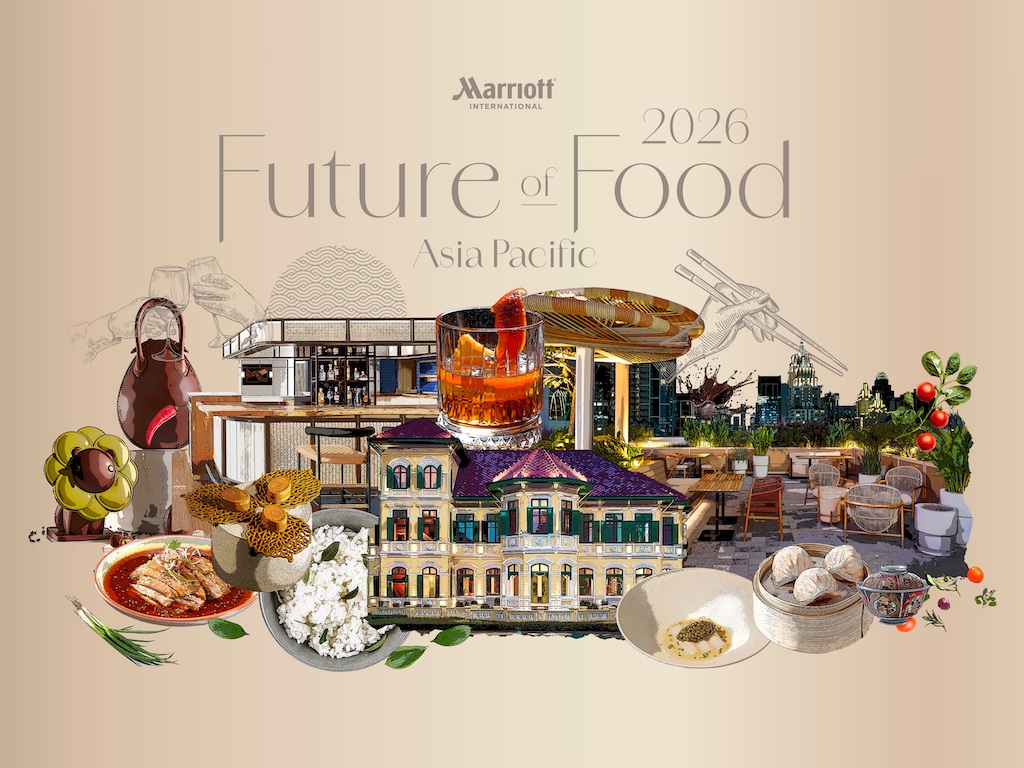
That shift is part of a wider transformation identified by Marriott International in its Future of Food 2027 report, which examines food and beverage (F&B) trends across Asia-Pacific, excluding China. Based on research across 284 Marriott International properties in 20 markets, the report found that diners are increasingly looking for experiences that are authentic, locally-rooted, and connected to their destination. Some 95 per cent of surveyed properties identified authentic local signature dishes as the biggest trend in their market.
“Across Asia-Pacific, we’re witnessing a shift toward intimate, locally-rooted experiences, where smaller, intentional spaces replace traditional formal dining models,” said Mr. Petr Raba, Vice President of Food & Beverage at Marriott International, Asia-Pacific excluding China. “Hotels are becoming cultural storytellers, embedding regional talent, locally-sourced ingredients and authentic connection into every aspect of the dining experience to create spaces that feel distinctly of their place.”
For Vietnam, the findings suggest that the future of dining may be less about moving away from tradition and more about interpreting it in new ways. Local ingredients, regional identity and familiar culinary characteristics are becoming increasingly important as restaurants seek to offer experiences that feel distinctive rather than interchangeable.
From restaurant to social space
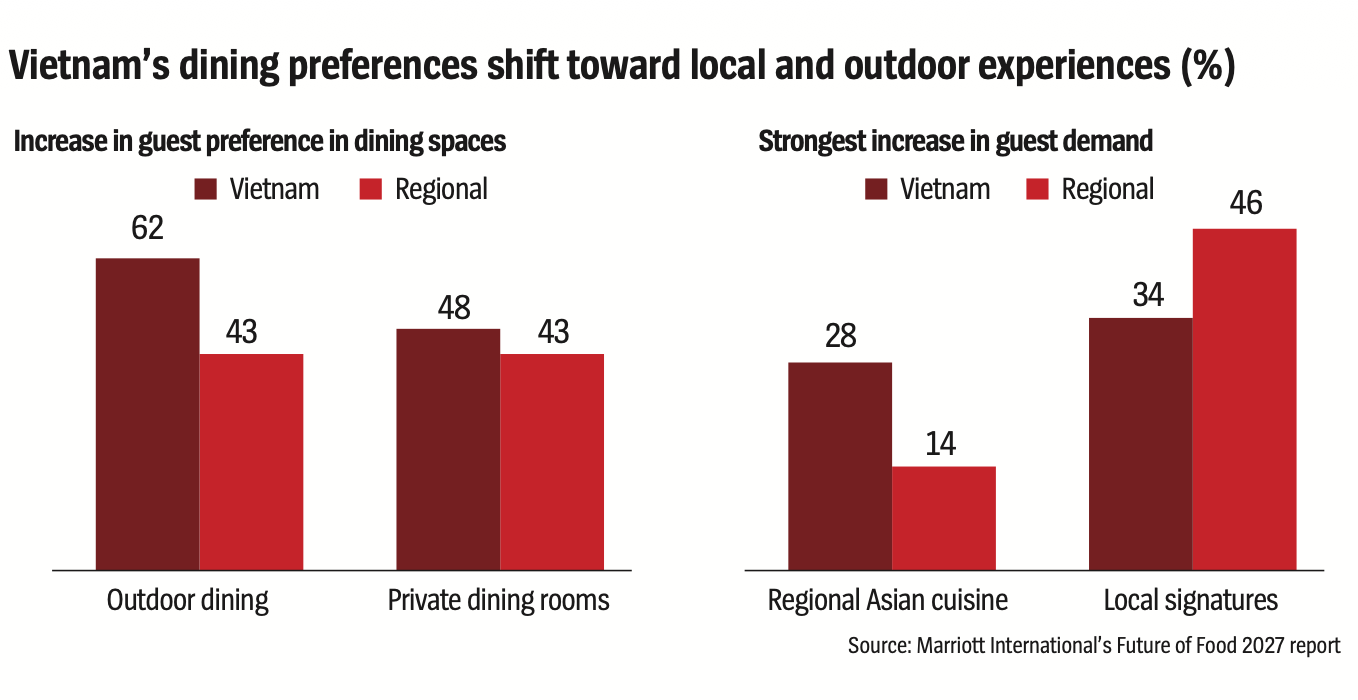
One of the most visible changes is taking place outside the plate. Across Asia-Pacific, traditional restaurant formats are giving way to more flexible and social spaces, including bars, lounges, counters, and outdoor areas. Nearly half of surveyed properties reported growing demand for casual dining spaces, while smaller 40 to 60-seat concepts are emerging as a preferred format for more focused restaurant identities.
Vietnam stands out in this trend. According to the report, 71 per cent of surveyed properties in the country have seen an increase in bar and lounge covers (the number of individual guests); the highest figure among the Asia-Pacific markets studied. Dinner covers have also increased at 52 per cent of properties, indicating that dining occasions are becoming more diverse rather than being confined to traditional restaurant settings.
The shift also reflects the changing role of hotels. Rather than serving primarily as dining facilities for hotel guests, restaurants, and bars are increasingly being designed to attract local residents and become part of the social life of a destination. Marriott’s regional research describes a move toward spaces that can support different occasions throughout the day, with design, lighting, and acoustics helping venues transition between different moods and uses.
Vietnam’s existing dining culture provides a natural foundation for this evolution. The country’s long-established mix of street food, neighborhood restaurants, coffee shops, bars, and destination dining already places considerable emphasis on sociability and informality. The emerging model combines some of those characteristics with more deliberate design and stronger culinary concepts.
Technology is also becoming part of this transition, though largely behind the scenes. The report noted that AI is increasingly being used for menu development, marketing, staffing, guest insights, food-waste reduction, and seating optimization across the region. Its role, however, is intended to support rather than replace human hospitality, allowing restaurant teams to focus more on the guest experience.
Locality becomes luxury
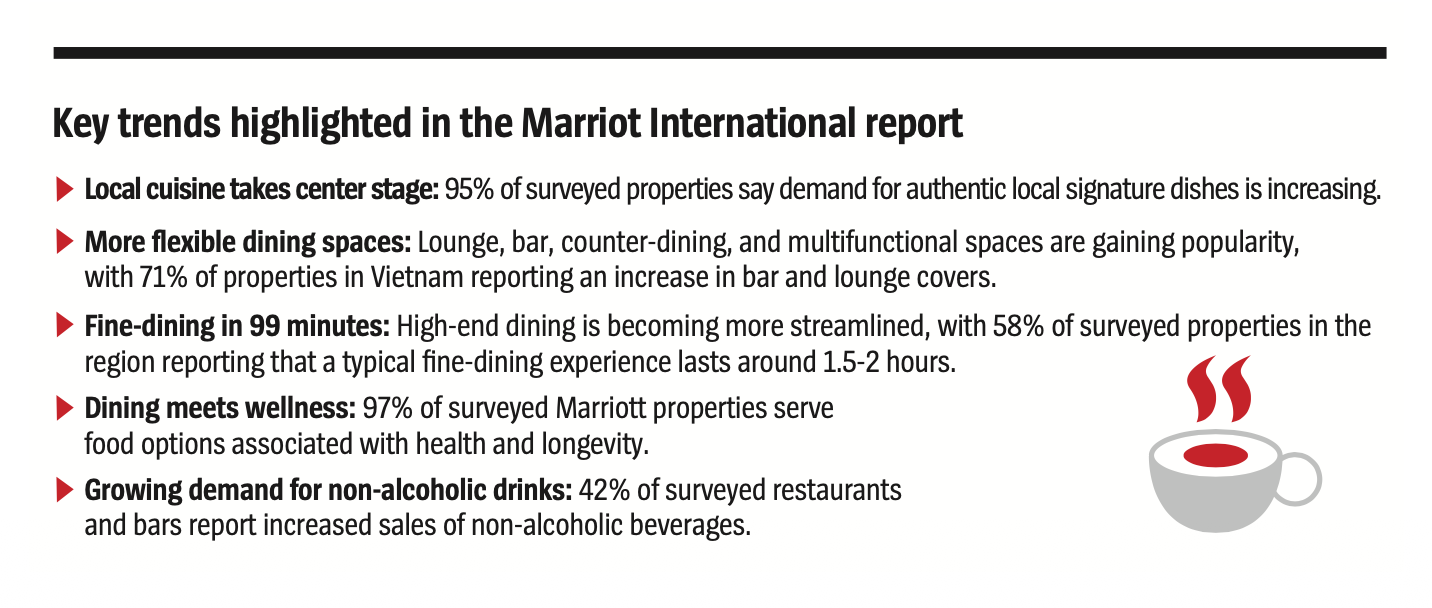
The strongest theme in the report is localization. Across Asia-Pacific, 95 per cent of surveyed properties identified authentic local signature dishes as the biggest trend in their market, while 79 per cent had introduced new local ingredients to their menus. Local ingredients are also appearing more frequently in beverage menus, according to 68 per cent of properties.
Vietnam is particularly well positioned for this trend because its culinary identity is already closely connected to geography, seasonality, and local ingredients. In the Vietnamese market, local signature dishes accounted for 46 per cent of the strongest increase in guest demand, compared with 14 per cent for regional Asian cuisine.
The report’s Vietnamese contributors suggest that this is also changing the definition of luxury. Ms. Summer Le, Founder and Executive Chef of Nén, a 2026 Michelin Guide Vietnam-recognized Vietnamese fine-dining restaurant in Da Nang, links the future of Vietnamese dining to “locality, creativity, research, and cultural depth,” noting that diners are increasingly interested in where ingredients come from and the stories behind them rather than simply the use of expensive imported products.
That trend could encourage restaurants to place greater emphasis on the diversity of Vietnamese regions. The report points to Da Nang and Phu Quoc as destinations where local dining could become increasingly vibrant, while fine-dining is expected to become more individual as restaurants develop stronger approaches to Vietnamese culture, ingredients, and storytelling.
The shift is also evident in how chefs approach familiar ingredients. At Akuna, the 1-star Michelin restaurant located on the ninth floor of Le Méridien Saigon in Ho Chi Minh City, Founder and Head Chef Sam Aisbett is described as allowing his menu to evolve with the seasons rather than keeping signature dishes permanently fixed. One current combination of smoked pork jowl, XO scallop, braised daikon, termite mushrooms, and roasted seafood broth illustrates how local ingredients can be combined with contemporary techniques.
Texture is another area where Vietnamese cuisine has an inherent advantage. The report highlights the crunch of banh mi, the contrast of “quay” in pho, and the use of fried shallots, peanuts, pickles, and herbs as elements that contribute to the distinctive character of Vietnamese food. Younger diners are also increasingly choosing venues for the overall experience, including aesthetics and lighting, while interest in formats such as single-diner hot pot is growing.
Together, these developments point toward a more specific understanding of Vietnamese cuisine. Rather than treating “Vietnamese food” as a single category, restaurants have an opportunity to express the characteristics of particular regions, ingredients, and culinary traditions.
Redefining fine-dining
The changes are also reshaping the fine-dining experience. Marriott’s report identifies a move toward shorter tasting experiences, with up to five courses delivered in less than two hours rather than the longer menus of ten or more courses that have traditionally defined some fine-dining formats. Across the region, 58 per cent of surveyed properties report average fine-dining experiences lasting between one and a half and two hours.
The trend reflects a broader shift in what diners value. Restaurants are simplifying menus, introducing more a la carte choices and focusing on memorable dishes and “wow moments” rather than the number of courses. For Vietnam, this could create room for fine-dining concepts that are more closely built around Vietnamese ingredients and stories instead of following established international tasting-menu conventions.
Wellness is another increasingly important consideration. The report finds that 97 per cent of surveyed Marriott properties in Asia-Pacific excluding China serve dishes featuring ingredients associated with health and longevity. The focus extends beyond restaurant menus into areas such as hotel minibars and turndown offerings.
Plant-forward dining is also gaining momentum. Marriott’s APEC Plant-Forward Program, piloted across properties in South Korea, Vietnam, Thailand, Malaysia, and Indonesia, developed a ten-dish vegan menu framework incorporating localized recipes, standard operating procedures, and allergen guidelines. The program is scheduled to be incorporated into dining standards across APEC in the first quarter of 2027.
For Vietnam, the move toward plant-forward dining builds on an established culinary tradition that already makes extensive use of vegetables, herbs, tofu, mushrooms, and fermented ingredients. The trend therefore offers an opportunity to reinterpret existing food traditions rather than simply import a new dining model.
Drinks are changing as well. The report records a 41 per cent increase in guest preference for alcohol-free or low-alcohol options in Vietnam. Across Asia-Pacific, 42 per cent of surveyed restaurants and bars reported higher sales of non-alcoholic beverages, suggesting that low and non-alcohol drinks are becoming a more established part of hospitality rather than a niche wellness offering.
For Vietnamese operators, this could create new opportunities around tea, coffee, fruit, herbs, and other local ingredients, particularly as consumers look for drinks that offer the same level of craft and presentation as alcoholic beverages.
Taken together, the findings suggest that Vietnam’s dining scene is moving toward greater specificity and flexibility. Restaurants are adapting their spaces to different social occasions, chefs are placing greater emphasis on local ingredients and cultural context, while fine-dining is becoming shorter, more individual, and increasingly attentive to wellness.
The broader regional trend identified by Marriott is therefore not simply a return to local food. It is a shift toward experiences that are more closely connected to the place where they are created. For Vietnam, where food is already deeply embedded in regional culture and everyday life, that could provide a strong foundation for the next stage of the country’s culinary development.







 Google translate