



Vietnam’s agriculture and environment sector has maintained positive growth in recent times, growing 3.78 per cent in 2025 and with exports of agriculture, forestry and fisheries products reaching $70.63 billion. In the first nine months of this year, growth stood at 4.02 per cent, while export turnover totaled $56.3 billion. Despite these positive results, however, the sector continues to face five major bottlenecks.
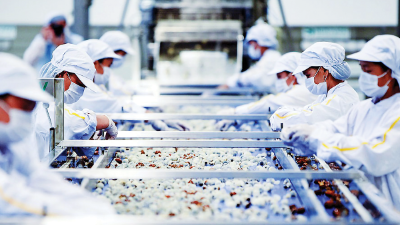
According to Deputy Minister of Agriculture and Environment Dang Ngoc Diep, these are fragmented and small-scale production; dispersed research and technology transfer efforts; limitations in breeding stock, crop varieties, and input technologies; inadequate preservation and deep-processing technologies; and fragmented data systems and a shortage of digital skills.
At a recent conference entitled “Developing Science, Technology, Innovation and Digital Transformation to Promote Growth in the Agriculture and Environment Sector in Northern Vietnam,” organized by the Ministry of Agriculture and Environment (MAE) in coordination with the Ministry of Public Security (MPS), participants identified science and technology, innovation, and digital transformation as key drivers of productivity, quality, and added value in the sector.
Driving agricultural innovation
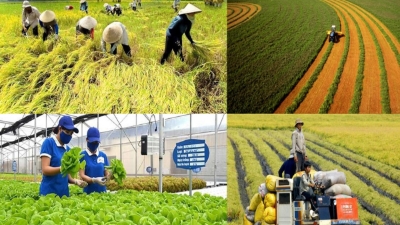
Mr. Lai Van Hoan, Vice Chairman of the Hung Yen Provincial People’s Committee, said the province maintains approximately 193,000 ha of rice cultivation area annually, producing 1.26 million tons, of which around 550,000 tons are destined for export and markets outside of the province.
Hung Yen is prioritizing the adoption of new rice varieties, particularly high-quality and specialty varieties linked to designated production areas and processing requirements. The province has also implemented 100 improved farming models, reducing seed use by 30 per cent, transplanting labor by 27 per cent, pesticide spraying labor by 44 per cent, and chemical fertilizer use by 28 per cent.
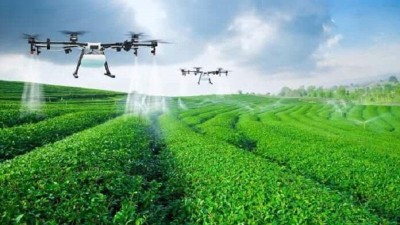
For 2027-2030, Hung Yen plans to select two to three high-quality rice cultivation areas, each covering 100-300 ha, and apply integrated farming practices, mechanization, drying, processing, and marketing. The province has also proposed prioritizing three core technology groups for investment: digital twins for environmental and disaster management; the Internet of Things (IoT) and blockchain technologies for agricultural product traceability; and blockchain for rural finance and credit management.
In Quang Ninh city, meanwhile, fisheries account for more than 45 per cent of the total value of agricultural production, with aquaculture contributing approximately 60 per cent of total fishery output. Mr. Nguyen Van Cong, Vice Chairman of the Quang Ninh City People’s Committee, said the city had approved a plan to develop concentrated aquaculture zones using modern, industrial-scale methods, with five designated farming zones covering a combined 93,600 ha.
As of September 2026, Quang Ninh had allocated more than 4,692 ha of marine area to 57 organizations and 517 ha to 807 individuals. However, marine aquaculture continues to face challenges related to breeding technologies and farming techniques. Deep processing, preservation, waste treatment, product traceability systems, and environmental monitoring technologies also remain underdeveloped.
Mr. Hoang Gia Long, Vice Chairman of the Tuyen Quang Provincial People’s Committee, said the province has more than 858,000 ha of forest, with forest coverage reaching 62.2 per cent; the second-highest rate nationwide. The province has 583 forestry product processing facilities. Despite its extensive forest resources, Tuyen Quang faces difficulties in developing large-timber plantations. The province proposed that the MAE support research into the economic efficiency of large-timber forestry and select Tuyen Quang to pilot a sustainable raw material zone integrating traceability and deep processing.

The requirement for large-scale livestock farms to maintain a minimum distance of 400 meters from residential areas is creating difficulties for existing facilities. It is complicating the legal procedures required to upgrade, expand, and adopt new technologies, including at farms equipped with modern, closed-loop environmental treatment systems.

Overcoming bottlenecks
Mr. Nguyen Van Long, Deputy Minister of Public Security, highlighted a significant gap between research and practical production and business activities. According to data compiled by the MPS, the standing agency of the Central Steering Committee for Resolution No. 57, Vietnam’s 34 cities and provinces had reported 916 tasks associated with 908 science, technology, and innovation products. Agriculture accounted for 451 products, or nearly 50 per cent of the total recorded.
According to Mr. Long, these figures indicate that science and technology tasks in many localities are not sufficiently aligned with growth targets and practical needs. They also point to a failure to clearly identify leading businesses to partner in research, application, and product commercialization.
Delivering concluding remarks at the conference, Deputy Prime Minister Ho Quoc Dung said the agriculture sector had considerable room for growth, particularly as science and technology, innovation, and digital transformation are more deeply integrated into production.
The sector grew 4.02 per cent in the first nine months of 2026, reaffirming its role as a pillar of the economy. However, it continues to face numerous constraints involving crop varieties, livestock breeds, input technologies, production organization, processing, post-harvest preservation, and market access. He emphasized that science and technology, innovation, and digital transformation must become direct drivers of agricultural growth. Their role should extend beyond research to deliver tangible products, economic value, and measurable results.
The MAE should work with the Ministry of Science and Technology to conduct a comprehensive review of the sector’s research and technology application landscape, identify priority challenges, and tailor solutions to the strengths and development needs of different agricultural regions, particularly in northern Vietnam.
Priority areas include developing nationally strategic technologies for next-generation crop varieties and livestock breeds; applying gene and cell technologies; developing veterinary vaccines and biological products; and establishing agricultural product traceability systems.
Mr. Dung also called for stronger collaboration between government agencies, scientists, businesses, cooperatives, and producers to ensure that research is linked to technology transfer, production organization, and product commercialization. In digital transformation, the sector needs to complete and standardize agricultural product traceability systems while accelerating the connection, sharing, and use of land data, traceability data, and information supporting efforts to prevent and combat illegal, unreported, and unregulated (IUU) fishing.
We propose prioritizing the development of high-quality forestry tree varieties and planning large-timber plantation areas certified under sustainable forest management standards. These measures would help secure raw materials for deep processing and export.





 Google translate