



Ministries, sectors and localities must either develop new, or review, update and promulgate, their respective ministerial- and provincial-level Digital Government Architecture Frameworks no later than January 29, 2027, with the aim of creating a unified digital space that better serves citizens and businesses.
Deputy Prime Minister Ho Quoc Dung stated at a conference on September 15 to disseminate, explain and implement Decision No. 1425/QD-TTg on the issuance of the National Digital Architecture Framework (Version 1.0), which he chaired.
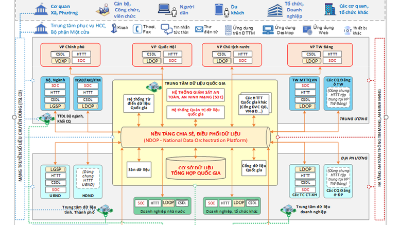
In his opening remarks, Deputy PM Dung emphasized that the National Digital Architecture Framework would serve as the basis for ministries, sectors and localities to develop and update their own digital architecture frameworks. It would also guide investment in, connection of, sharing of and common use of digital platforms, helping build a unified digital space while maximizing and building on existing achievements to better serve citizens and businesses.
“The architecture framework must be regarded as a tool for governing digital transformation. Implementation effectiveness should be measured by the ability to connect, share and jointly use digital resources; reduce overlapping investments; save resources; ensure security and safety; and improve the quality of services provided to citizens and businesses,” said Mr. Dung.
Addressing the event, Deputy Minister of Science and Technology Bui Hoang Phuong said the Ministry of Science and Technology would issue a set of measurement indicators that would enable real-time assessments, allowing adjustments to be made promptly and in line with the requirements of each stage.
Data would be collected automatically from existing systems operated by ministries, sectors and localities, reducing the need for agencies to manually re-enter data for reporting purposes.
The Ministry of Science and Technology will also coordinate with the Ministry of Public Security and relevant ministries and agencies to develop a common framework of standards, technical regulations and technical guidelines; issue assessment methodologies, compliance-monitoring mechanisms and a set of measurement indicators; and build, manage and operate the National Digital Architecture Management System.
At the same time, the ministry will consolidate information and report to the Government on implementation progress, while promptly advising and proposing solutions to address difficulties and obstacles faced by localities.
According to Mr. Nguyen The Tuan, Deputy Chief of the Ministry of Public Security's Office, the platforms currently under development are progressing according to the roadmap through 2030. Some platforms have already been installed and are providing services in practice, including the National Cloud Computing Platform and the National Cybersecurity Operations Platform.
Deputy PM Dung said the architecture framework must be regarded as a tool for governing digital transformation. Implementation effectiveness should be measured by the ability to connect, share and jointly use digital resources; reduce overlapping investments; save resources; ensure security and safety; and improve the quality of services provided to citizens and businesses.







 Google translate