


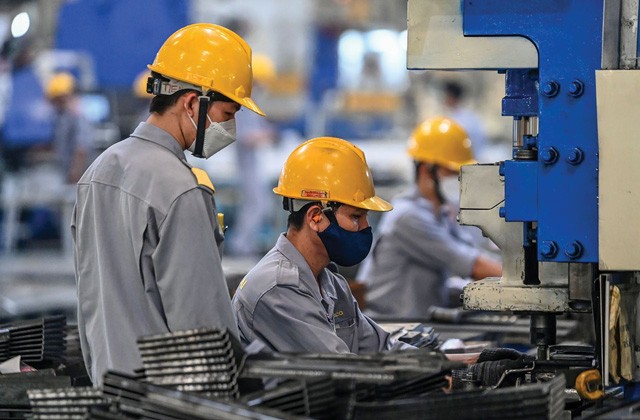
Vietnam’s mechanical engineering industry faces a critical turning point: move beyond contract manufacturing or risk being left behind as global competition shifts toward technological ownership and higher-value production. Professor Le Ky Nam, Vice Chairman and Secretary-General of the Vietnam Association of Mechanical Industry (VAMI), said the traditional growth model built on cheap labor and the production of individual components has run its course. Within global value chains, contract manufacturing generates some of the lowest returns and is among the easiest activities to relocate as labor costs rise.
Toward high-tech capabilities
Dr. Ngo Trong Binh, Deputy Director of the National Research Institute of Mechanical Engineering (NARIME), said 2025 marked the end of the previous development cycle. The nature of competition in the 2026-2035 period is undergoing a fundamental shift. The traditional model, based on cheap labor, production dependent on customer drawings, limited integration, and thin profit margins, is gradually disappearing. The new cycle requires businesses to take control of R&D, design their own products, own intellectual property, develop independent technological capabilities, and provide integrated, end-to-end solutions.
Analyzing import and export data, Mr. Pham Dong Khoi, Deputy General Director of the Viettel Manufacturing Corporation (VMC), highlighted a concerning imbalance. In 2024, exports across eight key mechanical engineering product categories, including reactor components, aircraft engines, rubber and plastic injection molds, and transmission shafts, totaled $1.26 billion, equivalent to just 0.62 per cent of global import demand, which exceeded $200 billion. Meanwhile, Vietnam spent $1.86 billion on imports in these categories, much of it on basic raw materials.
In both defense and civilian applications, VMC has successfully integrated and manufactured internationally-compliant high-tech systems, including radar systems, missile systems, and 5G base station equipment. The company is also working to qualify as a Tier 3 supplier to leading aerospace companies such as Boeing and Airbus through global partners.
The experience of the Flying Legend Vietnam JSC offers a particularly compelling example of such ambitions. Mr. Tran Hai Dang, Chairman of the Board at the company, said it began 18 years ago with around ten engineers working to localize aircraft armrests. Today, it operates two large-scale factories, employs 200 people, and serves more than 400 international customers across 40 countries and territories. Flying Legend has now developed capabilities in engine casing overhaul and repair, the localization of ground support equipment, and pilot training simulators, and has also successfully manufactured a two-seat aircraft.
Key challenges
Despite these achievements, Vietnam’s mechanical engineering industry continues to face significant challenges and barriers. The biggest challenge is the lack of strategic raw materials. Most aluminum alloys, specialty steel, and high-strength materials such as Inconel and titanium must be imported. When material prices rise by 40-60 per cent or supplier countries impose export licensing restrictions, Vietnamese manufacturers are immediately left vulnerable.
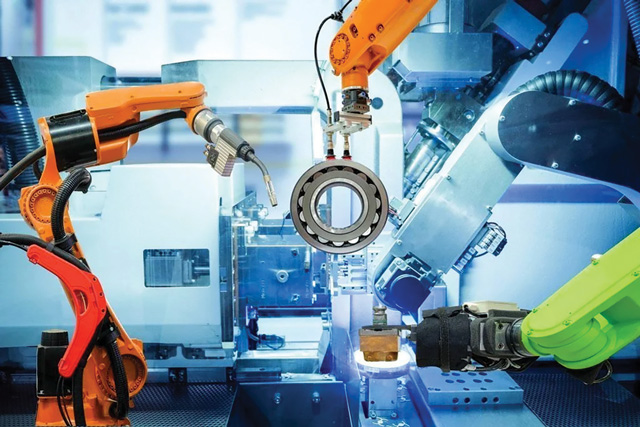
Meanwhile, fragmented and duplicative investment in machinery, coupled with the lack of shared data connectivity tools, prevents companies from pooling technological resources and sharing quality certifications. Most production remains small-scale and geared toward domestic demand, while export participation requires compliance with international standards.
The second challenge lies in regulatory approval mechanisms and State management capacity. Mr. Dang expressed concern that the company’s domestically-manufactured two-seat aircraft had remained grounded in Vietnam for three years. Despite operating successfully in South America and North Africa, the aircraft has been unable to progress domestically because approval procedures have failed to keep pace. Risk aversion and the absence of a central agency responsible for formulating a development strategy for the aerospace industry are also constraining business innovation.
The third challenge comes from the transition to greener production and increasingly stringent environmental, social, and governance (ESG) standards. Ms. Nguyen Thi Giang, GHG and ESG Specialist at Lead on GHG, warned about the EU’s Carbon Border Adjustment Mechanism (CBAM). With carbon certificate prices reaching €83.32 ($92.75) per ton of CO2 and plans to extend coverage to more than 180 downstream product categories, including metal products, processed components, and engines, from 2028, companies without traceable carbon data risk facing very high default carbon costs or exclusion from supply chains.
The final challenge concerns management systems and the ability to demonstrate manufacturing capabilities. Ms. Pham Van Anh, Country Manager of Epicor Software Vietnam, emphasized the need to shift from asking whether a company “can manufacture” to proving that it can. For mega-projects similar to the North-South high-speed railway, valued at more than $67 billion, global corporations do not simply ask whether a supplier has the necessary machinery. They require verifiable evidence of consistent quality control, multilevel bills of materials, raw material traceability, and real-time production records.
Technological autonomy
Overcoming these bottlenecks and accelerating the development of Vietnam’s mechanical engineering industry during 2026-2035 will require coordinated action on government policy and business strategy.
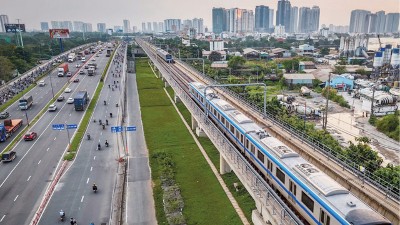
First, the legal and policy framework must be strengthened, with market demand serving as a key driver. Dr. Binh proposed that the government leverage major public investment projects, including urban railways, high-speed railways, and renewable energy projects, to create a sufficiently large market with long-term predictability.
Prime Ministerial Decision No. 929/QD-TTg, dated May 29, 2026, sets a target of increasing the domestic content ratio to 50 per cent by 2035, shifting policy support from the number of operating facilities toward the quality of management and technological capabilities. Coordinated implementation of the Law on Science, Technology and Innovation, Decree No. 205/2025/ND-CP, and the Law on Digital Technology Industry would establish a more favorable legal framework for land access and long-term credit while accelerating comprehensive digitalization, from 3D computer-aided design and manufacturing (CAD/CAM) to computer numerical control (CNC) machining and robotics.
Second, the industry needs to strengthen ecosystem connectivity and build shared databases. VAMI, together with relevant ministries and agencies, should move quickly to establish a national database of mechanical engineering capabilities, enabling businesses to share machinery capacity, international certifications such as AS9100 and NADCAP, and raw material supply chain information.
Mr. Khoi emphasized that “to go far, we must go together.” Rather than investing in scattered, overlapping capabilities, companies should form interconnected supply chains. Large enterprises should take on major projects, while smaller businesses should commit to developing specialized components over the long term, including parts, materials, air filters, rubber products, and lighting systems, helping build a complete industrial ecosystem.
Third, businesses must proactively adopt greener production practices and standardize digital management systems. Green transformation should be treated as a core competitive capability. Implementing batch-level carbon tracking, standardizing energy management, and adopting ESG reporting practices would help companies meet the EU’s CBAM requirements while opening the door to global supply chains.
At the same time, enterprise resource planning (ERP) and manufacturing execution systems (MES) can help businesses digitize their entire production processes, control errors, enable immediate traceability, and prepare for the integration of AI into manufacturing.
Fourth, the industry must overcome the invisible barrier of risk aversion and develop a global outlook. The government should establish mechanisms that allow for calculated risk-taking in research and new technology trials, while strengthening the capacity of testing and certification bodies to meet international standards. Businesses, for their part, must remain committed to long-term development and pursue opportunities across global markets spanning more than 160 countries and territories, rather than limiting their ambitions to the domestic market.





 Google translate