


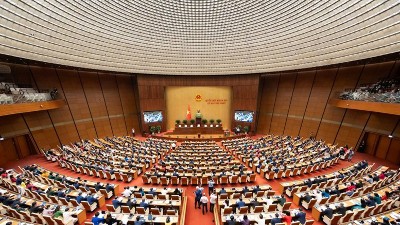
During the discussion session of the Ho Chi Minh City National Assembly Delegation on the Postal Law (amendment) project, which took place on October 17 morning in the framework of the second session of the 16th National Assembly (NA) that opened on the same day, NA Chairman Tran Thanh Man highly appreciated the innovations in the law project, particularly the shift from pre-inspection to post-inspection management, enhancing digitalization, postal item identification, and data-based management.
He emphasized that the amendment of the Postal Law must facilitate businesses, reduce market entry barriers, and promote the digital economy. At the same time, it should establish a substantive post-inspection mechanism to protect consumer rights and ensure the security and safety of the postal network.
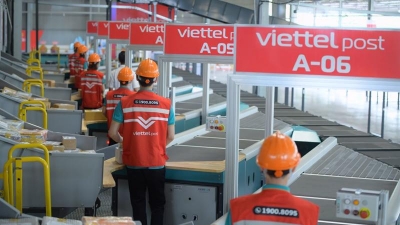
The NA Chairman noted that Vietnam's postal market has fundamentally changed in scale and nature of operations. By 2025, the volume is expected to reach about 4 billion postal items, a 12-fold increase compared to 2010; revenue was projected at approximately VND87 trillion (more than $3.36 billion), more than a 21-fold increase; and the number of enterprises has risen from about 40 to 760. Notably, over 90% of postal items and goods are linked to e-commerce.
According to the Chairman, postal services are no longer merely traditional mail delivery services but have become an important part of the digital economy infrastructure, directly connected to e-commerce and the flow of goods.
The draft law, which includes many groundbreaking innovations, was praised by the Chairman, who highlighted the most important point: transitioning from a licensing mechanism to registration, from pre-inspection to post-inspection on an electronic management platform.
According to the draft, the number of administrative procedures is expected to decrease from 14 to just one electronic registration procedure. State management agencies primarily check the completeness and validity of documents; businesses are responsible for meeting business conditions and are subject to post-registration inspection and supervision.
The Chairman considered this a revolutionary change in state management, aligning with administrative procedure reform requirements, reducing market entry barriers, facilitating businesses, and promoting the digital economy.
However, "post-inspection is only effective when there is real, transparent data and strong supervisory capacity," he stressed.
If the data-sharing system between businesses and management agencies is incomplete, and risk assessment criteria remain vague, post-inspection could become a formality or add compliance burdens, according to the NA leader.
Therefore, he suggested clarifying the minimum data-sharing obligations of businesses, especially identification codes, postal item journeys, and arising incidents; mandating digitalization for large enterprises, while providing appropriate technical support mechanisms for small businesses.
A matter of particular concern to the Chairman is defining the scope of regulation between postal activities and transport, warehousing, and logistics to avoid overlapping management or missing subjects.
According to the Chairman, the scope of management should be based on the nature of the activity rather than the service name or business organization form.
For logistics companies that provide both warehousing services and organize delivery, or technology platforms that only coordinate orders without directly operating the postal network, specific criteria are needed to determine the legal responsibilities of each entity.
The Chairman proposed adding quantifiable criteria to distinguish postal, transport, and logistics activities; and designing a separate, simpler post-inspection process for businesses not directly operating the postal network, suitable to the risk level of each model.
Regarding postal item identification, the Chairman appreciated the regulation that each postal item has a unique identification code maintained throughout its journey. This is the basis for shifting from management primarily based on detecting and handling violations to proactively preventing and controlling risks.
However, data collection must be limited to the necessary minimum, ensuring privacy, protecting personal data, and not increasing compliance costs for businesses.
For universal and public postal services, the Chairman requested continued expansion of access in remote, mountainous, border, and island areas; and building a transparent financial mechanism, compensating based on actual costs, with independent audits, without distorting competition.
The Chairman also suggested improving the damage compensation mechanism, allowing recipients a reasonable time, possibly 24 or 48 hours, to inspect goods and detect internal damage or loss.
Emphasizing that postal services have become essential infrastructure of the digital economy, the NA Chairman called for accelerating digital transformation, developing, and applying science, technology, and artificial intelligence in various sectors, including postal services.
To perfect the draft Postal Law (amendment), the Chairman urged the drafting and verifying agencies to focus on four key issues.
First, to clarify the legal boundaries between postal services and transport, logistics, and related services to avoid overlapping or missing management.
Second, to build a substantive data system and post-inspection mechanism, ensuring connection, information sharing, risk identification, and prevention.
Third, to ensure a fair and transparent financial mechanism, especially for universal and public postal services; create a level playing field for businesses.
Fourth, to balance the need to facilitate production and business activities with protecting consumer rights, ensuring the security and safety of the postal network.
The NA Chairman urged the drafting and verifying agencies to fully absorb and thoroughly explain the opinions of NA Deputies, continue to perfect the draft law with the highest quality, ensuring it is ready for submission to the National Assembly for consideration and approval at the second session.
The approval of the Postal Law (amendment) is expected to contribute to institutional improvement, promote innovation, digital transformation, and digital economy development.





 Google translate