


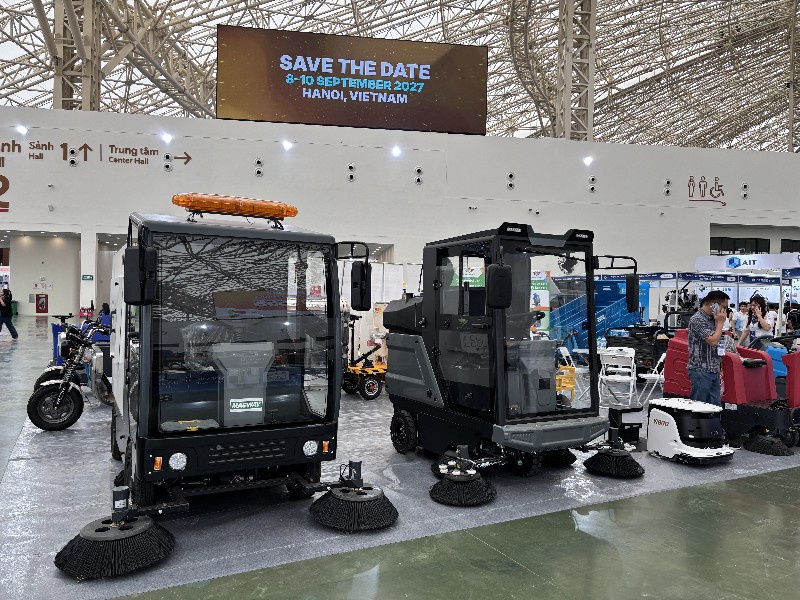
Within the framework of the International Manufacturing Congress 2026 (IMC 2026), recently held at the Vietnam Exhibition Center (VEC) in Hanoi, industry leadership gathered for a high-level panel discussion titled “Smart factory at scale: Deploying AI, automation and digital technologies across Vietnam’s manufacturing sector,” Dr. David Tw. Chia, Regional Managing Director of Beckhoff Automation Southeast Asia, shared deep strategic perspectives during the session regarding critical industrial technological shifts and collaborative ecosystems.
Unlocking Industrial Scalability and Real-Time Data Optimization
Addressing the defining technological trends in the industry, Dr. Chia noted that while artificial intelligence often dominates headlines, a more fundamental trend is rapidly reshaping the landscape. He stated, "I think the trend over the past 3 years. No doubt it's about AI, but I would not say AI," adding that software-defined automation holds a bigger impact primarily because it bridges the gap between hardware and software to enable mass production scalability.
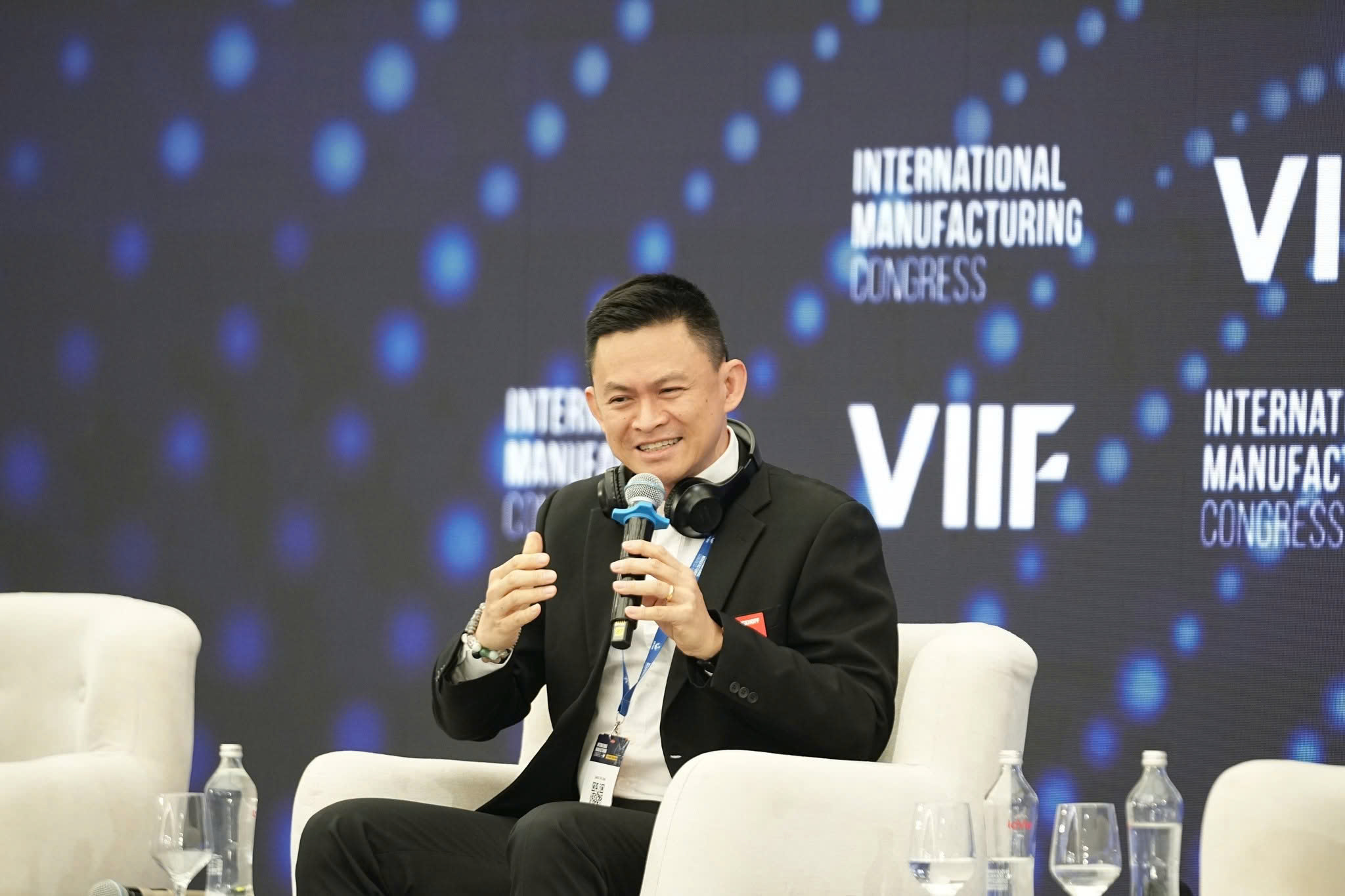
Addressing how manufacturers operating with legacy infrastructure can unlock value without replacing assets, Dr. Chia acknowledged, "It's a difficult question." He noted that companies spend heavily on equipment, yet "the machines don't talk, right?", advising manufacturers that "my suggestion is really to bite the bullet and get through it." For aging hardware, he recommended utilizing sensorization to convert analog data into digital formats, while pointing out that newer equipment running on open protocols makes data retrieval significantly easier.
Transitioning to the purpose of real-time data collection, Dr. Chia explained the importance of capturing operational information. To illustrate, he posed a practical question: "What I'd like to know is, is my factory producing the 10,000 parts per day that it promised to do?"
Noting that Overall Equipment Effectiveness (OEE) is not a novel concept, he explained that it evaluates three straightforward metrics covering operating hours, design output volume, and quality. Sharing a case study where implementation was tested on a cluster of machines, he noted that after estimating an eighteen-month return, "the project pays back in six months. Not 18 months, in six months," prompting the customer to remark that they should have done it much earlier.
Looking ahead to the strategic horizon of 2030, Dr. Chia stressed that Vietnam’s large base of small and medium-sized enterprises (SMEs) must look beyond domestic boundaries and embrace a broader regional perspective. He asserted that for an SME to grow successfully, it must focus on the ecosystem across Southeast Asia by mobilizing critical resources. Urging businesses to view neighbors as collaborators rather than competitors, he highlighted that combining diverse expertise and resources "will help the economy a lot" and create a very strong regional model.
Overcoming Lab-Scale Barriers and Empowering the Next-Gen Workforce
Transitioning to an exclusive sidebar interview with Vietnam Economic Times, Dr. Chia elaborated further on the root causes of failure when scaling up from laboratory environments. He observed that the fundamental challenge faced globally is "not knowing what you want to achieve at the end of the day," warning manufacturers against focusing narrowly on low-cost solutions without considering interoperability and future mass production requirements.
Addressing how SMEs can access advanced automation without excessive initial financial pressure, Dr. Chia pointed to the industry trend of software-defined automation, which he described simply as "the de-link between hardware and software." Drawing a parallel to mobile operating systems, he explained how decoupling software from diverse hardware models fosters innovation, noting that PC-based control systems give manufacturers "the choice of using either the hardware or the software, or both," providing the distinct advantage of testing solutions before full implementation.
Finally, offering guidance for young Vietnamese professionals seeking careers in smart manufacturing, Dr. Chia advised against focusing on learning specific big brand names during their education. Emphasizing the mastery of fundamental principles and close institutional links between academic settings and industrial environments, he concluded that true preparation involves students learning how to "train for automation, train for the fundamentals of how AI is now being used in automation," ensuring they can successfully scale their skills to meet industry demands.







 Google translate