


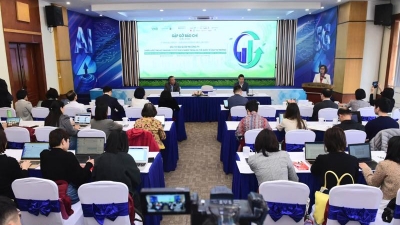
Built upon the latest G20/OECD standards, the Vietnam Corporate Governance Code 2026 (VNCG Code 2026), unveiled on February 4, is expected to be a major milestone in "upgrading" the governance quality of Vietnamese enterprises. This move prepares the domestic market for its upcoming reclassification roadmap and positions the country to capture massive international investment inflows.
The VNCG Code 2026 reflects recent shifts in the domestic legal framework while directly referencing the most advanced international best practices.
According to Mr. Vu Chi Dung, Head of the International Cooperation Department at the State Securities Commission (SSC) and a representative of the drafting team, the new code has been streamlined from the ten principles of the 2019 version to nine. However, it offers broader and deeper coverage of modern governance issues. The structure of the new code focuses on core pillars, including: placing the Board of Directors at the center of governance; strengthening risk control and management; enhancing disclosure quality and transparency; protecting shareholder rights; and notably, integrating Environmental, Social, and Governance (ESG) factors.
The most significant breakthrough in the VNCG Code 2026 is the implementation of the “Comply or Explain” mechanism. Under this approach, listed companies are encouraged to adopt governance standards that exceed the minimum legal requirements. If a company is unable to comply with these higher standards, it must provide a reasonable and transparent explanation in its annual report. This is a common practice in developed and ASEAN markets, ensuring flexibility for a company's specific needs while maintaining constant pressure to improve information transparency.
Notably, the VNCG Code 2026 introduces five strategic shifts designed to align Vietnam with global trends:
First, beyond defining business strategy, the BOD is now responsible for overseeing ESG factors, including climate change risks. The Code recommends establishing specialized ESG committees or appointing dedicated board members to ensure effective execution.
Second, the scope of risk management has been significantly expanded. In addition to traditional financial risks, enterprises must now closely monitor non-financial and "emerging" risks stemming from digital transformation, Artificial Intelligence (AI), and climate change.
Third, to meet global benchmarks, sustainability disclosures should now be verified by independent third parties. Furthermore, executive remuneration policies must be disclosed in detail and tied directly to the company’s performance and long-term value creation.
Fourth, the Code strongly encourages the use of technology in governance, promoting virtual Annual General Meetings (AGMs) and electronic voting (E-voting). Shareholder voting rights have also been extended to critical issues such as board remuneration, major M&A transactions, and the right to engage in dialogues regarding ESG matters.
Fifth, this marks a paradigm shift from prioritizing "Shareholder" returns to creating "Stakeholder" value. This requires businesses to balance the interests of investors, employees, customers, and the broader community.
“Good corporate governance does not only help businesses improve operational efficiency, transparency, and accountability; it is also a vital factor in bolstering investor confidence, attracting long-term capital, and driving sustainable growth,” said Vice Chairman of the State Securities Commission (SSC), Nguyen Hoang Duong.
In reality, results from the ASEAN Corporate Governance Scorecard (ACGS) indicate that Vietnam’s governance practices still require significant improvement, particularly regarding Board responsibilities and the protection of minority shareholders.
As Vietnam stands at a historic crossroads, seeking a market status upgrade from "Frontier" to "Emerging" by international organizations like FTSE Russell, the standardization of corporate governance is viewed as the "foundational condition" to enhance the market's overall attractiveness to global investors.



 Google translate