


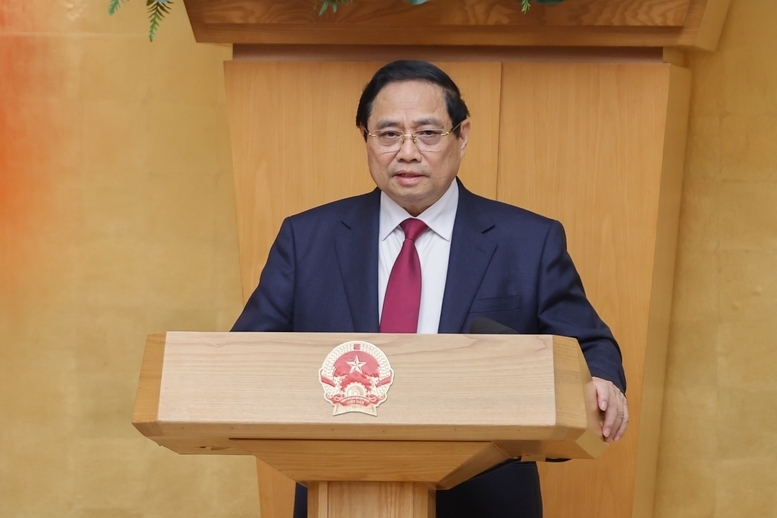
Prime Minister Pham Minh Chinh has called for a continued review and maximum reduction of administrative procedures to minimize inconvenience and compliance costs for citizens and businesses.
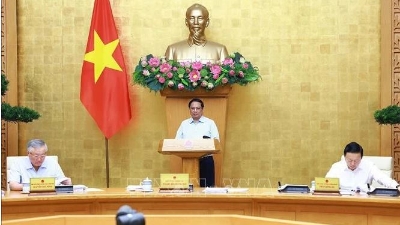
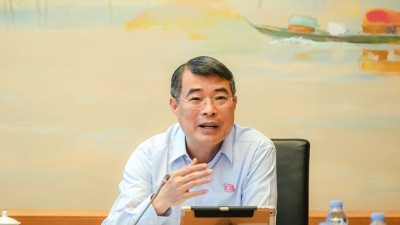
He made the statement while chairing the Government’s thematic meeting on law-making for February 2026 on February 27. The session was held to review and discuss five important draft laws and resolutions.
The five projects include: the draft Capital Law (amended); the draft Law on Civil Status (amended); the draft Law on Belief and Religion; the draft Law amending and supplementing several articles of the Law on Representative Missions of the Socialist Republic of Vietnam Abroad; and a draft Resolution of the National Assembly on coordination mechanisms and specific policies to improve the efficiency of prevention and resolution of international investment disputes.
In his opening remarks, the PM affirmed that institutions are both a driving force and a resource for development. He emphasized that institutions must "lead the way" to remove bottlenecks and address issues arising from practical realities. The resolutions of recent Party congresses have consistently identified building and perfecting institutions as one of the three strategic breakthroughs for rapid and sustainable national development.
Over the past period, the Government and the Prime Minister have placed a high priority on law-making, allocating resources and focusing leadership on resolving mechanism and policy hurdles to create favorable conditions for the public and businesses while promoting socio-economic growth.
PM Chinh noted that since the beginning of the current term, the Government has organized 41 thematic meetings on law-making. It has reviewed and commented on over 215 draft laws, ordinances, resolutions, and policy dossiers, and submitted 179 documents to the National Assembly for promulgation—more than double the amount during the 14th National Assembly's term. In 2025 alone, many legal "bottlenecks" were essentially cleared in the spirit of the Politburo's Resolution 66.
Concluding the meeting, the Prime Minister emphasized the requirement to continue streamlining administrative procedures. According to the Government leader, laws should only regulate fundamental principles; specific and detailed contents should be delegated to government decrees and ministerial circulars to ensure flexibility and adaptability to practical situations.
The Prime Minister noted that law-making must ensure the "5 Easies": easy to understand, easy to access, easy to implement, easy to inspect, and easy to supervise. Matters that are clear and proven effective by practice should be codified into law. For issues that are not yet "ripe" or clear, he suggested conducting pilot programs to learn and improve gradually, avoiding both perfectionism and haste.
The Government also requested drafting agencies to fully incorporate feedback from Government members, while seeking further input from experts, scientists, practitioners, and those directly affected by the laws. They should also reference international experiences suitable for Vietnam's specific conditions to finalize the drafts for submission to competent authorities.
According to the plan, at the first session of the 16th National Assembly, the Government expects to submit 34 sets of documents and dossiers, including 15 draft laws and resolutions covering difficult and complex issues with a broad impact on socio-economic life.
 Google translate