


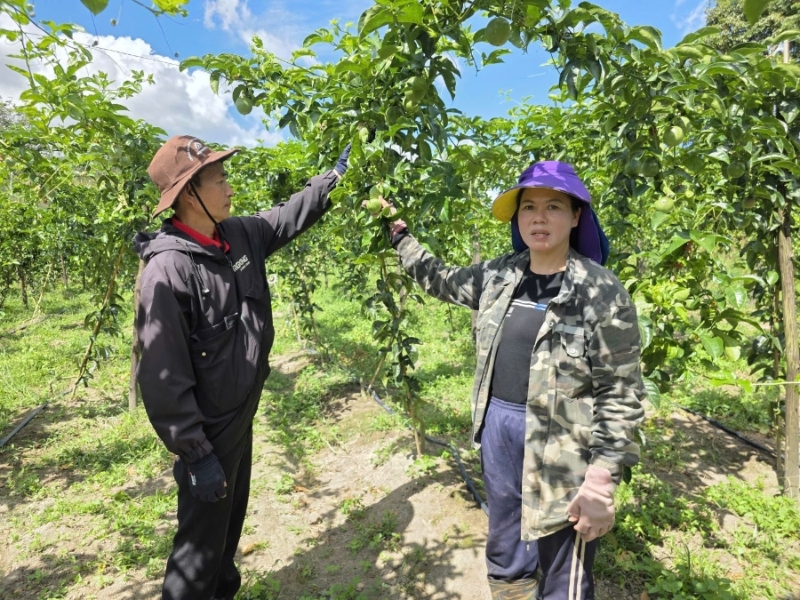
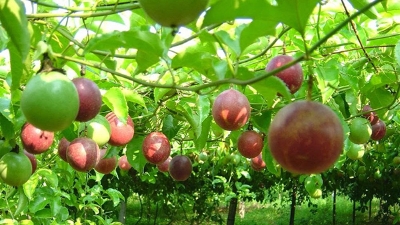
Vietnam's passion fruit exports are experiencing a breakout, skyrocketing from $20 million in 2015 to $222.5 million in 2023, and reaching over $202 million in just the first 10 months of 2025. Full-year exports for 2025 are projected to set a record high of $240–250 million.
These impressive figures underscore the sector's vast potential while highlighting the need for sustainable, systematic development based on value chain linkages.
This information was shared at the "Sustainable Development of the Passion Fruit Industry via Value Chains" forum held on December 12 in Gia Lai province, attended by numerous management agencies, industry experts, and major enterprises.
Mr. To Van Huan, a representative from the Ministry of Agriculture and Environment's Department of Crop Production and Plant Protection, stated that the Central Highlands is currently the country's largest passion fruit production hub, accounting for 86.4% of the total area and 92.5% of the output in 2024. Northern provinces account for approximately 12.5% of the farming area. Vietnam has approved the commercial circulation of 43 passion fruit varieties to serve growing production and export demands.
Vietnam possesses ideal natural conditions for passion fruit, particularly in the Central Highlands, where the plant has a short growth cycle of just 4–5 months and achieves high yields. Currently, over 80% of output is used for processing and fresh consumption, significantly helping to expand export markets.
However, the industry still faces numerous challenges, including inconsistent management of disease-free seedlings, fragmented small-scale production, non-uniform farming techniques, weak value chain linkages, and preservation and deep-processing technologies that have not yet kept pace with demand. Meanwhile, technical barriers and quarantine requirements in import markets are becoming increasingly stringent.
In light of this reality, Mr. Huan proposed that localities review their land areas to establish concentrated production zones integrated with infrastructure and processing facilities, while controlling unplanned expansion. He emphasized encouraging cooperatives to link with enterprises through contracts and ensuring origin traceability.
Simultaneously, the industry must prioritize disease-free seedlings, standardized farming techniques, pest forecasting, and staggered harvesting seasons to stabilize supply. Expanding markets, removing quarantine barriers, and enhancing the brand value of Vietnamese passion fruit are also key factors.
Mr. Doan Ngoc Co, Deputy Director of the Gia Lai Department of Agriculture and Environment, stated that the commencement of official passion fruit exports to China in July 2022 created a significant boost, clearly increasing value across the entire chain. Many enterprises have linked with cooperatives and farmers to form closed-loop production-processing-consumption chains, meeting requirements for planting area codes, packaging standards, and deep processing.
However, Gia Lai specifically, and the passion fruit industry in general, still struggle with climate change, fragmented cultivation areas, and uneven seedling quality. Major markets such as the EU, the US, Japan, and China all demand very high standards regarding food safety, plant quarantine, and production protocols. Consequently, many export orders currently cannot be fulfilled—not due to a lack of volume, but due to a lack of products meeting GlobalGAP or the specific technical standards required by import markets.
To address these issues, Ms. Nguyen Thi Bich Ngoc, Deputy Director of the Plant Protection Institute, recommended the urgent development of a standard set for disease-free passion fruit seedlings, tighter management of commercial seedlings, and the application of a three-tier net house model in seedling production. Furthermore, large-scale raw material zones must be established with uniform varieties and technical processes, subject to regular monitoring and pest warnings by the Plant Protection Institute.
Developing farming models that achieve VietGAP and GlobalGAP certification is seen as a crucial solution to enhance quality and meet export requirements.
Mr. Ho Hai Quan, Director of Nafoods Tay Nguyen JSC, noted that global consumer trends are shifting toward natural products that undergo minimal chemical treatment, are nutrient-rich, and beneficial to health. This presents a major opportunity for Vietnamese passion fruit to expand its market share, particularly in the beverage and processing sectors.
According to Mr. Quan, sustainable supply chain linkages between farmers, cooperatives, processing enterprises, suppliers, and distributors are the deciding factor. These linkages must be based on clear offtake contracts that share both benefits and risks, while strictly adhering to technical standards and origin traceability.




 Google translate