


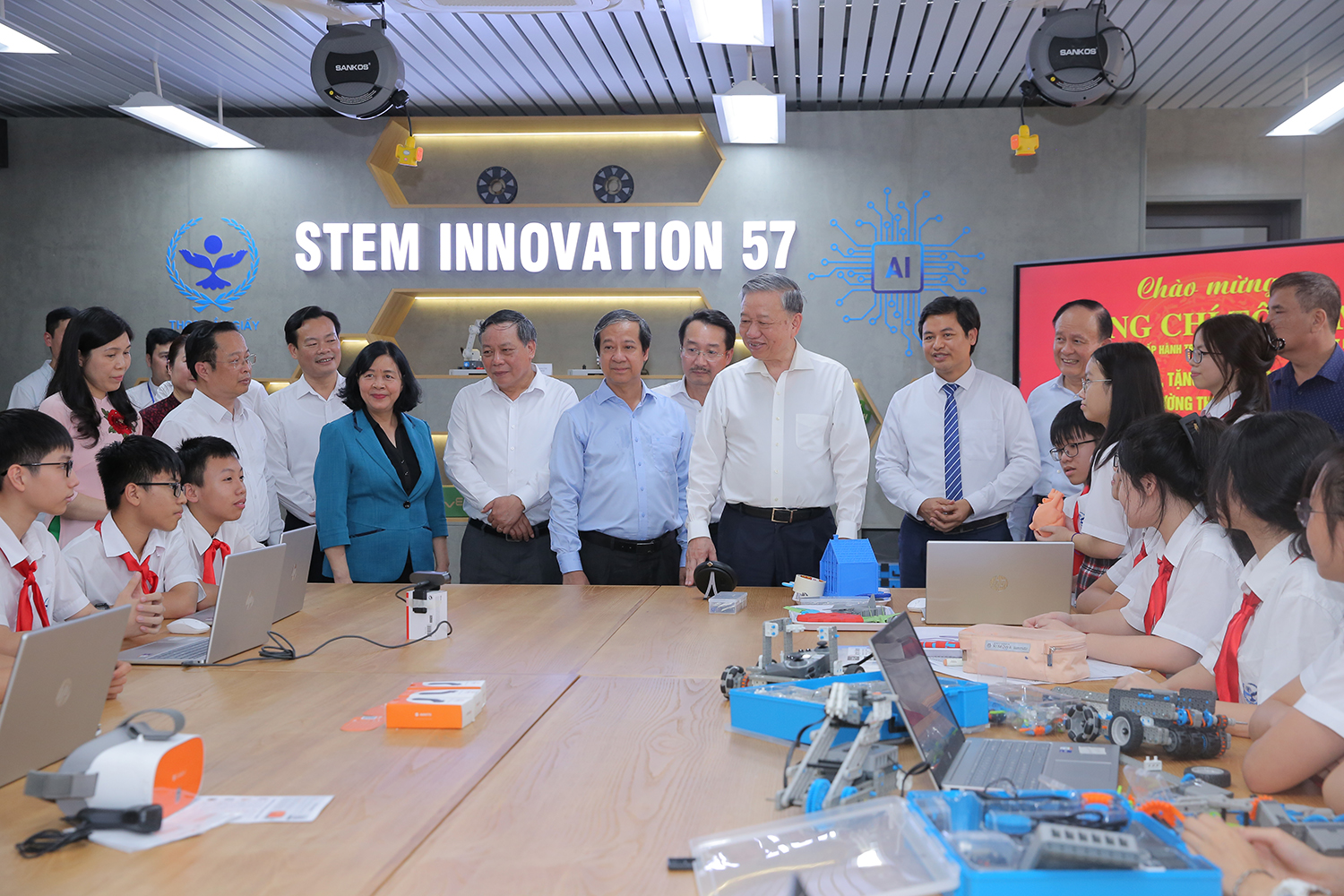
The STEM Innovation Petrovietnam program, launched by the Vietnam Oil and Gas Group (Petrovietnam), goes far beyond equipping schools with modern facilities. It is being positioned as an investment in Vietnam’s “knowledge infrastructure,” supporting the development of a science- and technology-skilled workforce and nurturing a new generation of energy-literate citizens.
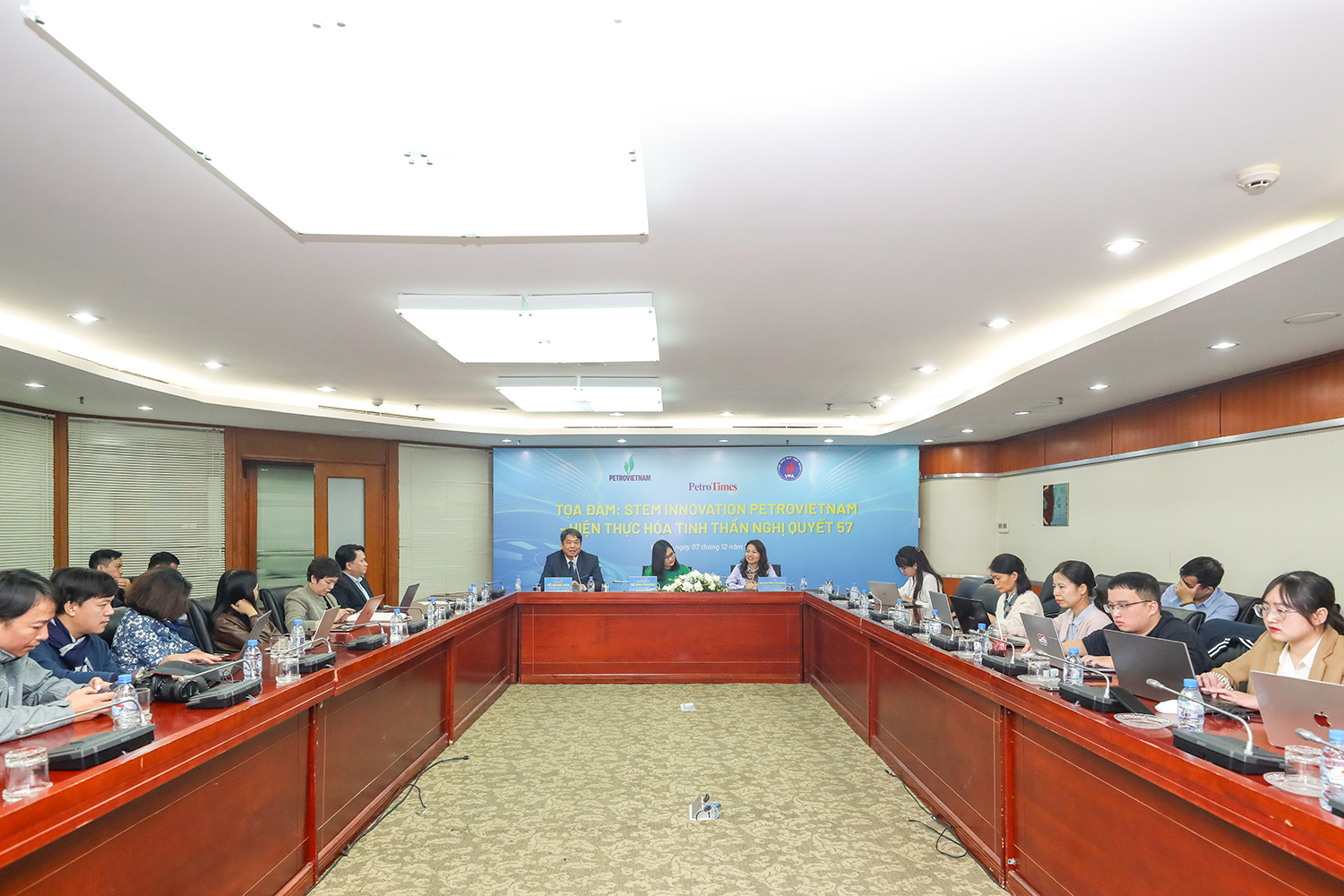
At the seminar “STEM Innovation Petrovietnam - Realizing the Spirit of Resolution No. 57,” held on the morning of December 7 by New Energy Magazine, National Assembly deputies, experts, and educators examined the strategic value of the initiative.
From policy to a gift for the next generation
Vietnam is pursuing major breakthroughs in science and technology under Resolution No. 57-NQ/TW and driving fundamental reforms in education and training under Resolution No. 71-NQ/TW. In this context, STEM education is becoming a crucial bridge linking knowledge, technology, innovation, and cooperation between schools, businesses, and society.
Inspired by the vision of General Secretary To Lam, Petrovietnam launched the “STEM Innovation Petrovietnam” program during the Group’s 50th anniversary celebration in September 2025. The initiative aims to build 100 internationally standardized STEM laboratories across 34 provinces and cities, making it the largest education project ever initiated by a Vietnamese enterprise. Its goal: contributing to a future science and technology workforce and cultivating a generation of citizens equipped to engage with the energy sector.
As the program’s first phase is rolled out in coordination with the Ministry of Education and Training, STEM specialists, local administrations, and participating schools, all 100 laboratories have now been surveyed and are being installed.
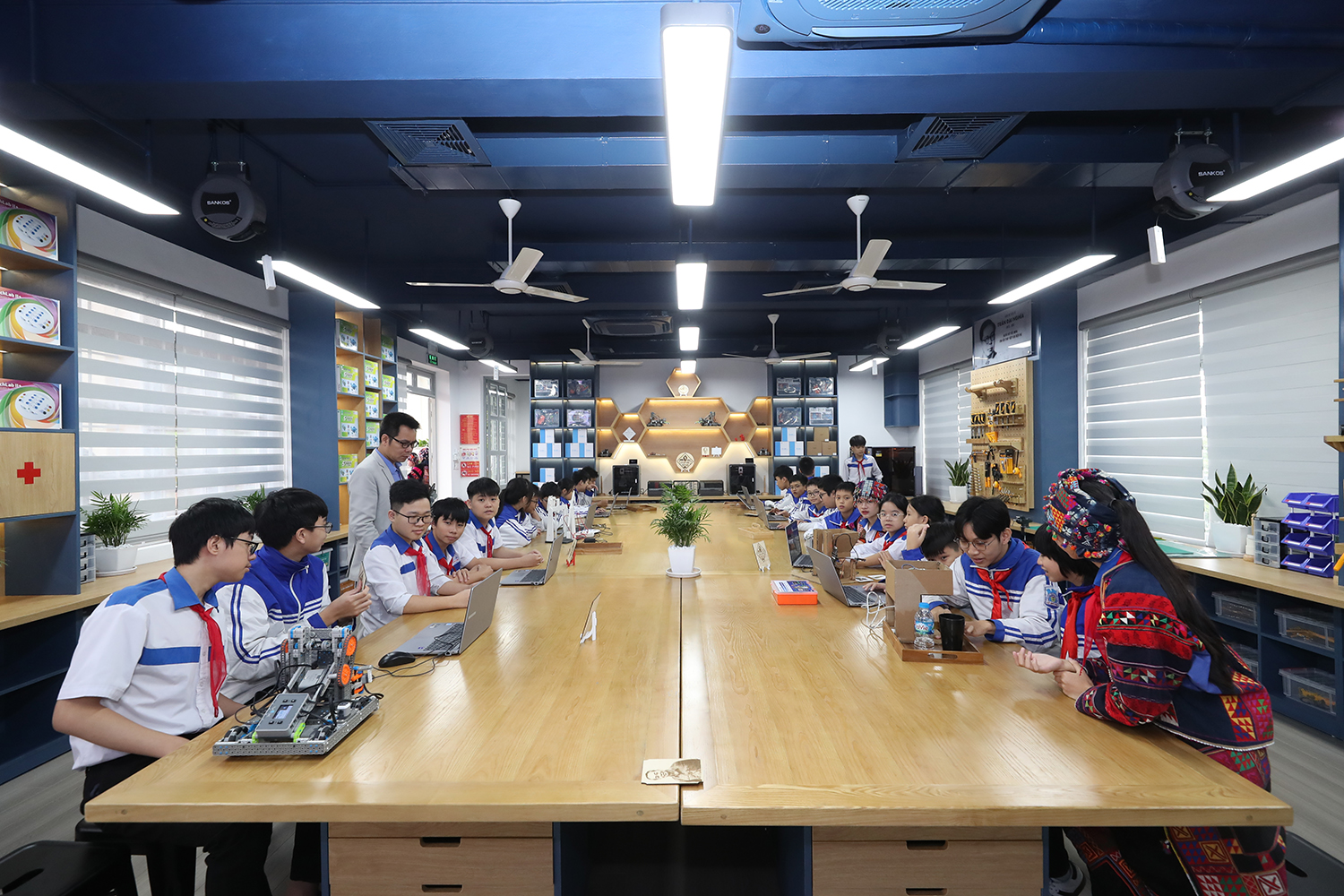
What distinguishes this program is not the hardware, but the philosophy behind it. Petrovietnam aims to build an entire “STEM ecosystem”: international-standard equipment, teacher training under a Master Trainer model, global linkages, and opportunities for students to access international innovation platforms. The ambition is to expand to 10,000 schools by 2035-2045.
This is why the program is named STEM Innovation Petrovietnam, rather than simply “STEM rooms.” It is being framed as a national-level educational gift with long-term significance.
Why STEM - and why innovation
Explaining the rationale behind the program, STEM expert Do Hoang Son recalled that Vietnam formally introduced STEM education into the national curriculum in 2018, an important milestone in the country’s education reform. Under the curriculum, STEM is defined by three characteristics: integration across science, technology, engineering, and mathematics; learning through hands-on experience; and strong relevance to real-world contexts.
He also detailed how the name and concept of the 100-lab system was formed. During consultations with Hanoi-Amsterdam High School for the Gifted - the first school to receive a STEM room presented by General Secretary To Lam - the working group sought to create a space whose purpose and educational value were immediately clear and could generate long-term impact.
The chosen name reflects Petrovietnam’s commitment to implementing national resolutions on science, technology, and education, while demonstrating the Group’s sense of social responsibility. Echoing this view, National Assembly Deputy Ha Anh Phuong described the initiative as “highly meaningful” and urged its expansion.
“As a teacher who once worked in mountainous areas, I saw firsthand how few opportunities students had to access modern laboratories,” she said. “The STEM Innovation Petrovietnam program helps narrow regional disparities. It shows Petrovietnam’s long-term vision in developing human resources.”
From classrooms to global stages
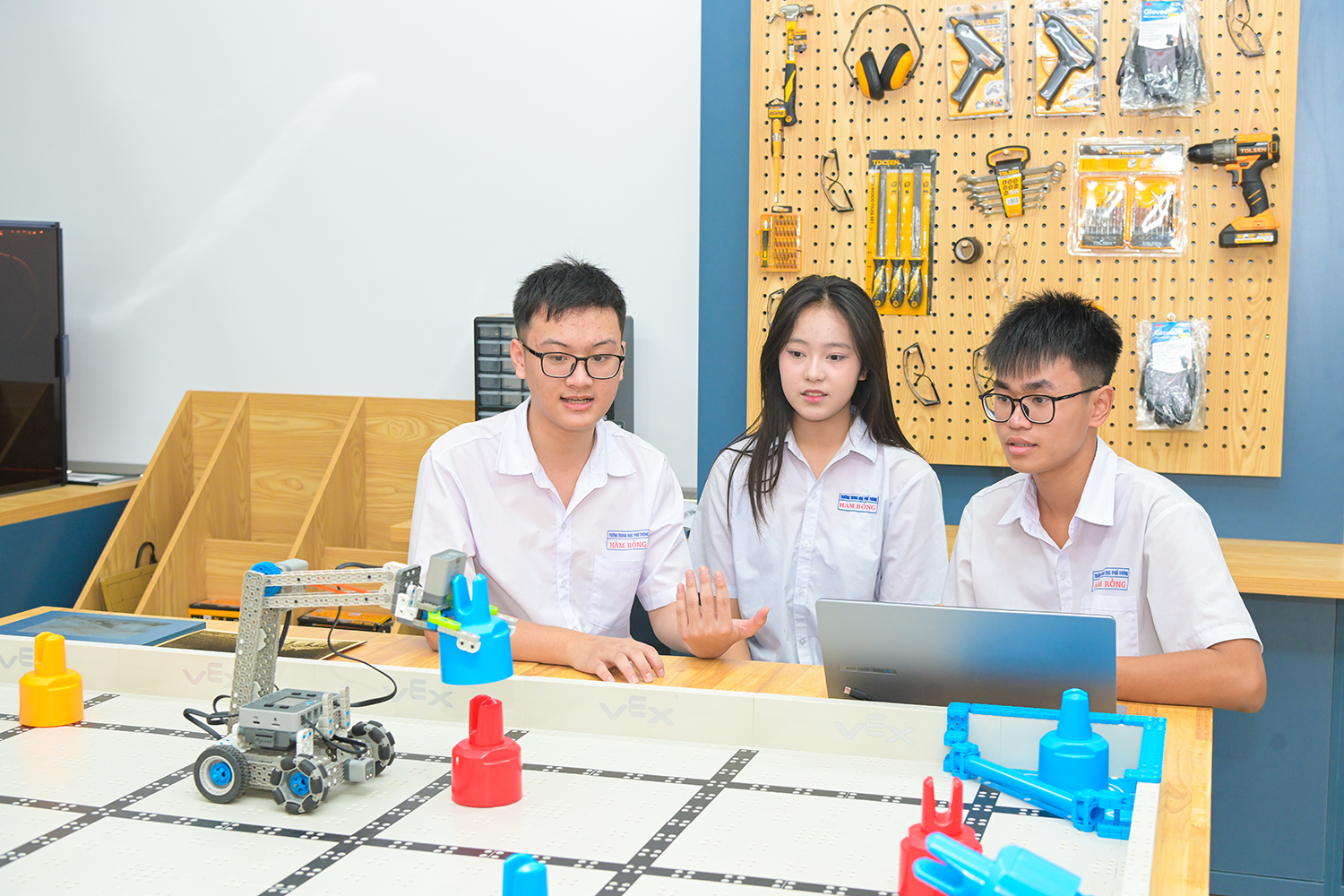
Among the seminar’s highlights was a set of concrete examples showing how the program is shifting classroom culture, most notably at Cau Giay Secondary School in Hanoi.
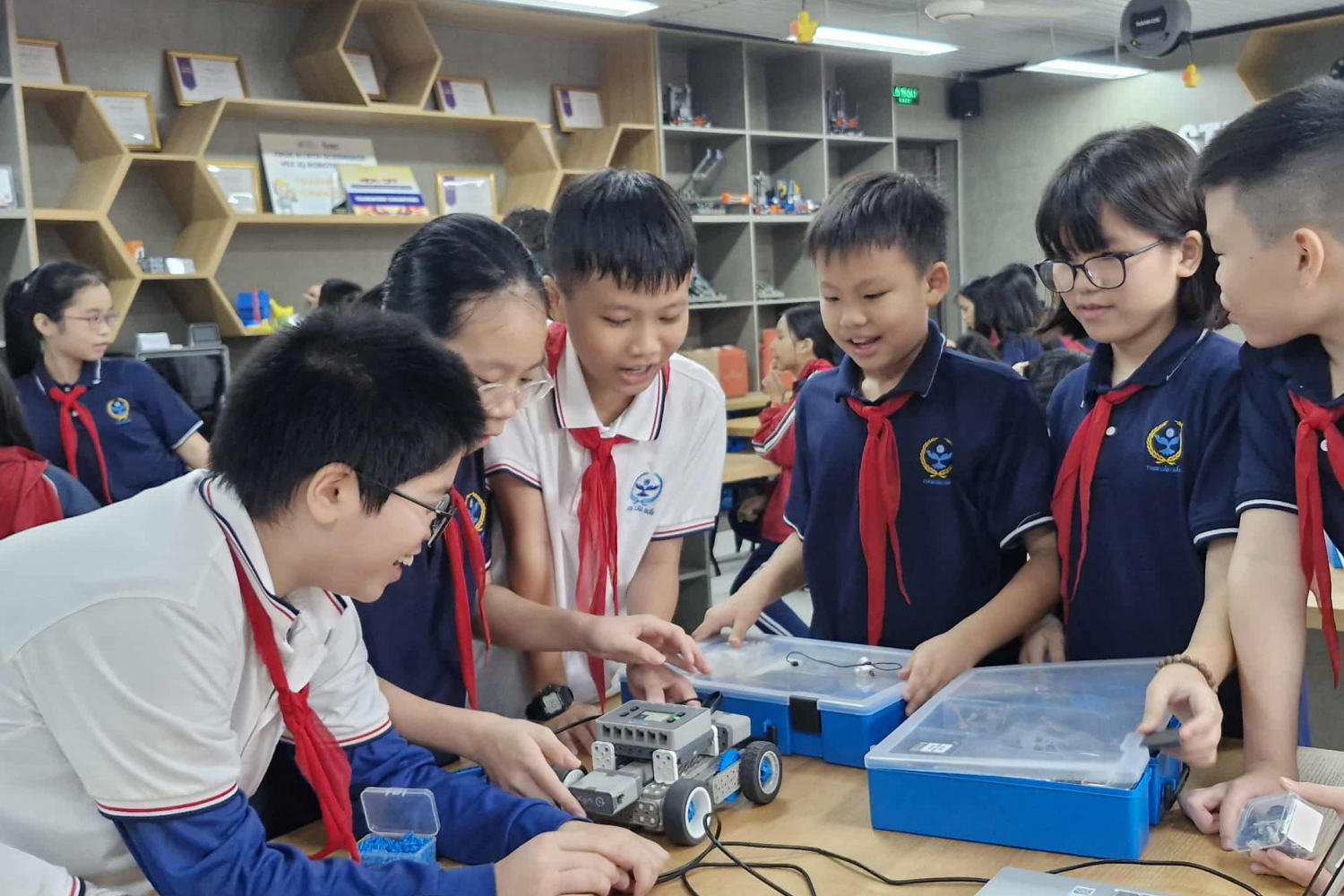
Teacher Nguyen Thi Nhan described the program as a “turning point” for both teachers and students, noting that the new laboratory has encouraged teachers to move beyond traditional lectures and explore more innovative methods. Students, meanwhile, have gained access to robotics and artificial intelligence (AI) tools, enabling them to build robots and compete at regional and international events.
The school has since fostered a vibrant robotics culture with multiple teams preparing for competitions. Students now follow competition-standard processes, maintain technical handbooks, and develop skills nurtured only in high-quality, hands-on environments.
Deputy Ha Anh Phuong, who mentors students on STEM projects, emphasized that STEM education is foundational to building a future workforce capable of participating in the digital economy. “Students do not just learn individual subjects. They apply interdisciplinary knowledge to solve problems and create tangible solutions,” she said.
Beyond sponsorship: building an ecosystem
Experts at the seminar highlighted the growing role of businesses in national education policy, especially as Vietnam accelerates digital transformation. According to expert Do Hoang Son, STEM education currently operates on three levels: mass integration in the curriculum; advanced and vocational-oriented clubs; and high-level “innovation” pathways where students engage in major national and international competitions.
The STEM Innovation Petrovietnam model supports all three levels, he noted. Deputy Ha Anh Phuong added that STEM education is also essential for narrowing regional gaps by giving disadvantaged students equal access to future jobs.
To ensure quality, speakers stressed the need for mechanisms to encourage long-term business participation, transparent public-private partnerships, and a strong focus on teacher capability, particularly through the Master Trainer approach.
Reaching for global standards
Reflecting on implementation at Cau Giay Secondary School, teacher Nguyen Thi Nhan said the program has given the school a clear roadmap and measurable results. She highlighted three essential factors: strategic direction from school leadership; a motivated, well-trained teaching staff; and enthusiastic, creative students.
With access to an international-standard lab, students have shed earlier limitations and are now able to learn, collaborate, and compete according to global benchmarks.
Deputy Ha Anh Phuong noted that through STEM-based learning, both teachers and students learn to follow international research processes, academic standards, and teamwork norms - essential for competitions such as NASA events, ISEF, and FIRST Robotics. This, she said, contributes to raising the profile of Vietnamese education on the world stage.
Ultimately, the significance of STEM Innovation Petrovietnam lies not in ceremonies or numerical targets, but in its connective role: linking national resolutions with practical action; bridging schools and businesses; reducing gaps between urban and disadvantaged regions; and opening pathways from classroom learning to global innovation arenas.



 Google translate