


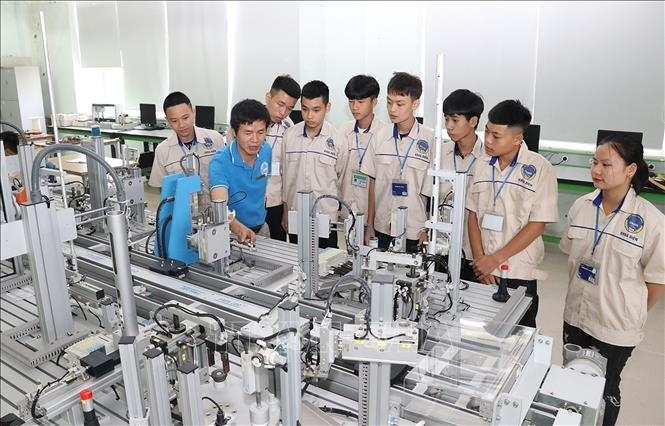
The Hanoi People’s Committee has officially issued a plan for elementary-level vocational training and short-term courses (under three months) across the city for the year 2026.
According to the plan, the city aims to provide short-term training for 8,890 individuals in non-agricultural sectors and 8,190 in agricultural fields.
Out of the total participants, 16,345 trainees will be drawn from specific priority groups as outlined by Government decrees. These include rural laborers, women, people with disabilities, individuals whose agricultural or business land has been reclaimed, and those who have completed prison sentences.
An additional 735 slots are reserved for youth who have completed their military or police service, volunteers who have finished tasks in socio-economic development projects, and employees currently working in small and medium-sized enterprises (SMEs).
The primary objective of the initiative is to equip laborers with essential knowledge and vocational skills, thereby creating opportunities for job placement and career transitions that meet the evolving demands of the labor market. This effort is part of a broader strategy to increase the ratio of trained workers and link vocational training directly to local employment solutions.
Furthermore, the plan aims to facilitate the restructuring of the labor force and economy to meet the requirements of international integration, technological application, and digital transformation. The ultimate goal is to improve the quality of human resources, ensure stable employment, and increase income for the workforce.
The training programs will give top priority to people with disabilities, individuals recognized for their meritorious service to the revolution, ethnic communities, and members of poor or near-poor households. Special attention will also be given to households affected by land reclamation, female laborers who have lost their jobs, and fishermen.








 Google translate