


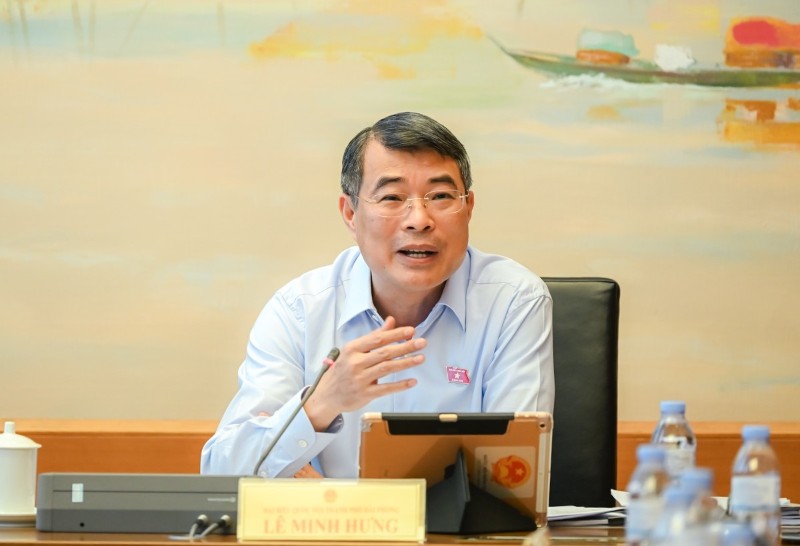
During a National Assembly group discussion session on socio-economic development and the state budget on October 18, Prime Minister Le Minh Hung underscored the urgent need to enhance productivity, reinforce competitiveness, and lower production costs to address upward cost pressures.
To this end, the government is conducting comprehensive reviews across real estate, land management, petroleum, electricity, pharmaceuticals, medical devices, and agriculture to eliminate unwarranted markups, cut intermediary layers, and raise regulatory oversight efficiency.
Regarding petroleum products, the Prime Minister noted that amid a 65% to 90% surge in global prices, domestic prices could have spiked by as much as 80% absent targeted tax interventions, which would have triggered secondary round price shocks across a wide range of goods. Proactive tax relief measures have successfully maintained domestic fuel prices below regional peers, dampening broader cost pressures.
The government has also ordered strict penalties for misconduct in the pharmaceutical and medical equipment sectors, rooting out unnecessary middlemen markups that inflate costs for patients.
In the power sector, structural reviews of state utility enterprises are underway to optimize operations and reduce generating and distribution costs.
The PM emphasized the necessity of guaranteeing stable power supplies, preserving electricity tariff stability, and curbing price volatility across essential commodities. High economic growth must be anchored by macroeconomic stability, he warned, cautioning that unchecked inflation would erode economic gains and diminish the real benefits delivered to citizens.
On budgetary management, the government in 2026 waived approximately VND235 trillion ($9 billion) in revenues and deferred an additional VND125 trillion ($4.8 billion) to preserve liquidity for businesses and household enterprises. Despite these tax relief packages, total full-year state budget revenue is projected to exceed VND3 quadrillion (over $116 billion), up 14% year-on-year, with domestic revenues contributing an estimated VND2.6 quadrillion (over $100 billion).
According to the Government leader, robust revenue collection reflects the fundamental resilience of the economy while simultaneously supporting businesses and driving growth. Nevertheless, for investment capital to translate into tangible economic outcomes, key national priority infrastructure projects must operate efficiently, ensuring that citizens and enterprises fully benefit from upgraded connectivity.

 Google translate