


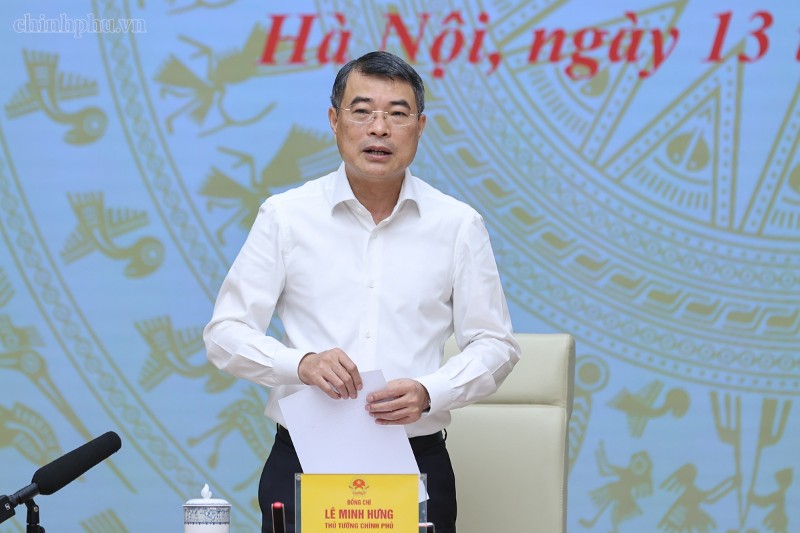
Prime Minister Le Minh Hung on August 13 urged the State Bank of Vietnam (SBV) and credit institutions to ensure credit flows are directed to priority sectors and growth drivers, while maintaining macroeconomic stability and controlling inflation.
At a meeting with the SBV and the banking system to review monetary policy and credit activities during the first seven months of 2026, the Prime Minister asked the central bank to manage credit growth in line with the year's target while responding proactively and flexibly to market developments.
He stressed that capital must reach the right sectors, at the right time and for the right purposes, at reasonable costs. Priority should be given to production, exports, high-tech industries, supporting industries, agriculture, innovation, social and rental housing, essential infrastructure and key national projects.
Monetary policy management must balance inflation control, macroeconomic stability and banking-system safety with support for economic growth, he said, calling for efforts to promote double-digit economic growth based on accurate data, forecasts and specific scenarios.
Regarding interest rates, exchange rates and credit, the Prime Minister urged the SBV and banks to mobilise resources for growth while sharing responsibility with businesses and people through measures to stabilise interest rates and reduce lending costs.
The SBV was also asked to maintain current policy rates, improve market liquidity and manage the exchange rate flexibly, while continuing close oversight of the gold market. Credit institutions were urged to cut operating costs, stabilise lending rates and deliver substantive reductions in borrowing costs.






 Google translate