


Under the Hanoi People's Committee's recently-issued plan, all gasoline and diesel taxis operating in the capital city will be transitioned to electric and green energy vehicles by 2030 at the latest.
To achieve this goal, the city is developing mechanisms and policies to encourage and support taxi companies in proactively converting their fleets.
Specifically, the Hanoi People's Committee will draft and present a resolution to the City Council, outlining policies to support the transition to clean energy road vehicles and measures to limit the use of polluting vehicles. The city will subsidize part of the interest on commercial bank loans for contracts aimed at converting traditional taxis to electric and green energy vehicles. Additionally, it will facilitate access to preferential capital from the city's Development Investment Fund.
Taxi businesses will receive support in the form of reduced registration fees and initial license plate issuance for electric and green energy taxis. The city will also consider offering preferential parking rates for electric and green energy taxis at public parking lots and incentives for investors in public charging infrastructure. Authorities are urged to extend the 100% exemption on registration fees for electric and green energy vehicles, with a particular focus on taxis used for passenger transport.
The transition timeline for converting gasoline and diesel taxis to electric and green energy vehicles sets targets of 64% by 2026, 68-70% by 2027, 74-77% by 2028, 88-96% by 2029, and 100% by 2030. Post-2030, the city will focus on maintaining stable conditions for electric and green energy taxis, prioritizing improved access to charging infrastructure, parking, and suitable traffic organization.
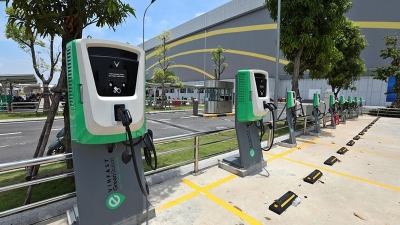
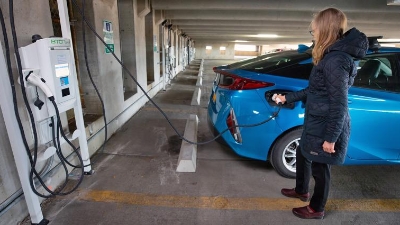
Currently, Hanoi has over 14,300 active taxis, with nearly 8,800 being electric. Additionally, around 13,600 taxis are inactive and awaiting replacement. The total number of vehicles expected to transition by 2030 is nearly 28,000. The city has tasked the Hanoi Department of Construction with leading, coordinating, monitoring, and evaluating the implementation of the plan. This department is responsible for expediting the review and installation of charging stations and arranging stops and parking for electric taxis.
In terms of management, the Hanoi Police is tasked with reviewing procedures related to the registration and issuance of identification license plates for vehicle conversion, providing unified guidance to shorten processing times and ensure no disruption to transport businesses. Concurrently, relevant authorities will research and implement an intelligent traffic monitoring system, utilizing automatic license plate recognition technology to manage vehicles and control violations in low-emission zones.






 Google translate