


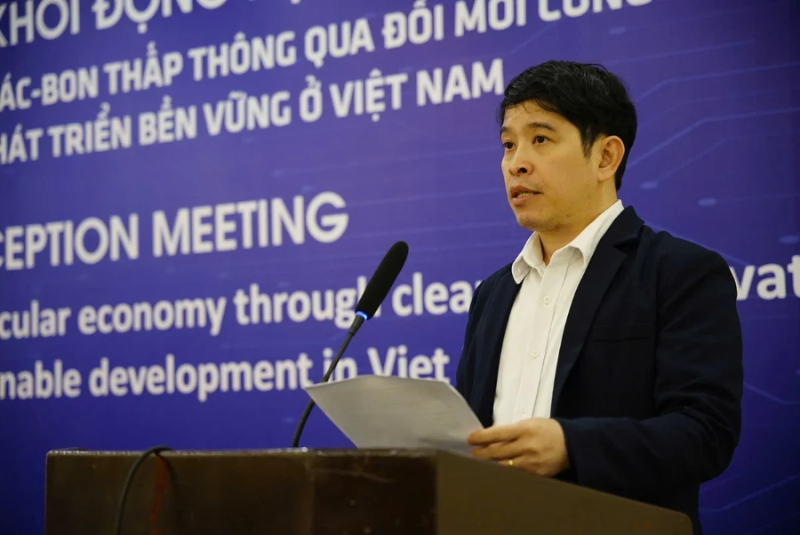
The project "Promoting low-carbon circular economy through clean technology innovation towards sustainable development in Vietnam" was officially launched on December 17 with support from the Global Environment Facility (GEF) through the United Nations Industrial Development Organization (UNIDO).
The project focuses on three specific objective groups: strengthening the policy framework and connectivity within the national clean technology innovation ecosystem; supporting startups and SMEs by promoting the commercialization of clean technology innovations; and enhancing management, knowledge sharing, and experience within the clean technology innovation ecosystem.
Implemented by the Ministry of Agriculture and Environment through the Institute of Strategy and Policy on Agriculture and Environment, it will run for 48 months (2025–2028) nationwide, with key activities expected to take place in Hanoi, Ho Chi Minh City, and Da Nang.
Speaking at the event, Dr. Nguyen Dinh Tho, Deputy Director of the Institute, stated that in recent years, the State has issued many important guidelines and policies to promote innovation, energy transition, and circular economy development.
However, Dr. Tho said, a significant gap remains between strategic direction and the practical implementation and application of clean technology solutions. Many businesses, particularly startups and small and medium-sized enterprises (SMEs), still face difficulties in accessing technology, resources, experts, and suitable support models.
Ms. Hoang Hong Hanh, from the Institute, also pointed out that finance is currently one of the major barriers.
"Transitioning to a circular economy and investing in clean technology development requires large capital, while SMEs, especially micro-enterprises, struggle to access funds," said Ms. Hanh.
According to a 2022 World Bank report, building resilience and reducing greenhouse gas emissions for Vietnam through 2040 requires massive capital investment, estimated at approximately $368 billion. Meanwhile, 2025 statistics show that green credit remains limited, accounting for only 4.3% of total outstanding credit—a small scale compared to business needs.
Another barrier identified is limited capacity and knowledge. Specifically, businesses lack experience and skills in project development, business modeling, and building partnerships within the clean tech supply chain. Additionally, technical capacity limitations reduce the efficiency of clean technology development and application.
Against this backdrop, the project is expected to help narrow this gap.
"The project focuses not only on supporting businesses to develop and commercialize clean technology solutions but also aims to perfect the policy framework, strengthen ecosystem connectivity, and promote knowledge and experience sharing among management agencies, experts, research institutes, and the business community," said Dr. Tho.
According to Ms. Le Thi Thanh Thao, Representative of the UNIDO Country Office in Vietnam, this project is part of UNIDO's global program on clean technology innovation. It aims to support startups and SMEs with innovative solutions to mitigate climate change impacts by providing business acceleration services, investment promotion, and capacity building for the national innovation startup ecosystem.
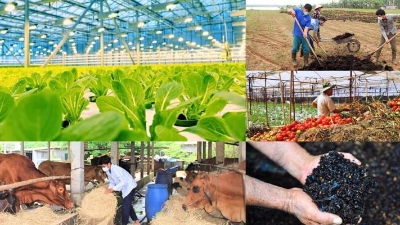
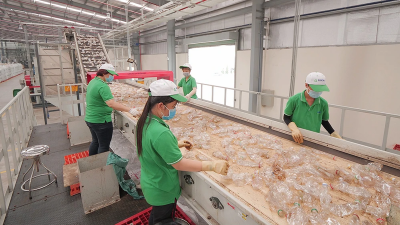
"The project's priority sectors include energy, waste, materials, and agriculture. The project also prioritizes support for women, youth, and marginalized groups," she said.
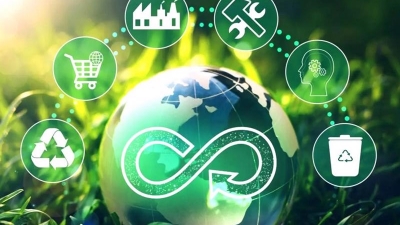
She emphasized that the project's overall objective is to promote the development of clean technology innovation solutions serving the low-carbon and circular economy, oriented toward sustainable and inclusive development, while integrating renewable energy, energy efficiency, and waste management.




 Google translate